Fort Worth police Crime Lab whistleblower terminated as state finished investigation
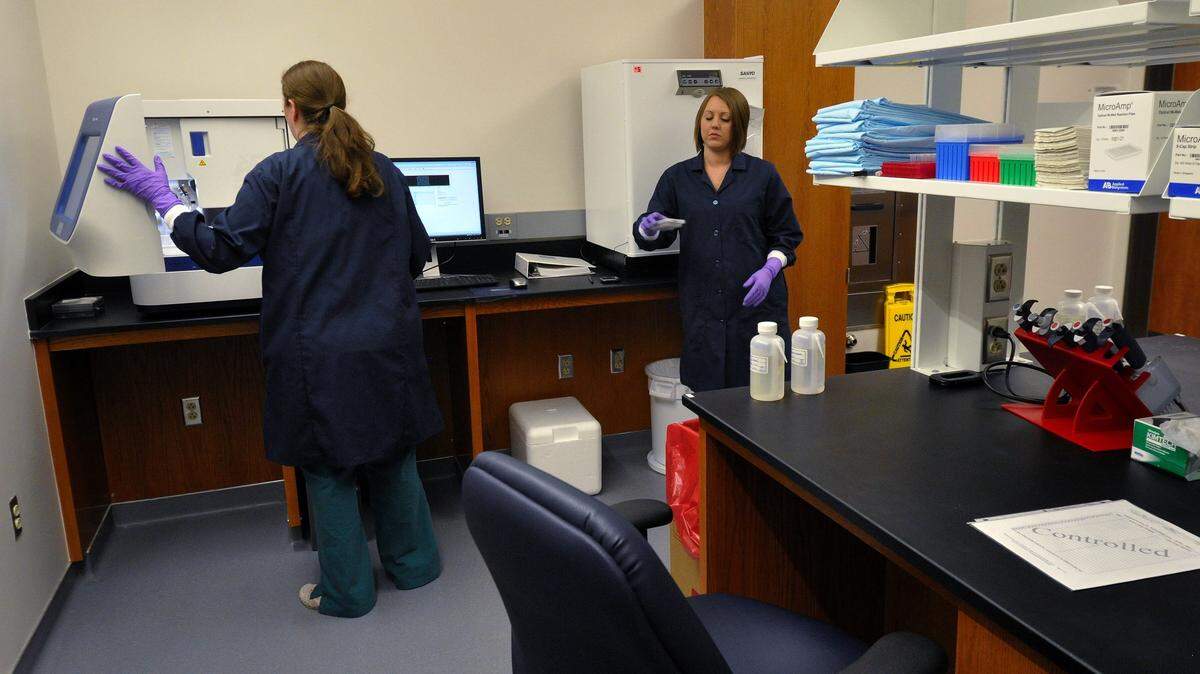
A whistleblower who filed a 174-page complaint against the Fort Worth Police Department Crime Laboratory in 2020 was placed on administrative leave after the Tarrant County District Attorney’s Office determined she could no longer testify during criminal trials.
Trisa Crutcher alleged in a lawsuit that the move was retaliation against her for being a whistleblower. She was later fired by the police department.
In the meantime, after receiving her complaint, the Texas Commission on Forensic Science voted in October 2020 to create an investigative panel to review it, dig through court documents and interview employees of the lab’s biology unit.
The commission recently released a 126-page report on its findings, which focused on an allegation that a policy regarding maintaining evidence had not been followed correctly for at least two years. It affirmed Crutcher’s allegations that the policy wasn’t followed but also found that the issue didn’t rise to a level of misconduct. Several recommendations were made by the commission that it said would improve the flow of work at the lab.
Crutcher’s report, initially made public in October 2020, questioned whether hundreds of cases could be affected since the lab wasn’t following policy. Exhibits attached to the state’s report said a disclosure notice has been added into every DA’s case that Crutcher worked, meaning attorneys will be notified about the complaint and allowed to ask questions about it.
The DA’s office will also review each case Crutcher touched to determine if it should re-test evidence. The office told Crutcher in a March letter that one case had to be re-tested at cost to the police department.
Questions about Crutcher’s employment were also reviewed by the panel, which noted that the lab manager’s response to Crutcher’s concerns “ultimately created more problems than it solved.” Crutcher wrote that after she complained about the policy, her work environment became hostile.
Most of the issues that Crutcher outlined in her complaint were not subject to the jurisdiction of the commission and were therefore not investigated, General Counsel Lynn Garcia said during a commission meeting in July.
Report findings
Part of Crutcher’s complaint referred to the “DNA submission form” document, specifically regarding a yes or no question that gives a forensic scientist “permission to consume” the sample. Consuming evidence means the scientist can use part or all of a DNA sample during testing.
According to the lab’s policy, a forensic scientist should keep an untested portion of the evidence sample, unless the scientist has reason to believe that using the entire sample will yield a stronger result. Using the full sample means that if the test isn’t done correctly, if it comes back inconclusive or the defendant wants to test it, then subsequent tests might not be possible because the entire sample has been used by the prosecution, according to multiple attorneys who spoke with the Star-Telegram.
For the lab to have permission to consume a sample, the OK must be given by the case investigator. This is in line with FBI protocols and policies at crime labs across the country. The Fort Worth policy states: “This form must be fully completed by the Detective.”
However, the crime lab’s liaison, Sundaye Lopez, had been signing the permission form to consume documents herself, according to court documents. According to testimony given by Lopez during a murder trial, the former lab director gave her permission to help detectives fill out the DNA submission form, and that permission was continued by Michael Ward, the lab’s current director, according to the document.
When the state’s team interviewed employees of the biology unit, they found that members of the unit didn’t realize that Lopez had been filling out the form in some cases until Crutcher had made her first complaint. They agreed that the policy had been broken.
Garcia said Lopez was doing her job in good faith by trying to provide customer service to the police department, but she did not keep any documentation that showed detectives gave her permission to consume.
“By the time it got to the DNA analysis they were concerned about whether they had indeed permission to consume,” Gracia said. “Consumption of DNA is a widely litigated issue in both state and federal court.”
The police department then investigated its own lab and found no wrongdoing. Crutcher took issue with the fact that the investigator, Sgt. Merle Green is on the district attorney’s Brady list, — meaning his credibility has been flagged by the office based on problems with his truthfulness, honesty or bias in the past — but he was still tasked with the investigation.
In June 2018, the lab manager sent an email to a sergeant in the homicide unit that asked if detectives had any concerns, issues, or problems with the laboratory consuming biological evidence in its DNA analytical process. The sergeant responded they had never had an issue with evidence being consumed against their wishes. The DNA analysts explained that while the email was informative, it was not a replacement for documentation in individual case records.
On July 3, 2018, other members of the biology unit met with a Fort Worth deputy chief to express their concerns about management’s handling of the issue. On July 30, the lab manager, who is not identified in the report, wrote a report about the issue that in part said, “The root cause of this concern does not appear to stem from any factual issues, but rather appears to stem from some type of personal animus, bias, or jealousy” of Crutcher.
Termination
Crutcher filed a lawsuit in November 2020 against the city of Fort Worth that accused her supervisors and other city employees of retaliation.
The lawsuit says the lab’s leadership created a hostile work environment over the last two years of her employment. Before her first complaint about the permission to consume form, Crutcher received good performance evaluations but after her complaints, she received negative and unsubstantiated comments regarding her performance, according to the lawsuit.
On March 14, 2021, she received a formal notification from Assistant Chief Robert Allredge that the police department was “seriously considering terminating” her employment because of “information from the Tarrant County District Attorney’s Office that establishes you can no longer satisfactorily perform some of the essential functions of your job”
According to the letter, the DA’s office informed the police department that, “the potential of calling Trisa Crutcher as a witness on behalf of the State at this point is problematic, due to the allegations that she has made against the Crime Lab.”
A spokesperson from the DA’s office said Thursday that the office is still calling Crutcher to testify and hasn’t stopped.
Crutcher was fired on April 1, 2021, according to the state report.
A copy of Crutcher’s final termination letter was not included in the state’s report.
“Notably, each person the Commission interviewed who worked with the complainant found her to be a hardworking member of the section who did quality work and paid close attention to detail,” the state’s report said.
The civil rights lawsuit was filed in Dallas County and is scheduled for a jury trial on Nov. 16.
Commission’s recommendations
After Crutcher submitted her complaints internally, no corrective action plan was issued and the Tarrant County District Attorney’s Office wasn’t notified about the possible problem with the DNA consumption.
The commission didn’t find that the events described by Crutcher rose to the level of professional negligence or misconduct by the department. The commission did find that the lab manager’s approach to the complaint ultimately created “more problems than it solved.”
The laboratory’s efforts to notify the DA’s office about the complaint was also insufficient, the commission found. When asking employees about the notification, there were differing answers about who was responsible for contacting the office. It recommended that the lab create a policy to strengthen communication from it to the DA’s office.
The commission recommended that the lab conduct a case audit, which should include documentation from each case where it’s unclear whether permission was granted for biologists to consumer evidence between January 2017 and August 2018.
It also suggested that the quality division of the crime lab should be strengthened with the roles of its employees clearly defined. The division should be independent from the lab manager.
And the lab manager specifically should “reflect on what it means to ‘embrace transparency and resist individual blame or scapegoating.’”
“Management must bear in mind the impact of the laboratory’s processes on analysts, victims of crime and the accused, lawyers, judges and juries,” it wrote.
This story was originally published September 2, 2021 at 5:15 AM.
CORRECTION: A spokesperson from the DA’s office said Thursday that the office is still calling Crutcher to testify and hasn’t stopped. An earlier version of this story indicated otherwise.