Did JPS Hospital leaders know of alleged fraud that led to $3.3 million settlement?
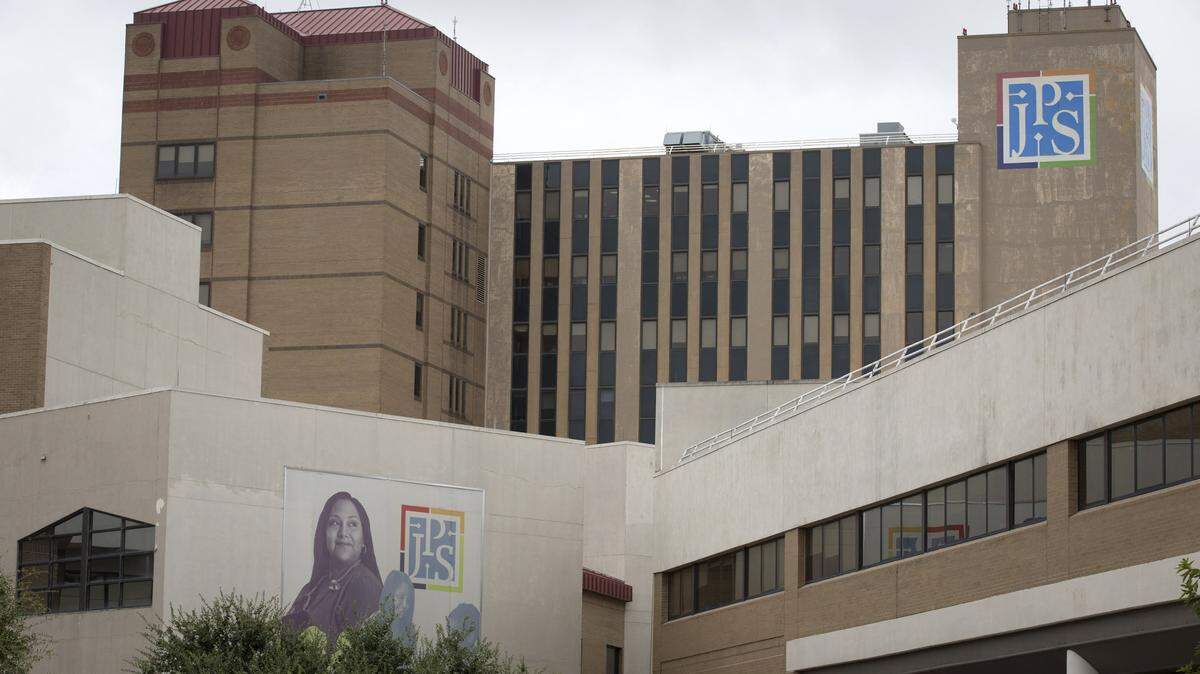
Top leaders at John Peter Smith Hospital knew for years that the hospital was coding certain claims to receive more money from the federal government than what was owed for the treatment of patients on government health insurance programs, and they gave directives to keep the fraud going, according to a whistleblower lawsuit the hospital recently settled.
But in a statement Monday, the hospital system denied that it knew about the false claims and allowed them to continue. The statement said the misuse of billing modifiers were found to be unintentional and largely software-generated. Once found, they were corrected, the hospital system said.
The lawsuit, which was filed in 2018 and alleges the hospital violated the False Claims Act, gives a glimpse into how the hospital got tangled in a case that led to a $3.3 million settlement.
The False Claims Act allows private citizens or the government to file a civil complaint against a hospital they believe violated the act. When a complaint is filed, it’s sealed while the U.S. Department of Justice investigates and decides if there’s merit or resources to continue an investigation.
In this case, the Justice Department declined to intervene. The case then became a civil litigation, though the government could still benefit from the lawsuit.
An attorney for the hospital, Gene Besen, said the lawsuit was settled without adjudication of liability — meaning no one has said JPS is guilty or not guilty of the claims.
On Monday afternoon, the legal team for Erma Lee, who filed the whistleblower lawsuit, released the following statement: “We are extremely proud of our client. Erma is a wonderful person and a person of integrity. We appreciate the United States Attorney’s Office for the Northern District of Texas for its hard work on this case and for recognizing our client’s contributions.”
None of the allegations against JPS would have had any financial implication on patients, Besen said.
Misuse of billing modifiers
Lee, the hospital’s former compliance director, first noticed the alleged overcharges in 2015 after she oversaw an internal audit related to JPS Health’s submission of claims, according to the lawsuit.
She alleged that the hospital received millions of dollars in reimbursements to which it was not entitled from at least January 2014 to November 2017. The lawsuit says that Lee notified the hospital’s Board of Managers and it’s chief executive officer, Robert Earley. She told them that the hospital had been improperly adding billing modifiers to claims between 70% and 95% of the time, essentially double billing for certain aspects of patient care, according to the lawsuit.
However, Besen said the hospital wasn’t notified of the possible misuse of billing modifiers until the Department of Justice contacted leaders four years after Lee’s alleged discovery.
Used properly, billing modifiers indicate that a provider administered significant care on the same day as another medical procedure that was above and beyond the preoperative and postoperative care “bundled” into the main procedure code.
The alleged false claims submitted by JPS were done on behalf of physicians by billing across multiple departments for a variety of services to Medicare, Texas Medicaid, Tricare and other government health care programs, according to the lawsuit.
But in a motion to dismiss Lee’s lawsuit, the hospital noted it already conducted its own audit of 450 claims from 2014 to 2016 and found that 427 claims were deemed to have incorrect coding. The hospital fixed the issue then before the Justice Department contacted them about Lee’s complaint, Besen said.
Lee used the self-audit as the basis for her complaint, Besen said.
Asked about the software issue, Besen said once it was found, the software issue was fixed.
“There was a follow-up compliance audit and that audit came back with a 0 percent error rate after fixing the problem,” Besen said.
The motion to dismiss Lee’s lawsuit was ultimately denied.
Asked why the hospital decided to settle the lawsuit even after the government decided not to intervene, Gene said it was a business decision.
“You have to look at the resources, the cost, the risk of litigation and then the distraction to the operations of the hospital,” he said, adding that the need to focus on caring for people during the COVID-19 pandemic was a big part in the decision to settle.
In an emailed statement, Earley, the hospital CEO, said, “We take any claims of wrongdoing extremely seriously, and JPS immediately engaged an outside law firm with experience reviewing allegations of this sort. JPS asked them to conduct a thorough and robust investigation including full access to all records and individuals involved in coding and billing. The matter was resolved on behalf of the hospital district, and it’s my understanding that the interviews and investigation revealed no evidence of intentional or knowing conduct related to this.”
The $3.3 million settlement does not correlate to any possible amount of alleged fraud, Besen said. Most of the money goes back to the federal government, $912,635 will go to Lee as her statutory share of the settlement proceeds, and the rest will cover attorney’s fees, Besen said. The money will come from the hospital’s reserves.
Lee was terminated by the hospital in 2017, after she reported the fraud. The hospital said she was terminated for an unrelated incident.
Part of the lawsuit alleges retaliation and harassment by hospital leadership against Lee. The lawsuit did not say what reason the hospital gave for firing Lee.
Besen declined to answer questions about Lee’s employment.
False Claims Act
The False Claims Act began collecting recoveries from health care systems in 1986 and has collected more than $64 billion since, according to data released by the Department of Justice.
In 2020, the department obtained more than $2.2 billion in settlements and judgments that involved fraud and false claims. Of those settlements, more than $1.6 billion arose from lawsuits filed under the same provisions of the False Claims Act that Lee filed her claim.
Besen said the settlement by JPS this year is the first the hospital system has ever paid out in such a case.
In 2021, at least six hospitals have reached settlements after being accused of violating the False Claims Act, according to news reports and releases from the Justice Department. The amounts range from $1.5 million from a hospital in Wyoming to $90 million from a hospital system in California.