Fort Worth woman was told she has 3 months to live, needs $500K for liver transplant
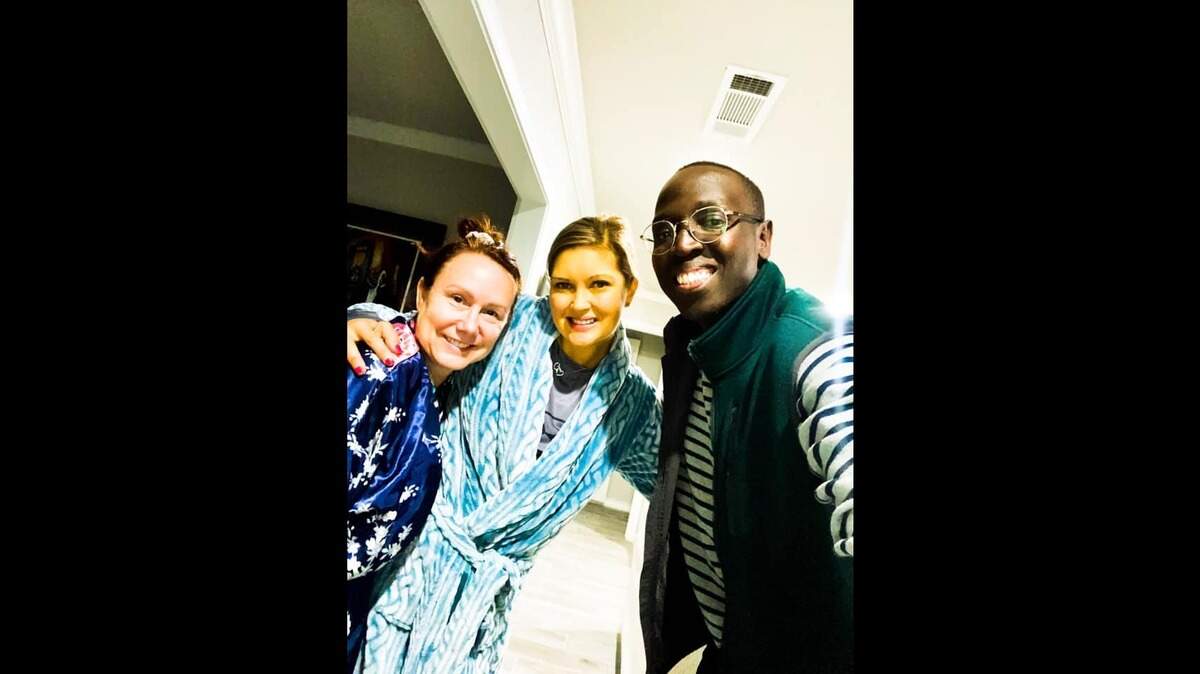
The doctor walked into April Heileman’s hospital room and delivered the news, in a serious but straightforward manner, that made her heart sink.
“These are your options,” she remembers him telling her on March 31.
The words were like a gut punch, a radical shift from the more calm and measured diagnoses she had gotten from medical professionals over the past two years. The 37-year-old had been in and out of hospitals since June 2019, when she collapsed in her Fort Worth apartment and slipped into a two-week coma. She dealt with ongoing issues related to her liver like a low blood count and high levels of ammonia. Her mind, at times, became fuzzy and unfocused.
But doctors had been reassuring that her damaged liver — the root of her problems — could heal itself over time, according to April and her mother, Camille Heileman, 58. They told her if she followed a healthy diet and lifestyle she could at the very least avoid a liver transplant until it became necessary down the road.
On March 31, sitting in a Baylor Scott & White hospital room, April learned that moment was sooner than she or her mother thought.
The doctor described how her liver was so damaged that she would need to get the proper insurance, which she didn’t have, or come up with $400,000 to pay for a transplant. If she couldn’t do that, the doctor told her bluntly, she might be able to live for another three months.
Her family has found out the grand total is closer to half a million dollars, a mammoth figure they are trying to reach through a GoFundMe page. They haven’t come close so far — the fundraiser has raised around $9,600 as of Sunday.
Camille and her husband, who live in Wylie, as well as their son, who lives in Oklahoma, are prepared to step in and donate a liver to April when and if they can pull together the funds, and if it’s determined they’re a match. They won’t be able to get tested, however, until they have the right insurance or the funds, Camille said. That’s only one of their frustrations.
It feels to the family that there’s a ticking clock hanging over their heads, with a deadline to meet that could mean life or death for someone they love.
It feels, to Camille, that her daughter’s health isn’t as important as money.
“Everybody’s scared. It’s like our hands are being tied at every turn that we make,” she said. “Her health is being held for ransom.”
The person at the center of all the concern, however, isn’t throwing “a pity party,” though there are days when it’s hard for her to lift her head off the pillow, as April described to the Star-Telegram over the phone on Friday morning. She had woken up with her mouth full of blood, because her blood doesn’t clot, she said. That led to nausea.
But by the time she got up and moving around, she was joking around with her roommate, whom she calls her “voice of reason.” She knows her parents would rather have her back home, she acknowledged, but she doesn’t want anyone waiting on her hand and foot, even now. She was working part-time at the White Elephant Saloon in the Stockyards up until a couple weeks ago.
It was around that time she was diagnosed with cancer in the liver, on top of the cirrhosis of the liver she already knew she had. The organ damage has affected her health in sometimes mysterious ways — her skin, for instance, has taken on a yellow tone.
April said she doesn’t want to hide, or to go through her days with people treating her differently. She doesn’t want this to be her identity.
One of the hardest parts of these recent weeks has been seeing people feel afraid to talk to her, or unsure how to.
“I’m not a victim,” April said. “My body isn’t working correctly, and that’s that.”
‘So much could have been prevented’
Doctors at Baylor suggested it’s possible April’s liver damage could have something to do with a birth control shot she was getting in her arm, Camille said.
She began to receive the Depo-Provera contraceptive injection in college, an alternative to other birth control methods like pills that requires a patient to get a shot every three months. She kept coming back, over several months and then several years, for the shot, Camille said. Her doctor indicated it was fine to keep using the injection as an ongoing birth control method.
She and her mother have learned, however, this is in fact not recommended, and even unsafe.
The Food and Drug Administration states in its prescribing information for Depo-Provera that the injection shouldn’t be used as a birth control method for more than two years, except in certain cases. The drug additionally isn’t recommended for people with pre-existing liver problems, and among its rare and often severe side effects listed on WebMD are liver problems.
Camille, though she can’t say for certain what happened, also believes April’s antidepressants and anxiety medication could have contributed to her damaged liver. She has spoken with doctors who have cautioned about combining these drugs and a birth control shot. She has inspected pill bottles that list cancer as a side effect.
“There were some really big red flags that should have been looked at over the years,” Camille said. “I feel like so much of this could have been prevented. So much could have been prevented.”
Around two years ago, April was in seemingly fine health, trying to find steady work in Fort Worth. She had spent years as the personal assistant to F. Howard Walsh Jr., the Fort Worth oilman and philanthropist who was a major TCU benefactor, until his death in June 2016. She had thought she might make a career at the company.
She worked in stints in retail stores and in restaurants, benefiting, Camille said, from a naturally outgoing personality and a strong work ethic. Outside of her jobs, she loved to fish, hunt and to ride horses at a ranch near Glen Rose.
Her life changed on June 15, 2019, when Camille couldn’t get April on the phone in the afternoon and, with a “mother’s intuition,” drove to Fort Worth.
She had medics break into her apartment. The first thing she saw when she rushed inside was her daughter lying on the floor in a pool of blood.
“I thought somebody had murdered her,” Camille said. “She sat up for a split second, and asked, ‘What are you doing here?’ and then she slipped into a coma.”
The medical staff at John Peter Smith Hospital told Camille they had seen gunshot victims with blood counts as low as hers who didn’t survive. The blood vessels in her esophagus had ruptured, meaning she needed bands put in to hold the vessels together. Doctors later determined she suffered a stroke.
About two weeks into her hospital stay, Camille remembers they were getting prepared to put a breathing tube into April’s throat. The family was saying their goodbyes, trying to come to terms with the fact she might not come out of the coma, when she popped up in bed, her eyes open.
She announced to the room, as Camille remembers, “What’s going on?”
It was a moment that doctors swore they would have never believed if they hadn’t been there, she said.
But it was only the beginning of April’s problems.
She was feeling better when she was released in January 2020 so she took a trip to Spain, unaware then, like the rest of the European country, COVID had been spreading. She contracted the virus, dealing with a dry cough and labored breathing, and passed it on to four family members. Other issues persisted too — the neuropathy that made her feet twitch, the uncontrollable swelling and bleeding.
As she continued to work in December 2020, she caught the coronavirus again. It put her in the hospital, and the staff at Baylor Scott & White noted her blood counts, platelet counts and ammonia levels were off.
April received then a version of what they had said before: Her liver is damaged and needs to heal, and medical events like this might happen.
Before Easter, she came back to the hospital and got the diagnosis that was like a 180-degree turn, that she might be able to live another three months without a new liver. She called her mom.
It was the first phone call she made, according to Camille.
That was more than two weeks ago.
“Now we’re down to less than two months, and we’re starting to see the effects,” Camille said.
‘They say two months; it could be 20 years’
Camille has faith her family can somehow pull together the money to pay for a liver transplant, if she can get April’s story out there. It could take one, or two, or even three people to see it, she said, to help the fundraiser gain the momentum it needs.
She hasn’t allowed herself to think of losing her “baby girl,” and has tried to come up with the money through whatever means necessary. She has called a long list of transplant centers and health clinics sent to her from friends, leaving desperate voicemails explaining the situation.
“I’ve never left so many voicemail messages with nothing in return,” Camille said.
She feels abandoned, too, by family and friends who have been silent in the past weeks as the circumstances of her life have drastically changed. There’s a lot for her to worry about on a given day, she said, especially not being able to see her daughter at all times.
But she understands why April doesn’t want to be at home.
“She’s not ready,” Camille said. “She feels like if she comes back home, she’s throwing in the towel.”
April, her voice sounding tired over the phone but also laidback, said she thinks about her family and friends, and worries about how they’re dealing with everything. She can feel their concern, which is an uncomfortable position for her to be in. She’s always been the type of person to want to fix other people’s problems.
When people approach her with too much seriousness, she will respond that everyone lives once, to have some fun. The way she sees it, “They say two months; it could be 20 years,” she said.
Though she acknowledges it’s frustrating to think about the situation she’s in and how she got there, she said she’s focusing on making sure those around her are smiling, and looking after herself. She hasn’t been as worried about the GoFundMe as much as her mother, saying she doesn’t want handouts. She would rather have a hug, she said, than a dollar.
She doesn’t have a doctor’s appointment until later this week. She was planning to ride horses on Saturday.
“What’s the worst that can happen? I’ll fall off,” April said. “Which wouldn’t happen, by the way, because I’m a really good horse rider.”
This story was originally published April 26, 2021 at 5:00 AM.