
César Chávez’s legacy to persevere in the face of long odds lives on in Fort Worth
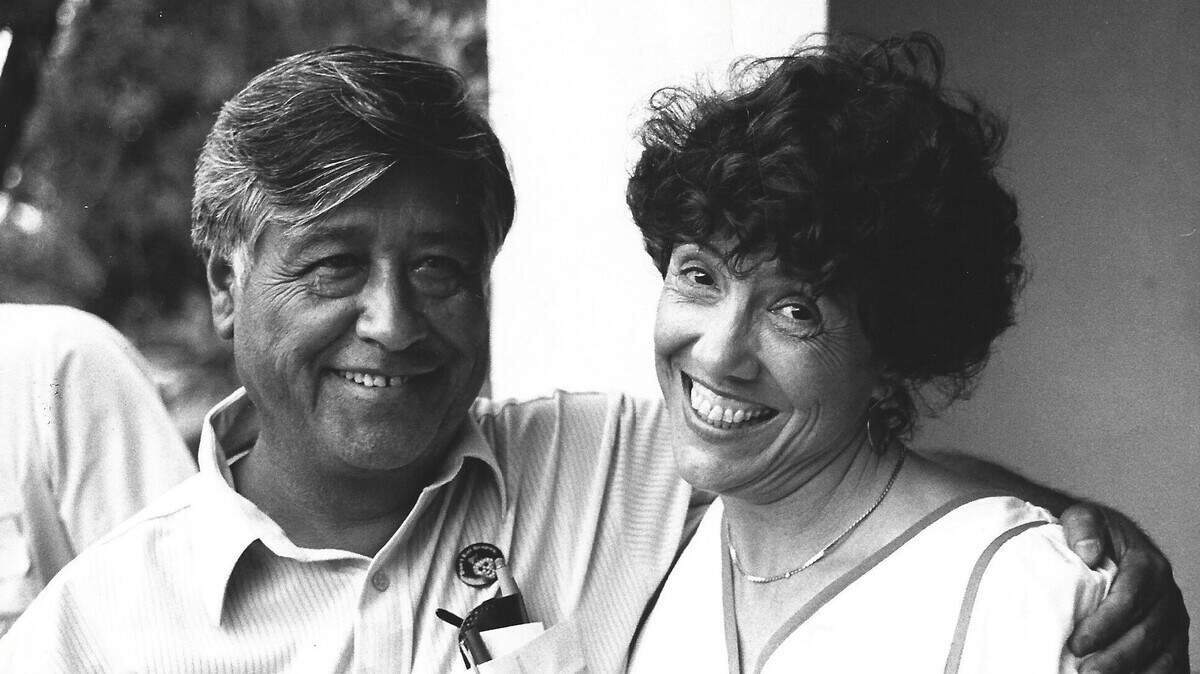
When Fort Worth activists asked Billie Reyna Dolenz to host at her home at 1410 Mistletoe Drive a reception/fund-raiser in September 1985 for United Farm Worker Union Director César Estrada Chávez, she gladly opened her doors. As a 15-year-old in her hometown of Peñitas, Texas, along the Texas-Mexico border, she remembered seeing an airplane spraying pesticides on the farm workers stooped in the produce fields owned by Othal Brand, mayor of McAllen and CEO of Griffin & Brand, a produce company. East Coast friends alerted her to the nationwide table grape boycott led by California-based labor organizer Chávez, who asked for political, financial, and spiritual support for the strike.
She recalled a supporter asking Chávez, who spoke on her veranda to a crowd in her front yard, if he feared assassination. He said he did not.
José Gonzales, while working for the Fort Worth Council of Churches, remembered sitting at Chávez’s bedside in 1972 after a day of meetings with local clergy and activists. During this visit, Gonzales and a local chapter of the Brown Berets acted as security for Chávez. Despite all the violent backlash and threats from farm grower goons and Teamster thugs, Chávez presented a calm, soft-spoken, intelligent persona that belied the militant power he wielded in the fight in the field.
Eva Bonilla met Chávez for the first time in 1972 at Gonzales’ office on the North Side, surrounded by Spanish-speaking Latino residents, stretching out of the house, eager to meet the labor champion. Her mother and grandparents had worked as migrant workers and had described the harsh field conditions. Raised in a family that valued and practiced caring for neighbors, she sensed her parents’ pride in Chávez’s religious devotion to non-violent protest. Bonilla was taken aback at how the small, Indian-featured man could rouse thousands internationally for the cause. Unsure of her Spanish fluency, she offered Chávez, weak from fasting, a cup of water.
Former State Rep. Lon Burnam had worked for the Texas United Farm Workers in 1983 on the border, leafleting Mexican day laborers. Feeling ambivalent and anxious as an Anglo running for political office in a majority Latino district, he shared his misgivings with Chávez when he visited Fort Worth. Chávez told him the color of his skin didn’t matter; what mattered was the color of his heart. Although Burnam had decided to run, Chávez’s affirmation boosted his resolve.
Burnam said: “His commitment to non-violence was strong because his commitment to Jesus Christ was strong ... Chávez helped the Latino community to define that ‘I am a man. I am deserving of respect and fair compensation.’”
His legacy continues. On Jan. 13, 2021, Fort Worth Mayor Betsy Price, city council member Carlos Flores, residents and activists celebrated the unveiling of the César Chávez/Dolores Huerta street toppers on 28th Street. Since 2000, Tarrant County government employees have observed a paid holiday in his honor. The Fort Worth Independent School District have commemorated César Chávez and Dolores Huerta since 2019 with a day of service on the last Monday in March. The César Chávez Committee of Tarrant County awards three $500 scholarships annually to high school essay contest winners.
Local educators and activists hope the young will capture from Chávez’s lifework the spirit to persevere in the face of seemingly overwhelming odds. In his words, “the people united will never be defeated.”