Billionaire developer has $250 million plan for Fort Worth’s Cultural District
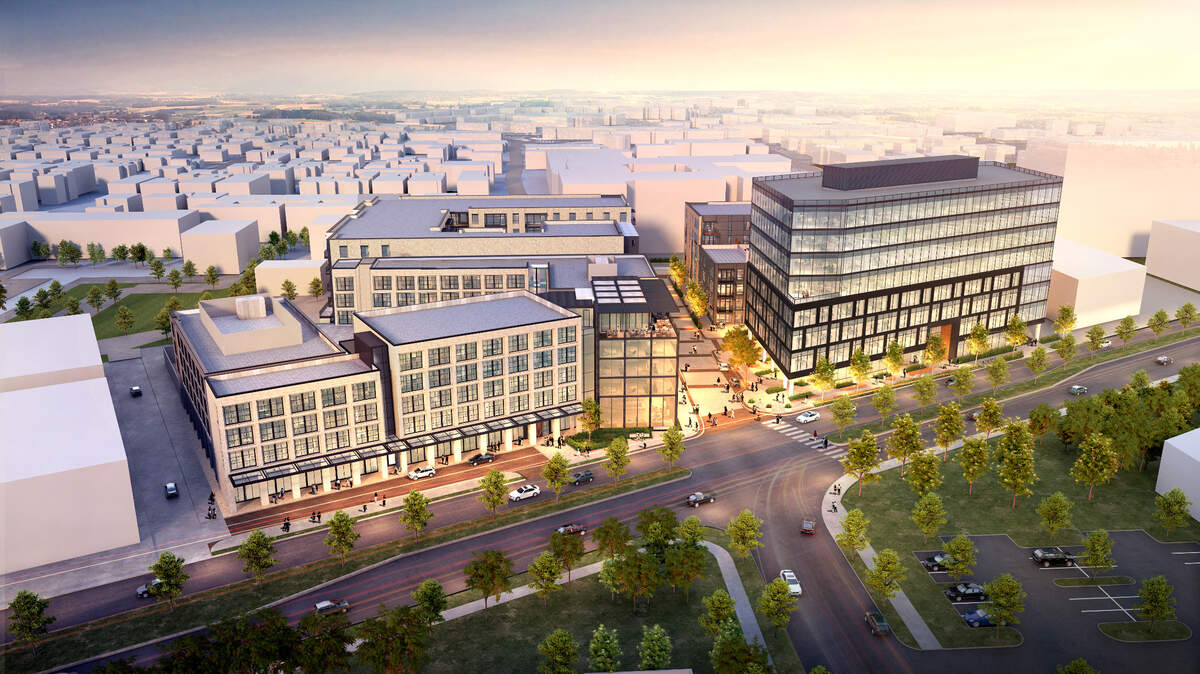
John Goff made his fortune in real estate and now he’s taking a bet on Fort Worth with a $250 million Cultural District development he hopes will become the city’s “living room.”
Goff, the billionaire who sold his Crescent Real Estate for $6.5 billion in 2007 just before the financial crash and then bought it back at a discount about 10 years later, plans to move all of his ventures to a high-end office and hotel development at Camp Bowie and Van Cliburn Way. The project could bring more than 700 employees and luxury living to the heart of Fort Worth’s Cultural District.
Though Goff has lived in Fort Worth since 1981 and is co-chair of Mayor Betsy Price’s Fort Worth Now economic recovery task force, he has spent most of his energy developing properties elsewhere, including Dallas where he owns the Ritz-Carlton and his Crescent Real Estate built and manages the 20-story McKinney & Olive office tower.
With an influx of young talent moving to Fort Worth, Goff said he’s confident in the city’s future.
“Look, I think it’s time,” Goff said. “The city’s growing, as we all know, quite rapidly, and I think that’s going to continue.”
Goff’s Cultural District venture is the third attempt in almost as many years to develop the two vacant lots at 3300 Camp Bowie Boulevard just across the street from the Kimbell Art Museum and the Modern Art Museum of Fort Worth.
Hotel Renovo, a 12-story concept from Illinois-based Heart of America Group drew considerable criticism because its height would alter views from inside the Kimbell’s famed courtyard. In early 2018, after the design was downsized to 10 stories, the City Council denied tax incentives for the project. A 21c Museum Hotels concept also planned for the site never got off the ground.
Goff said his vision will work chiefly because it doesn’t compete with the nearby museums.
The hotel, expected to cost more than $87 million and built directly across from the Kimbell, transitions from four to five stories in a way that protects sight lines from inside the museum, according to renderings. The eight story, $69.4 million office building across from the Modern Art Museum is positioned away from the Kimbell’s views. The buildings feature a modern design that does not aggressively stick out because Goff said he wanted to complement other Cultural District architecture.
As a friend of the late Van Cliburn, Goff said he also wanted to be mindful of the small street bearing the pianist’s name. Without going into specifics, he said he would like to work with the Van Cliburn Foundation on ways to use the street to better honor the musician, including closing it for events and designing a memorial.
Eric Lee, director of the Kimbell Art Museum, celebrated the concept saying it is “exactly the type of high quality project that is needed and that is right for the Cultural District.”
Lee said Goff worked closely with all three museums to ensure his development would not contrast with their unique architecture.
“I really have been so impressed with their approach to the project,” Lee said. “He has really been careful to develop a design that complements the neighbors and does not detract.”
That’s not to say the hotel, which has not been named, won’t stand out, Goff said. Thinking about the view of the hotel while traveling west on Camp Bowie, he said he envisions a brightly lit lobby that looks “like a jewel box” enticing people in for a drink or dinner.
“I really want it to be, in my mind, the living room of Fort Worth,” Goff said.
Denver-based OZ Architecture, a firm with a history of luxury hotels, high-end offices and urban living projects, did the exterior design. Lauren Rottet, an interior designer who has worked on numerous international hotels, completed the interior concept.
Construction is expected to start in June and should be done by the summer of 2023, Goff said.
He’s seeking financial incentives from the city, which he called “middle of the road.”
The City Council will vote March 2 on an agreement to purchase two parking garages from Crescent Real Estate for $25 million, Economic Development Director Robert Sturns said. The Fort Worth will lease use of the garages back to the developer for $800,000 per year and split the cost of parking revenue. Crescent will be responsible for maintenance and the city won’t act on the purchase until the development is finished and open, he said.
The 200-room boutique hotel features an 8,000-square-foot ballroom and a bar that opens on to a landscaped courtyard.
It will also bring a significant addition to Fort Worth’s culinary scene.
Dean Fearing, the creator of Fearing’s Restaurant in the Dallas Ritz-Carlton and author of The Texas Food Bible, will manage the restaurant, Goff said. The James Beard Award winning chef is likely to have some menu items from Dallas, Goff said, with a few additions.
“We want to create something that is unique to Fort Worth,” Goff said.
Unlike previous ideas, Goff’s plan also includes Class A office space. He will take up about a third of the 160,000- square-foot office building with his own companies: Crescent Real Estate, Goff Capital, Contango Oil & Gas and Canyon Ranch. The companies have about 140 employees altogether.
The remaining space would be prime for small companies, he said. If totally rented out, the building could support 425 workers. The hotel and a spa will likely have around 270 employees, according to an estimate Goff provided.
Ken Loose, an associate at VLK Architects and chairman of the Cultural District Alliance, said this kind of mixed use is the sort of development the district needs.
“A day time presence like that is absolutely critical to the viability of the district,” he said of the office space.
Goff is also hoping to add to the district’s permanent population with 175 luxury apartments in two buildings on either side of West Seventh and Van Cliburn. Those units will likely carry among the highest rents in the city, he said. The ground floor will have retail spaces, though Goff has not announced tenants. That portion of the project is expected to cost more than $78.8 million.
He hopes the development will lead to a more urban feel and an increase in activity along Camp Bowie.
“I would argue this is going to be a big shot in the arm,” Goff said.
This story was originally published February 23, 2021 at 6:00 AM.