As Fort Worth residents complain about water bills, these council members question rates
Editor’s Note: This story has been updated to clarify information about Councilman Dennis Shingleton’s water bill and to correct statistics regarding the number of bill inquiries the water department receives a year.
Several Fort Worth council members appeared unhappy Tuesday with the water department’s answer to why some residential customers saw soaring water bills after the installation of new water meters.
At least three council members — Carlos Flores, Kelly Allen Gray and Cary Moon — asked if the city should re-evaluate rates or communicate rate structures better in light of the higher bills.
High water bills have been a concern for many Fort Worth residents since late last year when some saw high bills despite believing they used less water. Councilman Jungus Jordan, who represents southwest Fort Worth, told the Star-Telegram earlier this month his office has heard from dozens of Fort Worth residents about water bills that have tripled or quadrupled since the new meters were installed.
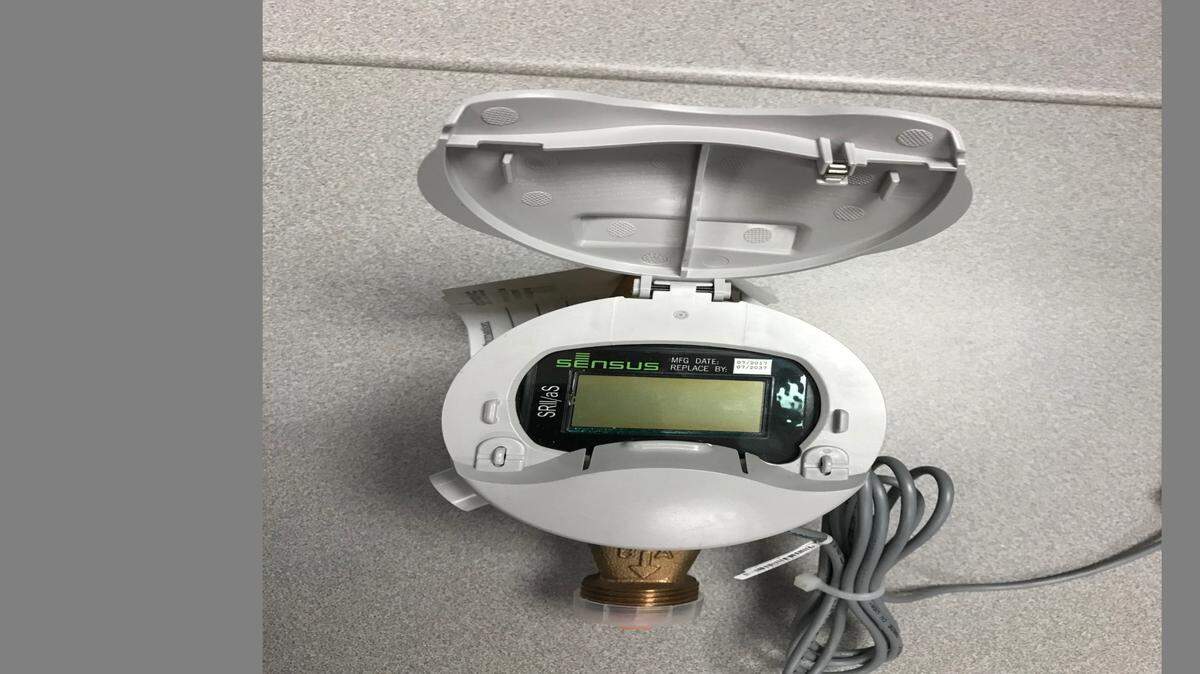
The city began installing digital water meters for residential customers in 2019, though the program started for commercial customers in 2016. Unlike older meters that require a manual reading, these meters are read remotely from a central location. The water department has said it will increase efficiency and help promote conservation. Upgrading the meters will cost about $73 million. About $58.9 million of that are the meters themselves and their installations.
Kara Shuror, the assistant director, said the water department would work with customers worried about high water bills and was taking steps to verify the accuracy of new meters.
“Our goal was to take these on one at a time, find out exactly what’s going on at any given property and work with our customers to get that bill back down,” she said.
There are a number of factors that could result in a high water bill, Shuror said. She gave the council a presentation on the new meters and water usage that mirrored what she told the Star-Telegram earlier this month.
Higher than expected water bills may be due to older meters that became faulty over time, under-reading water usage. Old meters are read once a month while new digital meters take a usage reading once an hour and send the data to the water department.
There are other factors that may lead to higher rates unrelated to the water meter, including leaks, Shuror said.
Water usage across the city did not decline dramatically in the fall of 2020 because the region received less than typical rainfall, Shuror said. Residential users also likely use more water if they’re working from home because of COVID-19. Irrigation issues, such as sprinklers that run too often or at night when the customer might not know, can also lead to high water bills, she said.
These answers did not seem to satisfy Jordan, who said he wanted the city to dig into the issue and find out what could be done to help ratepayers. He has requested an audit of the new meters.
“You’re giving me excuses, I want solutions,” he said.
Councilman Dennis Shingleton then chimed in to say his water bill had increased from about $140 a month to about $500.
“Give me a break,” he said when water staff told him his old meter may have been malfunctioning. Shingleton questioned how his water usage could be that far off.
After this story was published online, the water department said staff investigated Shingleton’s high bill and determined it was the result of human error the last time water usage was read on the old meter.
Shuror said the city is building a portal where water customers with a new meter can track their hourly water usage and receive notifications about high or constant water flow. The city this week began mailing notices to customers with constant water flow, which is a sign of a possible leak.
The water department is also looking for a third party to investigate both old and new meters to verify accuracy and determine how many old meters might have been under-reading, she said.
The city anticipated higher water usage with the new meters, between 3% to 5%, based on improved accuracy when the new ones were rolled out in 2016. So far the meters are picking up about a 4.3% increase, on average.
The city has installed roughly 140,000 meters on a system that has more than 270,000 customers. The city receives about 500,000 calls a year and conducts about 13,000 field investigations a year regarding high bills. About 2% of calls tracked through the city’s MyH2O are related to high water bills after a new meter is installed, the department said.
Higher bills and improved accuracy were a concern for council members who want the city to re-evaluate its rates. In 2020, the city raised water rates. Projections at the time indicated the average residential user would see a 4.4% increase on their water bill, about $30 a year.
Fort Worth water rates are tiered so those who use more water are charged more. A residential customer is charged $2.19 per 100 cubic foot for the first 600 cubic feet up to $4.73 for usage above 3,000 cubic feet of water. Those charges are in addition to monthly service fees. One hundred cubic feet of water is a little more than 748 gallons.
The tiered system has not been communicated well to customers who are likely using more water, either because they’re home more or because the new meter is more accurate, said Gray.
“The more water you use as a residential customer, the more this is going to charge you, which then means that most of our people who live on a fixed income can now not afford their water bills,” Gray said.
Moon wondered if the city could freeze or lower water rates based on updated usage forecasts.
“It seems like the thing to do is put a moratorium on rates,” he said.
Shuror said the tiers are set up to not encourage water usage, so tiers had to be more expensive based on greater usage. Those tiers could change, she said, but a number of factors are considered, including anticipated water usage based on weather forecasts and balancing commercial with residential usage.
Shuror said residents should call the department at 817-392-4477 if a water bill seems unusual. For customers who fix a leak, the city may be able to compensate up to 50% of the water bill. The department also launched an income-based relief program in October.
Daily, the water billing department evaluates about 400 bills for errors, she said.
During public comment during the City Council’s regular meeting Tuesday night, Laila Talley said she and 20 other residents want to opt out of the smart meter program. Her concern was not high water bills. Instead, she said, she was worried about possible health impacts from the radio signal the meters emit.
This story was originally published January 26, 2021 at 6:57 PM.