
102 years ago, this Fort Worth military bride died in the first wave of Spanish flu
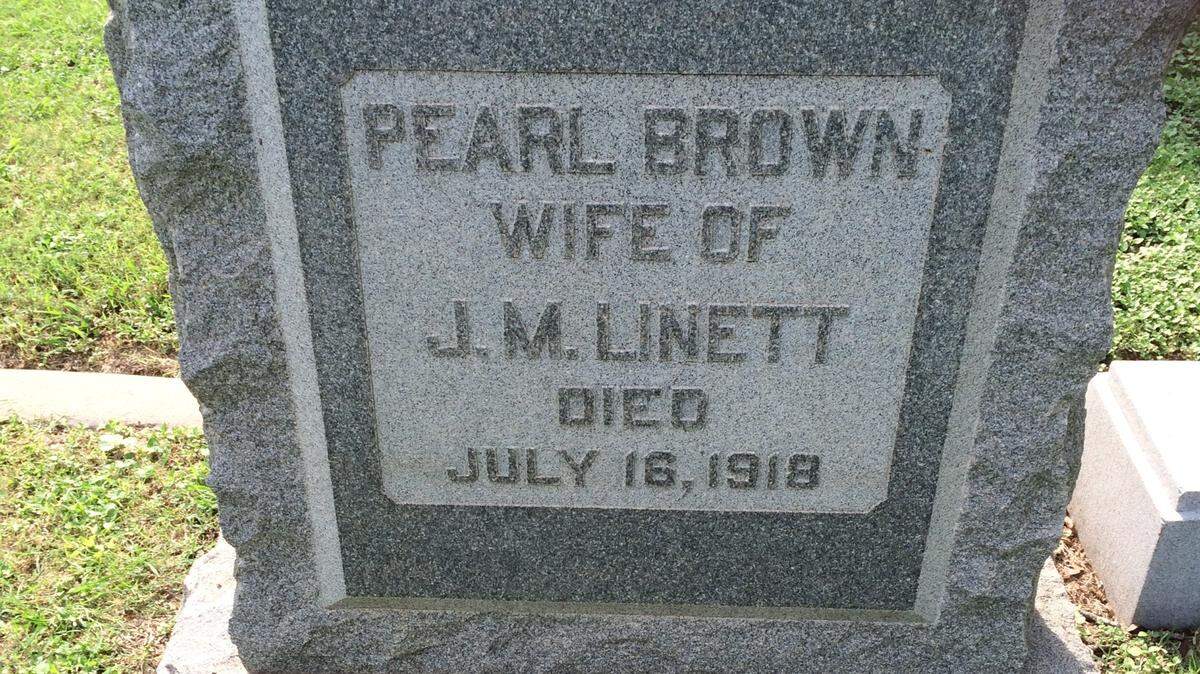
Pearl Brown’s marriage to Lt. Joseph M. Linett lasted less than three months. On July 16, 1918, four days after the soldier left Camp Bowie and boarded a troop ship for Europe, his bride died — a victim of the first wave of the Spanish flu.
That pandemic a century ago took more than 50 million lives worldwide, nearly 700,000 in the United States, including an estimated 2,000 in Texas. The deadliest outbreaks were at military training camps like Camp Bowie, the installation in West Fort Worth where the Red Cross tried to combat the flu by disinfecting soldiers with chlorazene spray.
Pearl’s obituary described her passing as “one of the most tragic deaths.” According to the Texas Jewish Herald of July 25, 1918, “A bride of only a few months, grief and worry of the departure of her husband . . . contributed to her death.”
How long it took for news of Pearl’s death to reach her husband, an Army physician with the 82nd Division, is unknown. A century ago, ship-to-shore radio — called “wireless” — was in its infancy. Telegraph messages, sent with the Morse code’s dots and dashes, were more common.
The groom, a 29-year-old Ukrainian immigrant, had come to the United States at age 18, received a medical degree at New York’s Columbia University and been assigned to the Army Medical Corps. His Fort Worth bride was 24, the daughter of an ice manufacturer.
The couple most likely met at a social for soldiers at the Hebrew Institute downtown on Taylor Street. Their courtship was a whirlwind. During wartime romance flourishes.
The couple married April 21, 1918, in a ceremony in her family’s home at 202 W. Broadway Ave. The wedding write-up in the Star-Telegram reported that the bride’s three-story house was decorated with “military suggestions” of red, white, and blue. Officiating at the double-ring ceremony was Rabbi G. George Fox of Beth-El Congregation, where the bride’s father was a founder and a past president. Maid of honor was the bride’s sister Ida, a kindergarten teacher.
Although none of the soldier’s New York relatives attended, the bride’s extended family did. Among her kin were the Carb family, real estate appraisers for whom a street in Westworth Village is named, and the Simon family, namesake of Simondale Drive in Colonial Hills.
Following a reception, the newlyweds boarded a train for a three-day honeymoon, which was all the time the Army would grant him leave. Then he moved in with his in-laws.
Two months later the first lieutenant received orders for the front in France.
The day he departed, Pearl wept so much and so long that her family thought sadness, not sickness, was overtaking her. Chills and fever followed her tears. As her condition deteriorated, she was hospitalized at a local sanatorium, where she died within two days. Pearl Brown Linett was buried at Emanuel Hebrew Rest, the pioneer Jewish cemetery in the 1400 block of South Main Street. The same rabbi who married her buried her.
When the war ended Nov. 11, 1918, Lt. Linett had no reason to hurry back to the States. He opted for an extended stay in Europe. With a detachment of 200 American soldiers, he enrolled in medical classes at Aix de Marseille. When he returned Stateside in August of 1919, he visited his still-grieving in-laws, David and Sarah Simon Brown. According to an article in the Texas Jewish Monitor, “Dr. Linett expects to return to Ft. Worth as soon as he has been demobilized (at Camp Travis in San Antonio) and will take up the practice of medicine.”
The newspaper’s expectation that the veteran would open a practice in the city did not materialize. Instead, he returned to New York, married in 1920, raised two children, practiced medicine in Brooklyn, and died in 1960 at age 72. Linett’s New York marriage certificate describes him as “single,” rather than widowed.
But two of his grandsons had heard whispers about Grandpa Joe’s first marriage to a girl in Fort Worth who died during the pandemic. They dug into their grandfather’s past and located the marriage certificate at the Tarrant County Courthouse. Six years ago, they contacted Beth-El Congregation, were referred to the Temple archives and reconstructed the story of their grandfather’s sweet but sad romance.
In 2017, during the World War I centennial, the late Dr. Julian Haber, a pediatrician and author, included a chapter about the lieutenant in his book, “The Yanks are Coming, Over There, Over There: The Stories of Fort Worth Jewish American Soldiers from World War I.” The chapter focuses on the groom, his background and his service during the war.
The current COVID-19 pandemic calls to mind the poignant story of the bride whose tombstone at Emanuel Hebrew Rest identifies her simply as “Pearl Brown, Wife of J.M. Linett, Died July 16, 1918.” It gives no hint of the tragic tale behind her death.
Hollace Ava Weiner, a former Star-Telegram reporter, is an author, archivist and director of the Fort Worth Jewish Archives.