Arrest records could haunt Fort Worth protesters even after dismissal of riot charges
Arrest records are created for those suspected of committing even minor offenses.
An arrest record can block employment opportunities for those seeking certain occupations, create barriers to obtaining education funding, stop a person from getting certain state certifications or licenses, or even prevent an accused person from living where they choose, according to Chrystal Gayden, a Fort Worth attorney.
Fort Worth police have declined to pursue charges for those arrested on suspicion of inciting or participating in a riot after a protest last month on the 7th Street Bridge. But even though they won’t be prosecuted, unless cleared their arrest records will follow them for the rest of their lives, attorneys say.
A rioting arrest record can cast a long shadow for those seeking a job or other opportunities, Gayden said.
“They see that and it may be something they don’t want to deal with,” Gayden said. “Explaining away a rioting charge is something that may have a negative impact.”
Police said last week that 47 people had been arrested on rioting-related charges since Black Lives Matter protests began in Fort Worth in May. After the arrests, in most cases, police decided not to pursue the charges.
According to the Tarrant County District Attorney’s Office, four cases have been filed by police for arrests related to protests, including cases of interference with public duties, obstruction of a highway, and evading arrest. One man faces charges of burglary of a building, evading arrest and detention, and failure to identify stemming from a June 2 arrest in Arlington. That suspect, the only person of the four who has been indicted, is accused of entering a building while it was closed with the intent to commit theft, according to Tarrant County records.
Albert Roberts, a Fort Worth attorney who helped gain release and organize legal representation for many of the protesters, said he is still awaiting documentation indicating that the people he is representing actually did anything wrong.
“I don’t know how the prosecution would meet the definition of starting a riot,” Roberts said. “We cannot have these mass arrests because of one or two bad actors. Some people said they were arrested while they were handing out water. I’m at a loss for words for a lot of it.”
Lawyers representing protesters arrested for rioting are beginning to work on getting those arrest records cleared through the expunction process, Roberts said. But police, the prosecutor’s office, the Tarrant County Sheriff’s Office and the Texas Department of Public Safety all retain these records and must be involved in any negotiations to erase those records, Roberts said.
Typically, a waiting period that may be as long as two years must elapse before the expunction process can begin in earnest for this category of arrest, Roberts said. Attorneys are involved in an effort to get agencies to waive or shorten those waiting periods, but all the parties involved have to agree, Roberts said.
“We’re talking years to get this rectified,” Roberts said. “You have to fit in a narrow category to get these records cleared and without some help, these people will not fit.”
Arrests cleared through typical expunctions are removed from the record, and Texas imposes a legal penalty for the disclosure of that information, according to the State Bar of Texas. If an expunction order cannot be obtained, Texas allows some people to receive a nondisclosure order that seals the records from the view of certain organizations and agencies.
Expungement proceedings are handled by the defense attorneys. The office encourages anyone trying to have their arrest record scrubbed to seek out the assistance of an attorney or reach out to volunteer attorneys, some who work with the Tarrant County District Attorney’s Office, with their partner at the L. Clifford Davis Legal Association, said Samantha Jordan, Tarrant County District Attorney’s Office spokeswoman.
The Clifford Davis Legal Association holds periodic expunction clinics where legal assistance can be obtained at a reduced price, Jordan said.
“We agree an arrest record can be debilitating,” Jordan said. “We worked with the Legislature in 2017 to pass laws to ease the expunction process, and with our County Commissioners to waive expunction fees. Our assistant district attorneys volunteer their time at the expunction clinics we offer in partnership with the L. Clifford Davis Legal Association.
“As prosecutors, however, we not permitted to give legal counsel to private citizens. Texas law outlines a specific process petitioners must follow to obtain expunctions, in which documents are filed by outside counsel. We stand ready to review the expunction petitions of these individuals once they are filed on their behalf.”
‘Why did you arrest us in the first place?’
Police departments in Texas have no legal mechanism to wipe an arrest from a person’s record, Gayden said.
Riot arrests in Texas are typically filed as Class B misdemeanors punishable by a maximum $2,000 fine and up to six months in jail.
Jonathan and Nathalie Serna, a brother and sister who were arrested on May 31, and who each faced a participation in a riot charge, say they suffered injuries when they were apprehended and worried about getting sick with the coronavirus when they were both jailed for a day or more.
Nathalie Serna, 18, of Fort Worth, says she no longer expects the police department to file a rioting charge against her, nor does she expect to file a civil suit against the city related to the arrest.
If an arrest remains on her record, she may change her mind about taking civil action, Nathalie Serna said.
“I don’t want this mistake on the part of police to jeopardize my future because of something I didn’t do,” she said. “I don’t understand why I was arrested in the first place.”
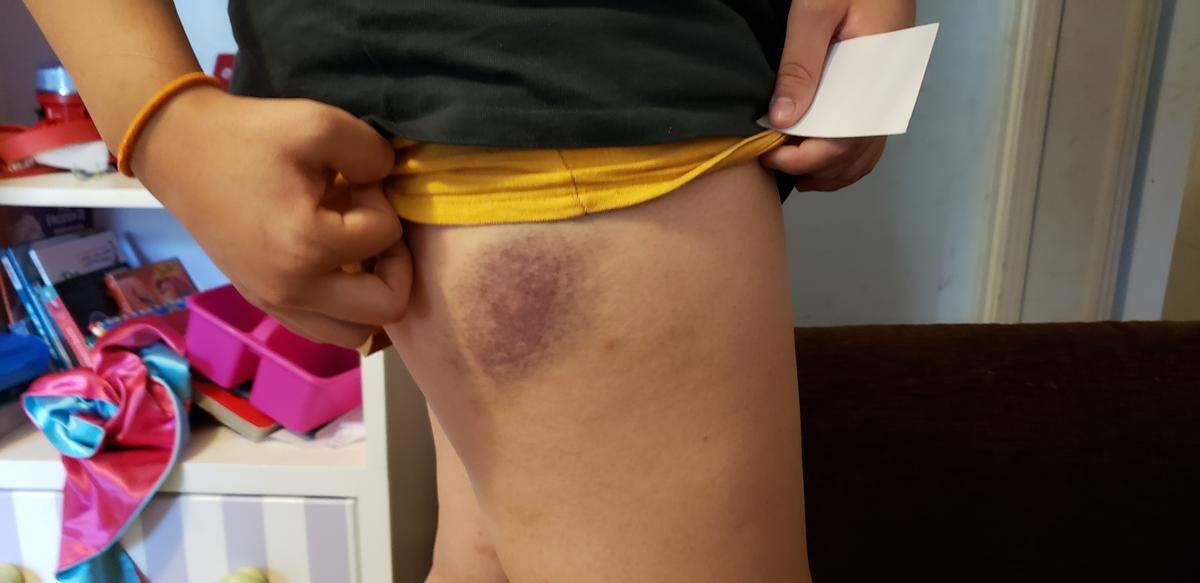
A Fort Worth police video of the arrest does show officers taking the brother and sister to the ground, but it does not show either of the two being struck by officers as they have said.
An officer can be heard in the video telling Jonathan Serna to stop resisting. One officer asked Jonathan Serna why was he resisting if he was not involved in the protest. Jonathan Serna tells the officer he ran because he was afraid and that he is not protesting.
An officer replies that Jonathan Serna should “follow directions.” Some of the audio is silent on the video, but officers have the discretion of turning off the audio on their recording devices in certain circumstances, according to police.
Police said the arrest records for the Sernas will eventually indicate that the charges against them were dismissed.
The Sernas argue that they were not rioting and were not on the 7th Street Bridge when police began arresting people.
The Sernas said they were on the bridge when the protest started but left when it looked as though the police might become more aggressive. Police have said they blocked protesters from crossing into the West 7th District because they were concerned about potential vandalism. Officers eventually used tear gas, flash-bangs and smoke bombs to disperse the crowd from the bridge after they said some protesters threw bottles.
Jonathan Serna, 25, of Fort Worth, said he and his sister got separated walking to their car where it was parked downtown, but reconnected later on.
They could not get back down the bridge on 7th Street, so they walked to the Lancaster Avenue bridge and headed downtown from there, the Sernas said.
They were walking with a group of people when they saw police pull up and get out out of their car. The Sernas said when they saw police running toward them they also started running.
Jonathan Serna said he tripped, and then either fell or was tackled.
‘I thought I was going to get shot’
Nathalie Serna said she was running ahead of her brother when she turned around because she heard him yell.
“There were two or three officers on top of him,” she said. “My initial thought was that I’m seeing my brother get beat up and he wasn’t doing anything wrong. I went toward him and tried to push them off of him. The cops grabbed me by my hair, my head, my neck and my initial thought was, ‘I’m going to get shot.’ ”
Nathalie Serna says she is 5 feet, 2 inches tall and there were two police officers wrestling her to the ground. There was a lot of yelling and screaming and one officer had both his knees in her back. It was difficult to see what was happening while her face was being forced to the ground, Nathalie Serna said.
“It’s like they wanted this to happen,” she said.
The Sernas said they were each given surgical masks before they were taken to jail. Nathalie Serna said she was able to hide a mask and wear two masks while she was detained. The mask that was provided to her by jail officials had to last at least a day, Nathalie Serna said.
“The jail is very cold, very unsanitary,” Nathalia Serna said. “There is spit everywhere.”
Generally speaking, most of those arrested by Fort Worth police were housed in the Tarrant County Jail for less than 24 hours after they were medically screened and given a mask, said Lt. Jennifer Gabbert, Tarrant County Sheriff’s Office spokeswoman.
Many of the arrestees who were in a large crowd together could have been housed together to prevent possible spread of COVID-19, according to Gabbert.
According to figures released by the Tarrant County Sheriff’s Office on June 15, 16 inmates who tested positive for COVID-19 were being treated by medical staff while in quarantine, while 132 inmates have been designated recovered.
Employees recorded 12 members of the jail staff positive for COVID-19, with one inmate death attributable to the coronavirus, jail records showed.
The jail’s state certification was suspended for six days recently due to an inmate’s suicide. An investigation by the Texas Rangers cleared the department of any wrongdoing concerning the inmate suicide. A separate investigation into an inmate who gave birth cleared the department of any wrongdoing in that incident.
Assurances from the Tarrant County Sheriff’s Office that employees are taking extraordinary sanitation measures have not stopped complaints from inmates and others who have said jail conditions and architectural limitations make disease spread at Tarrant County facilities unavoidable.
The Sernas say they were each in jail for about a day. Jonathan Serna said he was put in the same area with 19 other people, but that he was more concerned with infecting someone else with coronavirus than getting it himself.
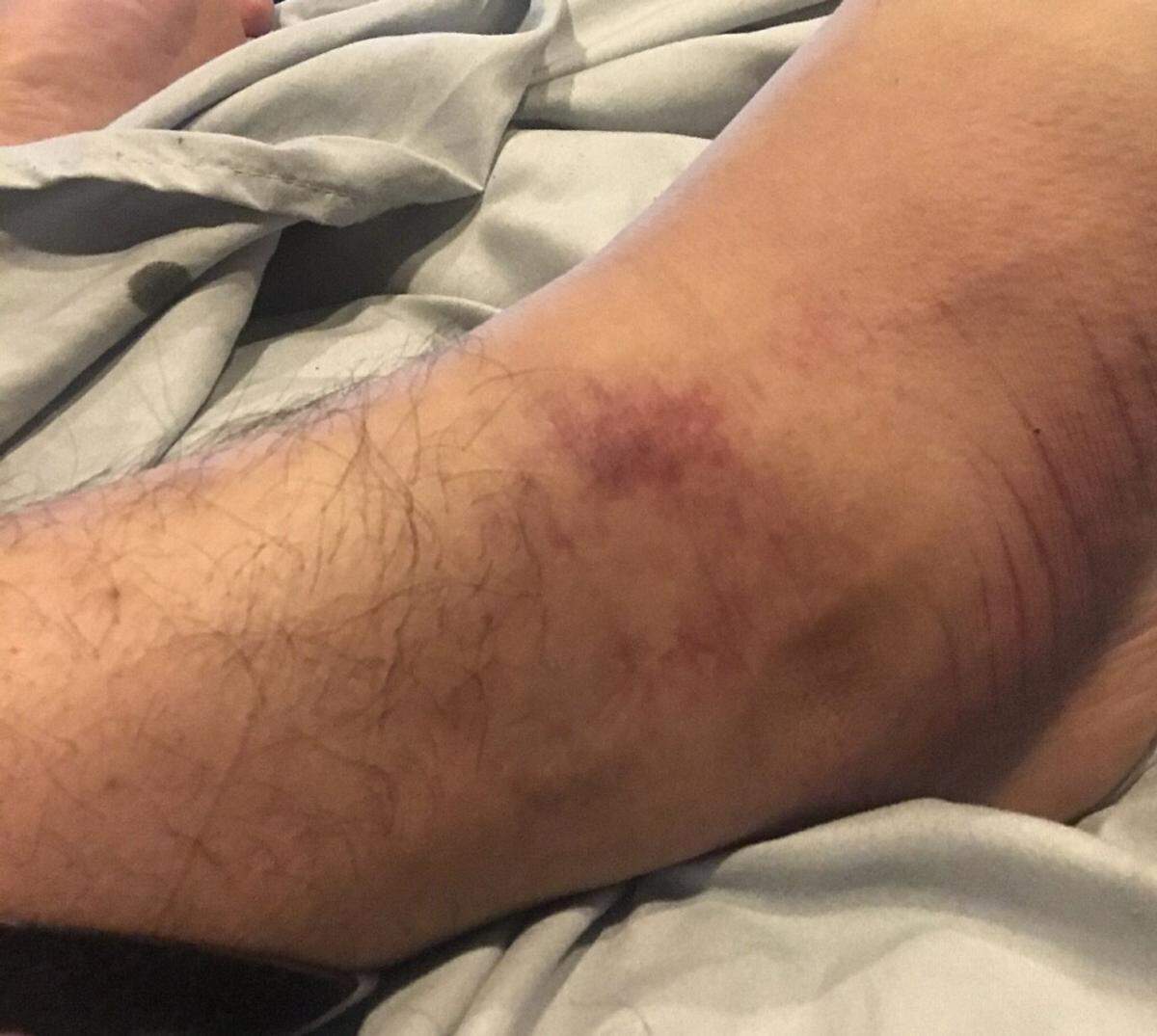
“We drank from a water fountain that was attached to the toilet,” Jonathan Serna said. “They just basically strip you of all your human rights. They lock you in a cage like you are in a zoo.”
Jonathan Serna said he went to the protest in downtown Fort Worth on June 2 hours after his release from jail, but left at 7:30 p.m. because he did not want to be arrested again for a curfew violation. There was a nurse at the protest sobbing uncontrollably who he recognized from jail, Jonathan Serna said.
“I wanted to protest the injustice,” Jonathan Serna said. “I was angry and frustrated and wanted to do something about it.”
This story was originally published June 22, 2020 at 6:00 AM.