Fort Worth black professionals vow to be more vocal in this new civil rights movement
America needs to see us, said Keon Anderson, president of the alumni chapter of the Fort Worth Kappa Alpha Psi fraternity.
Anderson, a Fort Worth dentist, spoke to the group of African-American professionals and fraternity brothers who bowed their heads for nearly nine minutes at Tuesday’s Rally for Change to show their solidarity with the George Floyd family and protesters across the country.
The moments of silence mirrored the time a Minneapolis police officer’s knee shut down the flow of oxygen to Floyd’s brain before he died. Floyd’s death represents an inflection point in history, Anderson said.
“We wanted to show the community that we are more than what you see on television,” he said.
Those gathered in front of Anderson were doctors, lawyers, police officers, businessmen and others. There were so many stories shared Tuesday about police officers abusing their power that some could not articulate their pain.
“A bad experience with a police officer never goes away,” said Herbert Young, a 40-year-old investigator. “I go through it with my children. I try to give them insight on how to prepare for their encounters with police.”
They lamented those who have been lost to them or estranged by distance because of reputations certain cities have and what they allow within their borders.
Many talented black people leave Fort Worth as it exports them to other cities, local attorney Nathaniel Washington said at the rally.
“I have a sister who tells my mom she’s never coming back to Fort Worth,” Washington said. “She is a nurse at one of the biggest hospitals in Dallas. I see her on holidays. If you are white, if you went to TCU, you stay. It’s heaven for you here.”
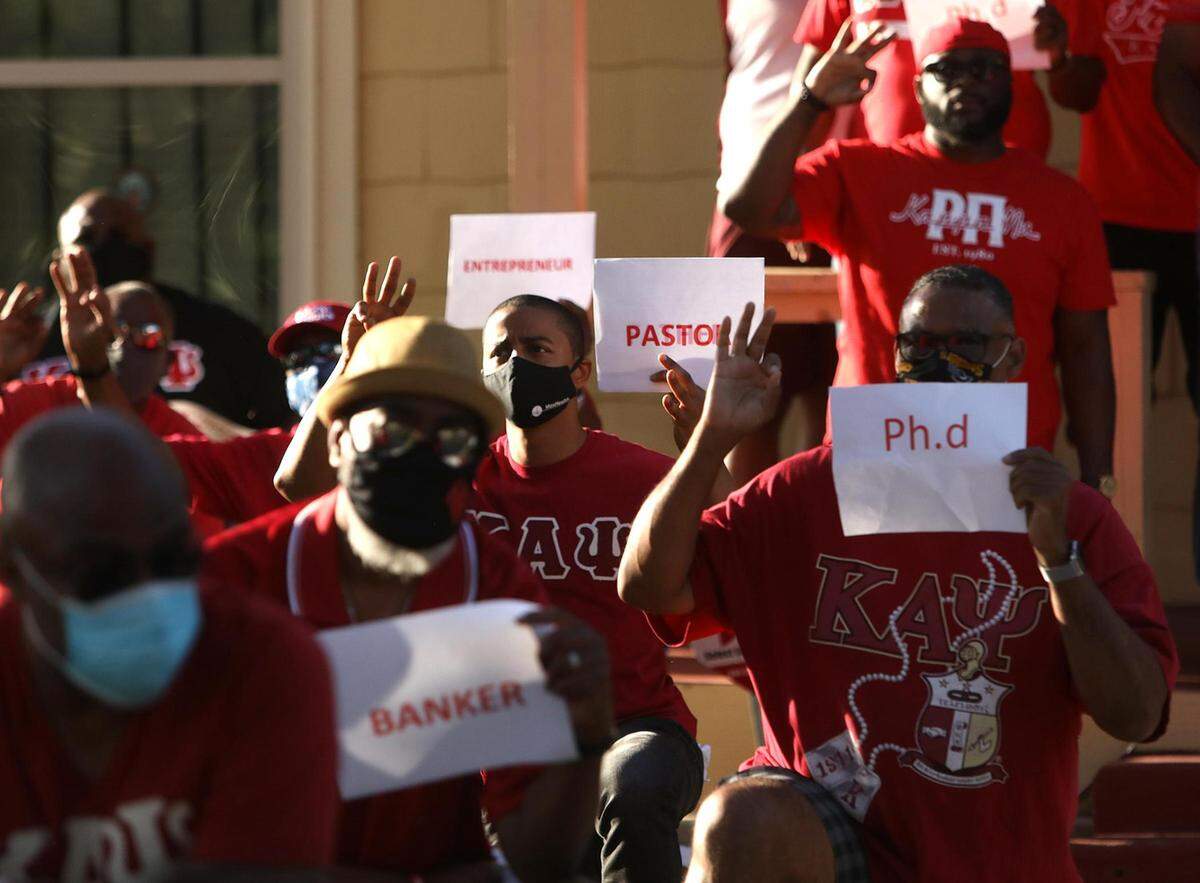
Tuesday’s rally, held outside the group’s Achievement Center on East Terrell Avenue, was to show the world a strata of the black population that many do not think of when they consider those who have been on the receiving end of police abuse, Washington said.
Many of the images of black men seen by the at-large population come from police, Hollywood or the courts, he said. It’s not a true representation of a black experience but instead creates a perception that colors all interactions, he said.
“I live in a community of $1 million and $2 million houses and I can’t let my children out of my eyesight,” Washington said.
Kyland Dobbins, 44, Harvest United Methodist Church pastor, said he had his first bad experience with police when he was 13. His crime was jumping over a terminal turnstile to try to catch a subway in San Francisco. He was with his parents and they had paid for his ticket, but the turnstile mechanism malfunctioned, according to Dobbins.
“In five seconds or less this cop just hemmed me up in a way that nearly broke my arm,” Dobbins said. “He put me in a chokehold, he put my face and my body up against the wall.”
Dobbins said that police encounter left a bad taste in his mouth. But other, better officers, have balanced out that experience, he added.
Dobbins asked how many at the rally had a negative experience about a police encounter and everyone, about 70 men, raised their hands. The community must shift the conversation, he said. The community at large is learning about the life experiences of black men, but while doing so people must also confront their attitudes, Dobbins explained.
“We know what the problem is. We know what our plight is,” he said. “Help white people shift the conversation to them, and their whiteness. That’s really where the situation and the issues lie.”
This story was originally published June 10, 2020 at 5:30 AM.