
Long-time Fort Worth folks may think Reddy Kilowatt was a hometown character. He wasn’t
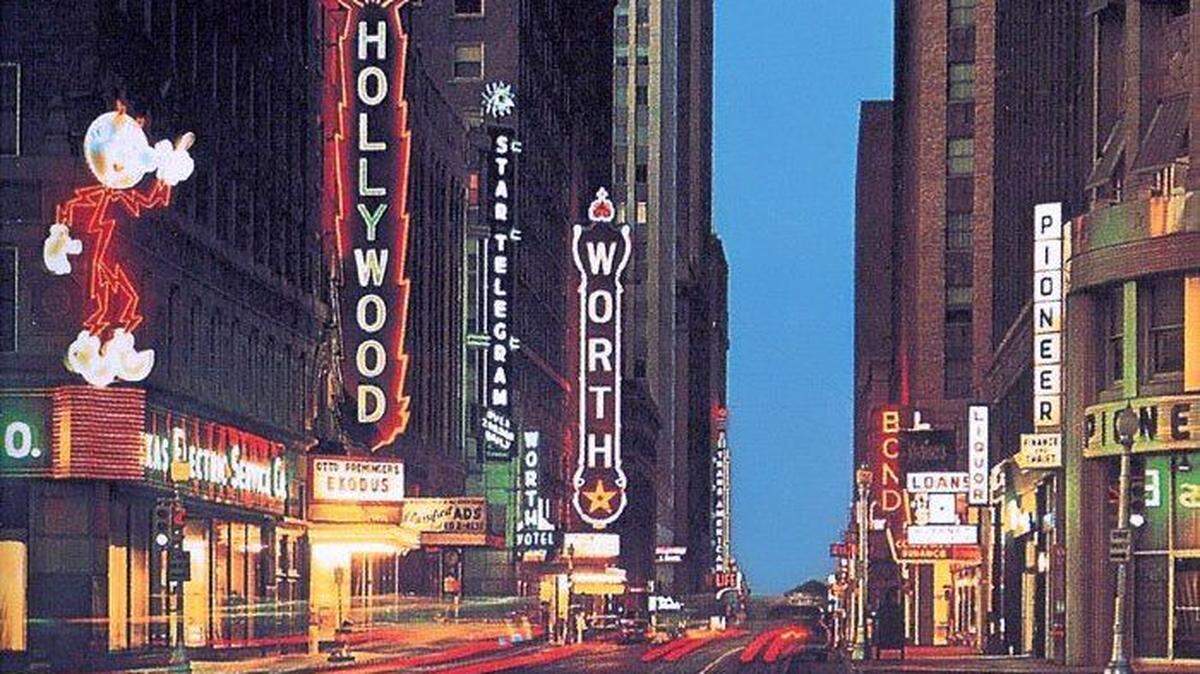
If you lived in Fort Worth 50 or so years ago, perhaps you assumed that he was one of our own, a Cowtown kid who rose to celebrity, like Fess Parker or Bill Paxton.
After all, he seemed to be everywhere:
We saw him nightly on WBAP-TV’s Texas News, sponsored by Texas Electric Service Co.
(“I can cook your meals, turn the fact’ry wheels.
“I wash and dry your clothes, play your radios.”)
We saw him standing like a benign colossus at the Handley power plant and on a smokestack of the power plant on North Main Street.
We saw him on the side of the Electric Building, standing at the gateway to Show Row like an usher who was his own flashlight.
We saw his name and likeness on a B-58 Hustler made at the bomber plant.
Yes, Reddy Kilowatt was one of us, a native son.
But if 50 or so years ago you lived in Pennsylvania or Missouri or Ohio, you, too, may have assumed that Reddy was a native son.
But only one place could call Reddy Kilowatt a “native son:”
Sweet ohm Alabama.
Reddy Kilowatt made his public debut in 1926 in the Birmingham News. He was the brain child of Ashton B. Collins, manager of Alabama Power Co., created to promote, 1. the electrification of rural America, 2. the consumption of electricity and 3. the use of electric appliances.
The original Reddy Kilowatt was not the lovable character we remember. The original Reddy looked like an alien from outer space: bolts of lightning for arms (five of them) and legs and antennae, a light bulb for a nose, pointy-toed boots. His body language was downright menacing.
In 1934, Collins began to license Reddy Kilowatt to other electric companies. Reddy hired on at TESCO in 1937. In Star-Telegram ads, he urged consumers to plug in, switch on, and power up: “The more work I do . . . the cheaper I work.”
Indeed, after World War II consumers began to use more electricity and more electric appliances. And the cost of electricity began to fall.
By 1946, Reddy had evolved to the human-like corporate spokesbolt we remember. He had lost three arms and had grown wall-socket ears. His eyes and smile were more expressive, inspired by the cute characters people saw in cartoons at the movies.
By the end of the 1960s, about 300 electric companies licensed the Reddy Kilowatt trademark. Reddy even got a passport and went overseas: Africa, Asia, Australia, Spain (where he was “Don Kilovatio”).
But the year 1973 brought a shock to his system. The oil crisis began when the Organization of Petroleum Exporting Countries declared an embargo. Gone were the days of cheap electricity. To many people, Reddy Kilowatt became a symbol of corporate greed and conspicuous consumption. Electric companies began to abandon him.
In 1982, TESCO put Reddy on probation. Within two years the Human Resources Department put him out onto the sidewalk of West Seventh Street.
In 2000, the energy company that owned the trademark stopped licensing Reddy Kilowatt.
Reddy went to advertising heaven, where no doubt he’s “always there with lots of power to spare” for Ipana’s Bucky Beaver, Alka-Seltzer’s Speedy and Nestle’s Farfel the Dog.
Mike Nichols blogs about Fort Worth history at www.hometownbyhandlebar.com.
This story was originally published June 13, 2020 at 8:00 AM.