Jury clears two Fort Worth police officers in lawsuit alleging excessive force
A jury in a federal lawsuit decided that no damages would be recovered by a family who accused two Fort Worth police officers of using excessive force during a fatal drug raid.
The jury began deliberating late Wednesday morning in a civil trial about the death of Jermaine Darden, a 34-year-old auto mechanic and father of two sons, and returned with a decision in less than 30 minutes, according to attorneys.
The trial began Monday in senior U.S. District Judge John McBryde’s court.
Kenneth East, the attorney representing Fort Worth police officer W. F. Snow, said jurors answered the first of 17 questions that were included in the jury instructions and did not have to consider anything else.
“My client is relieved,” East said. “There is no celebration, just relief.”
The officers conducting the May 16, 2013, raid did not know and could not have known details about Darden’s fragile medical condition, East told the jury during his closing arguments.
“This officer served as the point man in one of the most dangerous jobs that an officer can do,” East said. “On most people a Taser works. But Darden immediately pushed back up. The officer thought he was resisting.”
After a second Taser deployment, Darden remained non-compliant, and Snow was unaware of the extent of his underlying medical condition, East said.
“He (Darden) died from a severe underlying coronary disease and his own struggle,” East said.
Dee Lee Thomas, the attorney for Javier Romero, the other police officer named as a party in the lawsuit, said his client is also relieved by the jury’s decision. Thomas said he was relieved that the jury returned with a decision so quickly. The jury exonerated Romero’s actions and found no excessive force was used, Thomas said.
“Unfortunately, Mr. Darden died from a heart attack,” Thomas said. “Fort Worth has a very credible and competent police force and this verdict shows that.”
In closing his argument, Matt Kita, one of the attorneys representing the Darden family, said the most important question the jury had to answer was whether the force used to subdue Darden was unreasonable from the perspective of a reasonable police officer.
“This is not about whether you support our men in blue,” Kita said. The case was about “whether Jermaine’s death would have occurred were it not for the actions of these officers,” he said.
Daryl Washington, the lead attorney representing the Darden family, said he plans to appeal the case to the 5th Circuit Court of Appeals in New Orleans. The evidence, in his opinion, is overwhelmingly in favor of the family’s assertions, Washington said.
The jury returned with a decision in minutes, and Washington has never seen a jury reach a decision that quickly, he said.
Washington said he believes and hopes that although the officers responsible for Darden’s death were not held accountable, the trial will have an effect on other officers and stop them from taking other lives unnecessarily.
“Sadly, Jermaine Darden was killed in his own home,” Washington said. “If the Fort Worth Police Department would have taken the responsibility to properly train its officers, perhaps Atatiana Jefferson would still be alive today. The Constitution should protect everyone, regardless of race, sex, religion, position or their economic status in life.”
Jefferson was shot by a police officer in her own home after her neighbor called 911, concerned that her door was open at an early morning hour. Aaron Dean, the officer who shot Jefferson in October 2019, resigned and has been indicted on a murder charge.
.jpg "Atantiana Jefferson (b).jpg")
Officers say they followed training
The two police officers who were the focus of the trial testified Tuesday that they only did what they were trained to do.
Snow said when he first saw Darden, his hands were raised, but he did not interpret that action as an attempt to surrender.
“I told him to get down,” Snow said. “He did not follow instructions.”
Darden was a big man, sitting down on a couch when Snow entered after police officers from a Fort Worth Zero Tolerance Unit forced their way into the residence with a battering ram. Darden weighed approximately 340 pounds, while Snow is closer to 160 pounds.
Snow said he tried to pull Darden off the couch, but only ended up ripping his shirt.
“I was able to get him on the ground for a second, but he got back up,” Snow said.
Other officers came to help during the struggle, but their efforts were ineffective, according to the testimony of police officers. Someone suggested that a Taser be deployed to subdue Darden, and he was shocked twice, but that also was ineffective, Snow said.
“Darden resisted until the moment he was handcuffed,” Snow said. “After the Taser was deployed, I did not lay a hand on Darden.”
Snow said that he had used the tactics used in the drug raid before but had never seen anyone die after their application. Other people in the house yelled that Darden had asthma and could not breathe, according to witness testimony. Other occupants of the Southeast Fort Worth residence fell to the ground when ordered to do so by police, witnesses said.
Snow said he heard other officers yell at Darden to get down, stop moving and stop fighting. Snow said his immediate priority was getting Darden to put his hands behind his back so he could be handcuffed.
“I believe he told me that he could not breathe,” Snow said.
Washington asked if police shocked Darden a second time after he said he could not breathe and if Snow agreed that there was a difference between panicking because you cannot breathe and resisting.
Snow answered yes to each question.
“I was still trying to focus on getting him into custody,” Snow said. “I wasn’t ignoring him.”
Washington also asked about police policy that calls for the use of extreme caution when handcuffing obese individuals while they are on their stomachs with their hands pinned behind their backs. Police witnesses testified they were trying out zip-tie plastic handcuffs, referred to as flex cuffs, that did not work on Darden.
Eventually, police said, they used two sets of metal handcuffs on Darden, because they could not get the zip ties to reach across Darden’s back.
Snow said he was aware of policy recommending caution when handcuffing large individuals because that can cause breathing issues, but said the policy only instructs officers not to leave suspects in that position for long periods of time.
Officer Javier Romero, who had been on the Zero Tolerance Unit for about a month before the raid, said he was stationed on the perimeter, watching Snow struggle with Darden for about 30 seconds before coming to help.
“I struck him on the left side of the face to distract him and get him handcuffed,” Romero said. “I heard someone shout Taser and backed off. If we are touching the person, we could get some current. He went down for a split second and then he popped back up.”
Romero said officers had no knowledge of Darden’s medical fragility prior to the raid.
“I heard people say he had asthma but I didn’t do anything about that,” Romero said.
Romero testified that his net worth, including his household, is about $55,000 and added that the city of Fort Worth is not helping him with any of the trial expenses.
Darden never tried to hit anyone, and a weapon was never recovered from the house, Romero said. Romero said he punched Darden and placed his knee on Darden’s back. Attorneys for the family have argued that Darden was punched, kicked in the head, shocked and choked prior to his death.
But police witnesses who participated in the raid, including Snow and Romero, testified they never saw anyone kick Darden in the head.
“I was just trying to get him under control by the safest means possible,” Romero said. “I don’t think it’s reasonable to kick someone in the face in this situation.”
What killed Jermaine Darden?
Darden died of natural causes, with sudden cardiac death associated with high blood pressure and application of restraints, according to the Tarrant County Medical Examiner’s Office.
Washington asked how the medical examiner’s office arrived at the conclusion that Darden died from natural causes after allegedly being kicked, beaten and shocked twice by a Taser.
“Could these trigger a sudden cardiac arrest?” Washington asked.
“Certainly,” said Tasha Greenberg, deputy medical examiner with the Tarrant County Medical Examiner’s Office. “We haven’t had that many in-custody deaths.”
None of the injuries Darden received caused any brain damage, Greenberg said in response to a question from East.
But Greenberg also said, “All of the things that were part of the physical struggle could have contributed to Darden’s death.”
A medical expert for Darden’s family stated that Darden’s death should not have been ruled “natural,” according to an opinion from the 5th Circuit Court of Appeals.
The New Orleans appeals court had previously stated there is evidence that suggests Darden would not have died if the officers had not used a Taser on him and forced him onto his stomach. Several officers applied their weight to Darden’s back, according to court documents.
Darden’s body looked beaten after the raid, according to his sister, Angela Darden, 54.
“After he was killed he was a bruised, bloody mess,” Angela Darden said. “There was a shoe imprint on his face.”
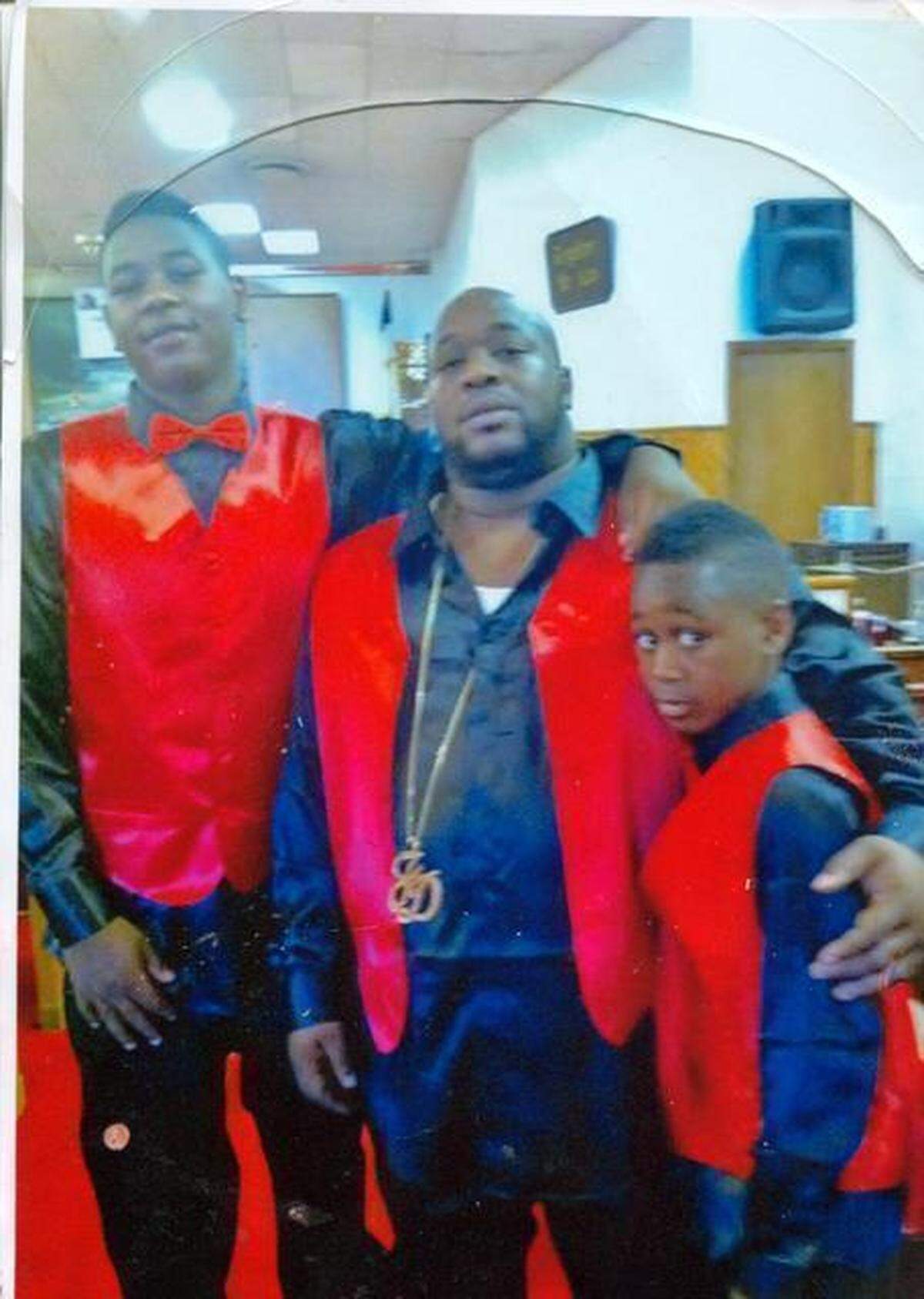
Darden’s two sons, who were happy and outgoing prior to their father’s death, shut down and became depressed afterward, Angela Darden said.
“At first it was hard to get them to talk about their dad,” Angela Darden said. “They were angry. They are still angry.”
What led to the raid
Police witnesses said a confidential informant made four drug buys before officers got a no-knock search warrant to raid Darden’s residence in the 3200 block of Thannisch Avenue.
Two drug buys were for cocaine, purchased from Darden by a confidential informant at a cost of $20 each, according to police witnesses.
Nathan Danford, Fort Worth narcotics officer, said police had received several complaints about narcotics being sold from the address where Darden lived. The confidential informant said Darden was the person selling drugs there, Danford said.
The no-knock warrant was sought because the informant told officers that lookouts had been stationed close to the house on Thannisch Avenue, and that the house that supplied the narcotics was also nearby, Danford said.
Officers seized 2.4 grams of cocaine, 1.8 grams of heroin and 3.1 ounces of marijuana, according to court documents. Police believed some of the drugs belonged to Darden, court documents stated. Police also recovered about $265 in cash, $101 from Darden and the remainder from another person in the house, Danford said.
“The value of the drugs was probably between $500 and $600,” Danford said.
There were two suspects, said Michael Johnson, who testified he was the team leader for the unit that conducted the raid. One suspect was a petite, light-skinned African-American woman and the other suspect was a large African-American man who weighed about 300 pounds.
The case was initially dismissed
The presiding judge in the case, McBryde, dismissed all claims against the city of Fort Worth. But that decision is on appeal at the 5th Circuit Court of Appeals, and attorneys representing the parties are awaiting the appeals court’s opinion.
As soon as officers were able to handcuff Darden, the use of force stopped, McBryde wrote in his opinion when he initially dismissed the suit.
In its opinion ruling that the case against the two officers should go to trial, the 5th Circuit wrote that Darden, according to video from the incident, “raised his hands when the officers entered the residence, and it appears that he rolled over onto his face at one point after the officers instructed him to do so.”
“Based on evidence in the record, a jury could conclude that no reasonable officer on the scene would have thought that Darden was resisting arrest,” the appeals court said in its opinion.
This story includes information from the Star-Telegram archives
This story was originally published February 12, 2020 at 2:06 PM.