
A 9-year-old boy was missing for a month in 1911 and thought to be dead. He wasn’t
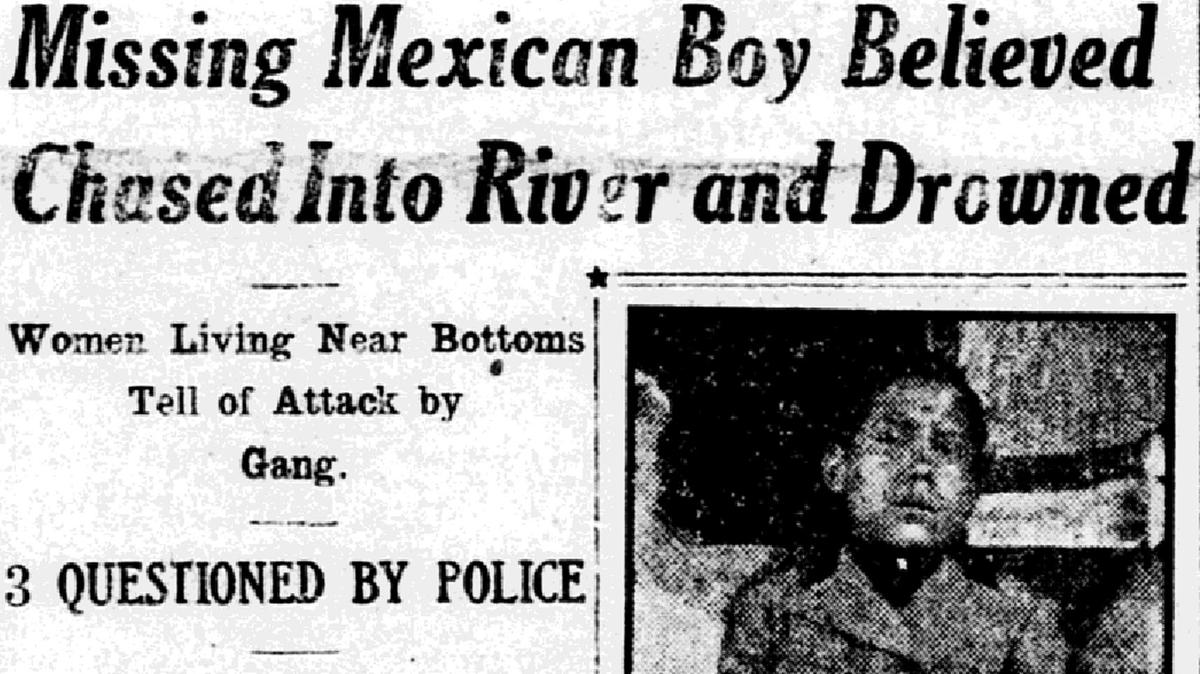
The Fort Worth Star-Telegram ran a front page story and photo on Aug. 31, 1911, about the mysterious disappearance of 9-year-old Gabriel González from his Battercake Flats home.
Living with his parents, Elmo and Francisca, and three sisters and one brother, Gabriel, the eldest, was last seen by his mother playing in front of their house the morning of Aug. 23.
Maps of the time show the unplatted bottoms consisted of shacks and a few dirt roads. Indigent families of all races lived on the edge, wary of periodic flooding. The community lay north and west of the courthouse, from Franklin Hill to the confluence of West and Clear forks of the Trinity River and had assumed a “No Man’s Land” reputation.
Elmo González, a Tejano, worked as a jeweler, counting notable Fort Worth citizens as customers. Despite his dependence on a crutch and a cane to walk, he traveled miles on both sides of the Trinity searching for his missing boy. He soon reported his son’s disappearance to the sheriff, then to Capt. John Connelley and Police Chief JW Renfro. Detectives Speight and Porter were assigned to investigate.
The newspaper’s headline on Sept. 3 read “25-Cent Reward for Horse Cost Life of Mexican Boy?” The detectives, through interviews of several witnesses, learned a man who lived in the bottoms had lost his horse and offered a 25-cent reward to any boy who would return it. After Gabriel found the horse and was riding back to the owner and the reward, another man forced him to dismount and urged several boys to attack him. Speight and Porter concluded the gang drowned Gabriel.
The detectives arrested the man and three boys for further questioning. They released the youth to their families but the next day two of them left town with their fathers to work in a cotton patch. A woman, who had first testified about witnessing the gang attack, now claimed she knew nothing. Police suspected intimidation.
A distraught Elmo González told a grand jury on Sept. 14 of his single-handed, fruitless search throughout the city and his determination to find his son’s body.
On Sept. 27, Elmo received a letter from a “Mexican” who lived near Mart, Texas, outside of Waco. He wrote that he had seen the boy’s photo in the newspaper and was taking care of a youth who resembled him but used a different name. After appealing to Capt. Connelly for money to purchase train tickets, González traveled to Mart and found his son.
The next day, reporters met Gabriel and his father at the Fort Worth T&P depot. The boy explained a gang held him at bay over two hours in the river, throwing clods and stones. Fearing punishment for his prolonged absence, he climbed the opposite bank and walked onto Commerce Street where he encountered a group of laborers who offered to take him into the country to work.
After 35 days away from home, Gabriel ran down the Battercake Flats bluff into the open arms of his mother, surrounded by his siblings. The newspaper described Francisca “calling in the musical language of her race endearing terms.”
Thanks to a Fort Worth Star-Telegram photo, a captain’s generosity, a “Mexican’s” benevolence, and a lame dad’s perseverance, Elmo the jeweler brought his precious Gabriel home alive.
Author Richard J. Gonzales writes and speaks about Fort Worth, national and international Latino history.