
Casino Park was a popular summer spot in Fort Worth to aquaplane, dance, swim and more
Labor Day was first celebrated by unions in the 1880s and designated in 1894 as a federal holiday to honor the contributions, prosperity and achievements of workers.
As a result, 2019 commemorates the celebration’s official 125th anniversary. Traditionally (before the start of the school year moved back several weeks), Labor Day also marked the end of the summer season.
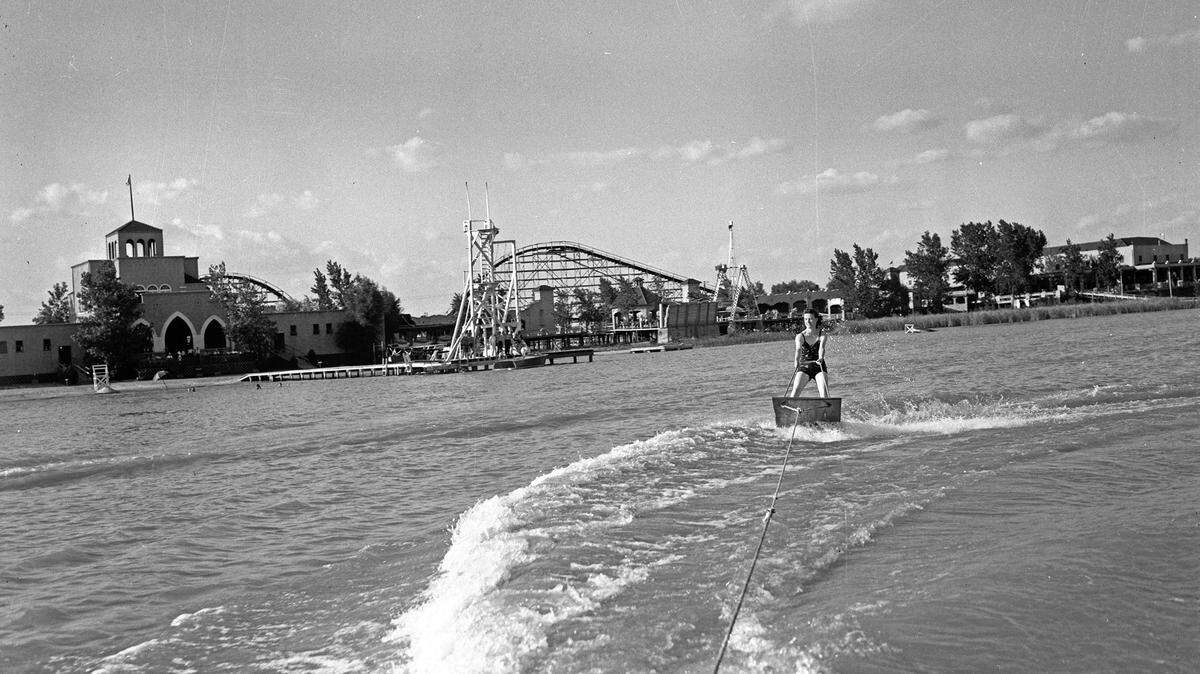
Sydnie Lunt knew how to celebrate! How better to spend Labor Day in 1939 than by skimming over Lake Worth on a — door? It seems a bit crazy, but there she is flying behind a speedboat with a smile on her face and riding a rectangular plank that for all intents and purposes could have been taken from a nearby house and attached to a rope by two holes in its short end.
In fact, Lunt, a 27-year-old public relations officer for the Hotel Texas and athlete who excelled in city tennis and swimming competitions, is enjoying the sport of aquaplaning — riding a single board rather than a pair of water skis. First recognized during the mid-teens, aquaplaning reached Fort Worth about 1920 when it is first mentioned in the Star-Telegram.
Flying around the lake on a board quickly became a favorite “niche” sport, with exhibitions in which the winner was crowned Queen of Lake Worth, a title bestowed by being able to ride for at least five minutes while displaying the best form, grace, and style. It wasn’t easy — many riders ended up going overboard. In 1940, Jack Fry and Miller Daniel even formed a co-ed Fort Worth Aquaplaning Club at Casino Beach, open only to expert swimmers who wanted to learn how to aquaplane.
Casino Park, which opened in May 1927, was called, “Texas Million Dollar Playground.” The park on Lake Worth featured a mile-long board walk, a “monster” dance floor where 2,000 couples could dance comfortably to music provided by a live orchestra, free picnic tables, and rides and thrills galore.
Casino Beach was technically a municipal beach owned by the City of Fort Worth that was part of Casino Park but, like the other facilities, had been “improved” (it was advertised as, “the only sandy beach in North Texas”) and was operated by the Lake Worth Amusement Co.
Virtually the entire park went up in flames in June 1929, but it was rebuilt in Mission style stucco in time for the 1930 season. Many longtime Fort Worth residents fondly remember their parents – or aunts and uncles – dancing the night away at the dance pavilion or have heard tales about the 35-foot diving tower and swimming at night under electric lights. Maybe they even went aquaplaning?
Casino Park and the beach thrived for several decades, but time, repeated fires, and rising rent finally caught up with it. Today, there’s not much left but memories.