
Investigation into Fort Worth crime lab scientist could affect hundreds of cases
A forensic scientist with the Fort Worth police crime lab has been placed on administrative leave as the department investigates allegations she failed to do a quality control test, then tried to cover it up.
The allegations, revealed in documents obtained by the Fort Worth Star-Telegram, prompted the Tarrant County District Attorney’s Office to delay taking cases that included work done by the crime lab’s serology or DNA unit to trial until it could determine if the forensic scientist, Amanda Schaffner, had played a role in the investigations.
Schaffner could not be reached by the phone or through a Facebook message sent by a Star-Telegram reporter. She denied any wrongdoing during a March 4 meeting with crime lab management, according to documents obtained by the Star-Telegram.
“I don’t want to be here. Never in a million years would I make up a plate or data,” she is quoted as stating during the meeting. “Why would I do that? That would ruin my career.”
At least one defense attorney says he plans to file a motion for a new trial after he was informed by the District Attorney’s Office about the investigation of Schaffner. The attorney learned of the investigation soon after his client took a plea deal in a capital murder case and a series of aggravated robberies.
The Fort Worth Police Department’s internal affairs unit is investigating the matter, and the Forensic Science Commission has been notified in accordance with state law, according to Jimmy Pollozani, a police spokesman.
“Since the investigation is active and on-going, we are unable to release any details at this time,” he said in an email to the Star-Telegram.
Schaffner, who was hired in May of 2015, has signed 382 reports during her employment with the crime lab, including a small number of training cases and proficiency tests, the documents state.
“We do not yet know how many cases she assisted on, but were reported by other analysts,” a lab supervisor wrote in a March 5 email to police administrators.
As of March 22, the District Attorney’s Office and police had identified 117 pending criminal cases involving 94 defendants in which Schaffner played a role. They counted 207 resolved cases involving 142 defendants, according to numbers provided by the District Attorney’s Office this week.
Samantha Jordan, a spokeswoman for the District Attorney’s Office, said the numbers may increase as more cases are filed.
“We have a way to identify the cases at filing so we can catch any subsequent cases,” she said.
Raised concerns
Concerns about possible professional misconduct by Schaffner arose on Feb. 27 when the supervisor of the lab’s biology unit, Cassie Johnson, could not find a computer file for a quantification performance check that had been purportedly run by Schaffner a day earlier, according to the documents.
Schaffner said she may have inadvertently used the same name for both her casework file and the performance check file, thus overwriting the performance check file.
But the casework file name contained a typo, leading the supervisor to doubt Schaffner’s statements.
“Ms. Johnson thought this would be unlikely since Ms. Schaffner would have had to misspell the word ‘batch’ multiple times and disregard several warning prompts to overwrite the files,” Michael Ward, the crime lab’s Forensic Science Division manager, wrote in a March 5 email to an internal affairs lieutenant.
Johnson and Schaffner looked through trash cans to try to find the performance check (PC) plate that had reportedly been used by Schaffner but could not find it, prompting Schaffner to reportedly break down in tears.
“Later in the day after Ms. Johnson left the lab area, Ms. Schaffner called to advise Ms. Johnson that she had located the PC plate inside of an empty glove box in the regular trash,” the documents state.
Upon examination and further testing, the recovered plate, however, did not appear to have been previously run through the machine used for testing, the documents allege, leaving lab supervisors to suspect Schaffner either made up or used data from an unrelated quantification plate in her work.
During a March 5 meeting with lab managers, Schaffner implied that Johnson, the supervisor of the lab’s biology unit, and Ward, the crime lab’s Forensic Science Division manager, “had it in for her” based on an unrelated incident.
“It is insulting to say I recreated the plate and threw it away in the Post-Lab,” Schaffner said, according to the documents. “When I went back to look for it, I found it in the post lab, fallen into the trash down inside a glove box. If I didn’t run it, where did the data come from?”
Ward wrote to an internal affairs lieutenant that he told Schaffner that no one had made any accusations against her, but that lab management had an obligation to investigate the matter.
“I advised her that the best case scenario was that she had made five or six mistakes last week, which had led to this point.,” Ward wrote. “Ms Schaffner admitted that she had made numerous mistakes.”
Ward wrote to internal affairs that a key card log and video surveillance contradicted statements made by Schaffner regarding her actions on the day in question. He said a computer event log also showed the casework plate being run at 1:30 p.m. on Feb. 26, but no other plates prior to or after that time on that day.
Schaffner left the building after the meeting with lab management and later put in for medical leave. She was placed on administrative leave on March 5, the documents indicate.
Sealed Brady notices
Dawn Boswell, chief of the conviction integrity unit of the Tarrant County District Attorney’s Office, said the office was notified about the issue involving Schaffner on March 4.
Under a disclosure compliance policy implemented by the District Attorney’s Office in November 2016, labs and the Medical Examiner’s Office must report any conduct of an employee that might constitute exculpatory, impeachment or mitigating information in a criminal case. In turn, the District Attorney’s Office must disclose such information to the defense as required by law.
“These issues are going to happen but we have the lab disclosure compliance procedure in place in order to address them,” Boswell said.
Boswell said the District Attorney’s Office worked with the crime lab to identify all the pending and disposed of criminal cases in which Schaffner played a role.
“The crime lab did an excellent job in stopping everything and identifying the cases,“ Boswell said.
Boswell said prosecutors assigned to the pending and recently resolved cases were then notified and told to begin making Brady disclosures to defense attorneys in each case.
Under Brady disclosure, named for the U.S. Supreme Court ruling Brady v. Maryland, prosecutors must make available to the defense any exculpatory or impeaching information and evidence that is material to the guilt, innocence or punishment of a defendant.
“Us trying to identify every case she had a role in doesn’t necessarily mean we believe that all those cases are affected or that the various roles impact anything regarding the analysis or even the case as a whole,” Boswell said. “... We’re being super conservative because we don’t want to miss anything. So the idea is, tell us every case that this person has touched — pending or disposed — and then once we have the details of what the situation is, we will make additional detailed notifications.”
Jack Strickland, a defense attorney, said he learned there was an investigation involving a crime lab scientist six hours after one of his clients made a plea in court.
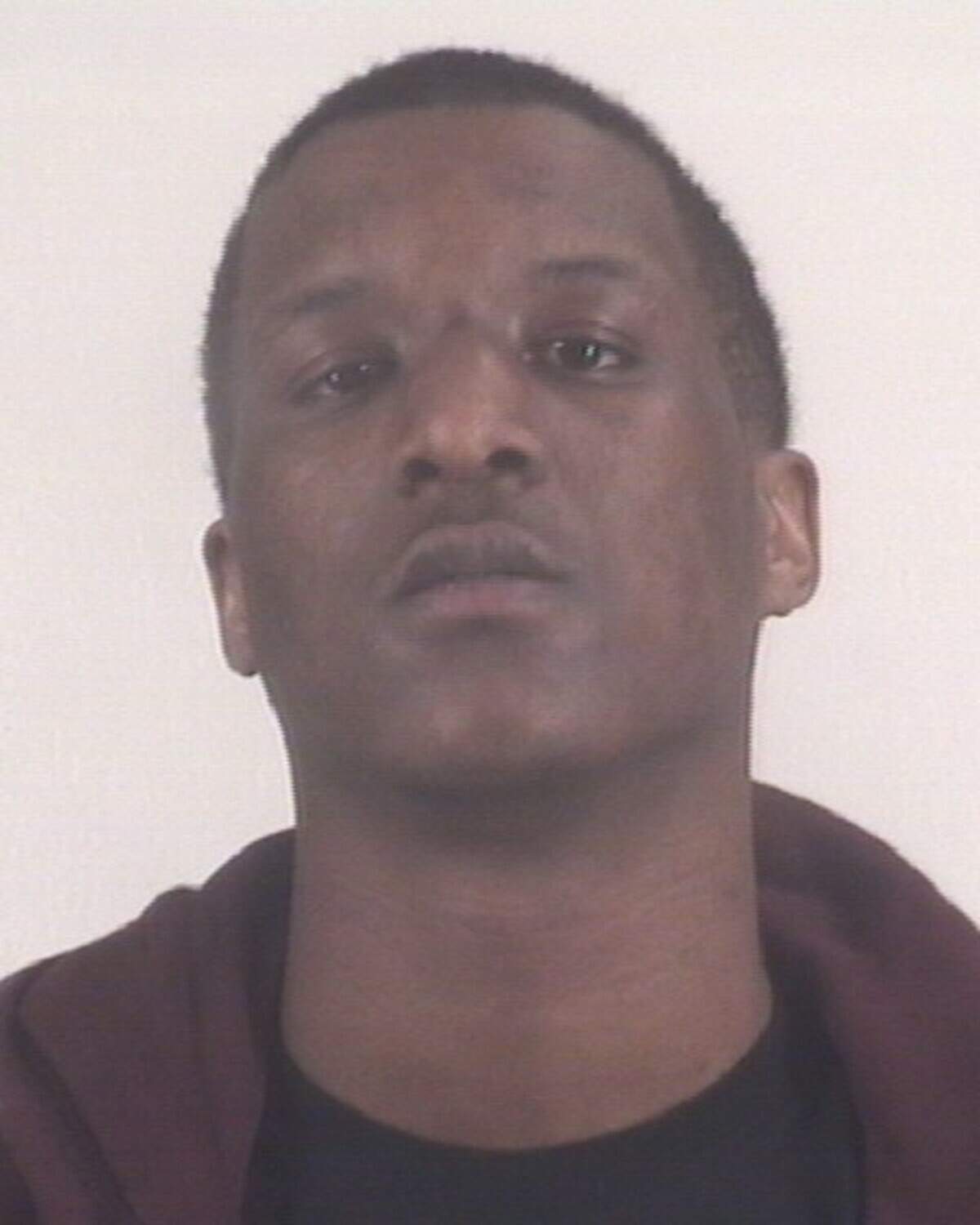
Donnell Ray Page, 18, pleaded guilty March 14 to murder in exchange for a 45-year prison sentence in the shooting of Jose Ontiveros, a taco vendor shot in the stomach while trying to intervene in a robbery outside a Fort Worth night club. Page also pleaded guilty to five aggravated robbery charges in exchange for 20 years in prison.
“They just said there was an ongoing investigation. They wanted to put us on notice,” Strickland said. “Unfortunately, it was six hours after we had already plead those cases. If it was something significant, clearly we need that information and whether or not that changes the nature of his voluntary plea.”
Strickland said he intends to file a motion for a new trial.
Boswell said the District Attorney’s Office prioritized identifying and notifying defense attorneys in cases that are pending or that were recently resolved.
“Everybody is doing the best job they can to do it in a timely way,” Boswell said.
In older resolved cases, Boswell said, the notifications will be made after the police department’s investigation is complete so the notices can include any findings.
“We expect they’ll be working diligently to complete their investigation in a timely manner so we can make those disclosures,” Boswell said.
Prosecutors, however, have sought to seal the disclosures about the crime lab investigation — a decision Boswell said was made because the investigation is continuing and the allegations are not yet confirmed.
“Having it disclosed under seal was a way for us to guard against mistakenly disclosing inaccurate information in a public realm when we won’t know the complete and accurate details until the investigation is done, while still ensuring that the defense and our prosecutors are aware of the potential issue,” Boswell said. “Everyone has to know because we can’t go forward with cases where there may be an issue but we just don’t know exactly what it is yet.”
Another Brady disclosure regarding Schaffner that has not been sealed referenced statements made by Schaffner to an out-of-state district attorney involving a case she had worked on while employed by a private forensic company.
Schaffner had told the out-of-state district attorney that she could not attend a court hearing in May of 2018 because of an “emergency family obligation that she had to attend to” when, in reality, she was on vacation attending her sister’s wedding, the notice states.
Past crime lab problems
In 2002, the Fort Worth Police Department shut down the DNA unit of its crime lab, then located in the Thomas Windham building in downtown Fort Worth, amid backlog concerns and accusations of shoddy work and contamination. Concerns about the work of one of the lab’s scientists prompted prosecutors to forgo seeking the death penalty in a capital murder case.
As a result, the department had to outsource DNA testing.
In 2003, the Tarrant County District Attorney’s Office began a criminal investigation of the DNA lab that later expanded to the lab’s serology, chemistry and firearms sections. The investigation found that no one was wrongly convicted or accused because of flawed DNA analysis, but that there were widespread problems and troubling practices within the crime lab.
Even prior to the investigation’s end, the Police Department began making improvements and, in June 2010, opened a new crime lab on East Lancaster Avenue. The crime lab resumed DNA analysis in July 2012, a decade after the unit was shut down.
This story was originally published April 4, 2019 at 12:39 PM with the headline "Investigation into Fort Worth crime lab scientist could affect hundreds of cases."