
Judge files lawsuit against judge and county, gets fired, claims $1.3 million loss
Editor’s note: This story has been edited to clarify the position of the attorney filing the lawsuit
A lawsuit filed by a former Tarrant County associate judge now threatens to engulf all the Tarrant County family court judges.
Diane Scott Haddock, former associate judge for the 233rd State District Court, was fired in January.
Haddock filed her lawsuit in October, alleging that 360th State District Judge Patricia Baca Bennett retaliated against her because she failed to muzzle her husband’s political commentary on social media as Baca Bennett requested.
Haddock also complained that after being notified of the hostile workplace environment created by Baca Bennett, Tarrant County officials did little or nothing in response and named the county as a party in the lawsuit.
Haddock has filed a motion to add the names of the all six Tarrant County family court judges, the four who signed her termination order and the two judges, Baca Bennett and 323rd District Judge, Alex Kim, who did not sign the termination order.
According to her attorney, Walter Taylor, all the judges from Tarrant County’s family law unit are required to be parties in the lawsuit to grant the relief she requests — reinstatement, with back pay and benefits, including health insurance and retirement contributions.
Haddock calculates her losses at more $1.3 million due to her early termination and loss of job benefits, according to her proposed lawsuit. Haddock’s motion requesting that she be allowed to amend the lawsuit is awaiting a ruling from U.S. District Judge Reed O’Connor.
Haddock’s husband, attorney Gerald Haddock, said the termination order prohibits his wife from using her legal skills in Tarrant County.
“She’s basically out of business,” Gerald Haddock said.
To the victor go the spoils
Assistant Attorney General Benjamin Walton, who is representing Baca Bennett, and assistant district attorneys with the Tarrant County District Attorney’s Office who are representing Tarrant County, have opposed the motion to amend, according to court documents.
Attorneys for Tarrant County argue that the rules do not allow Haddock to amend her lawsuit and even if additional facts were added, the lawsuit would still not have any merit because no one with the county can constrain the state district judges from firing an associate judge.
As the attorneys for the county, M. Keith Ogle and David Hudson, argued in a previous motion, “Diane is subject to patronage dismissal,” and Tarrant County has no authority to intervene in this matter because judges are state employees.
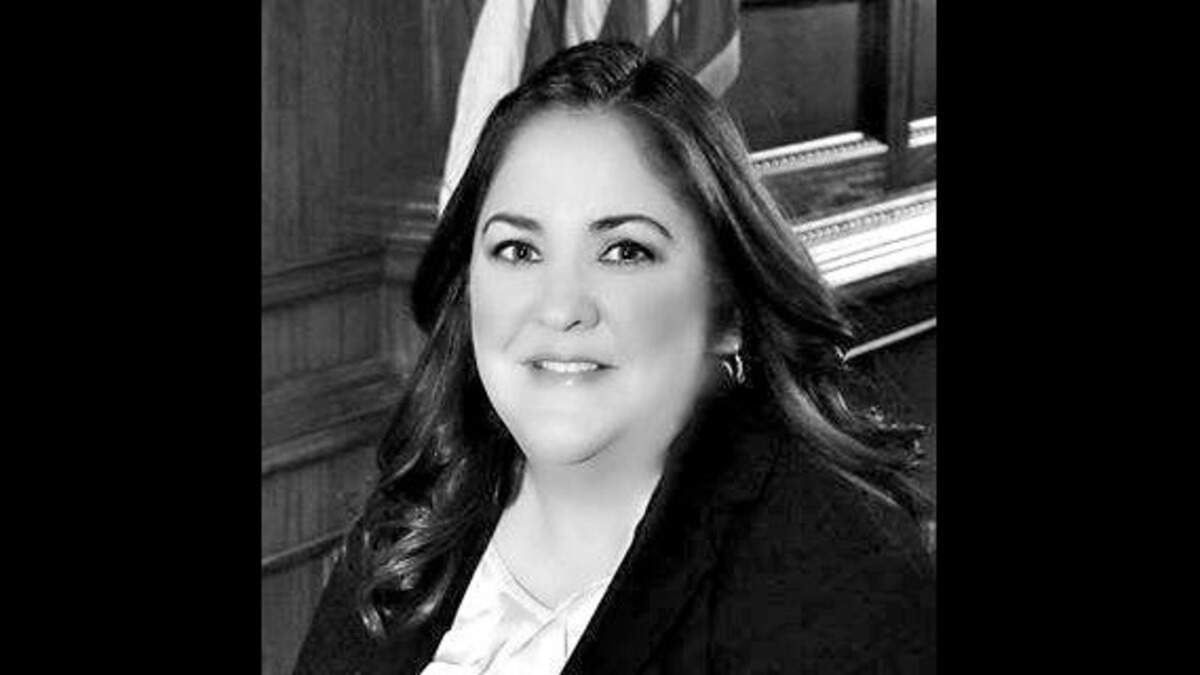
Baca Bennett filed a separate document asking the judge to deny Haddock’s request to amend her complaint. Baca Bennett’s response also argues that allowing Haddock to amend her complaint would break the court’s rules and also claims that Haddock has no protection under the First Amendment as she claimed in her lawsuit.
Ogle and Hudson, assistant district attorneys with the Tarrant County District Attorney’s Office, said they did not wish to comment on pending litigation. Benjamin Walton, an assistant attorney general representing Baca Bennett, did not respond to a request for comment.
In a motion filed Tuesday, Haddock said she understands what the federal court’s rules are, but the court should allow the additions in the interest of justice.
“They keep saying to the victor go the spoils,” Taylor said. “We say to the victor go the spoils that are constitutionally allowable.”
Being a judge is all she has ever wanted to do
Haddock’s lawsuit claims that Baca Bennett campaigned to muster the support among the state district judges in the family law unit to fire her because she could not stop her husband, Gerald Haddock’s, from making political commentary on social media.
During the 2018 Republican Primary campaign, Baca Bennett allegedly supported James Munford, the man who eventually won the 322nd District Court race while Gerald Haddock supported Munford’s primary opponent, Jennifer Moore.
About the same time, William Harris, the presiding judge in the court where Haddock was an associate judge, decided not to run for re-election and Newell was elected to that position.
Haddock sees Newell on April 26, (2018) and he tells her that people are asking him what he will do about her, according to the lawsuit. During their conversation, Newell says:
“ ‘I want to be clear – I have not made a decision about what to do with you,’ or words to that effect”, the lawsuit states. “He [Newell] also indicates he has seen Baca Bennett’s public posts about the associate judges’ statute, which he professes is unclear.”
Haddock assured Newell she would never abandon her post without notice and opportunity for a smooth transition, according to the lawsuit.
“Newell acknowledges that Diane is the most qualified for the position but states again, ‘I just don’t know what I am going to do with you,’” Haddock’s lawsuit says.
“This conversation leaves Diane with the very clear impression that Newell has, in fact, made a decision to terminate her but does not want to do it himself,” the lawsuit says. “He leaves Diane with the impression that she would be difficult to keep despite her qualifications due to the political situation, part of which he witnessed on social media.”
Sometime during March, April or May, Haddock states that she heard Harris encouraging lawyers to apply to Newell for her job.
‘“We are hoping that John Clark will replace you,” Harris told Haddock, according to the lawsuit. “As if it is already a foregone conclusion that Diane is leaving, even though she has never given any such indication”.
“This statement indicated to Diane that “we” meant Harris, Newell, Baca Bennett and perhaps other judges and lawyers,” the lawsuit stated. “At some point, upon information and belief also during this time frame, Diane learns that Baca Bennett, in the Family Law Center, was overheard in the lawyers lounge screaming, yelling and crying while demanding support to oust Diane.”
Harris said Thursday he never told Diane Haddock that he hoped John Clark would replace her.
“I had heard Clark’s name mentioned for a couple of associate judge positions but I never encouraged anyone to apply for her job,” Harris said. “I think there were a lot of people who believed that Haddock would leave when I left. “
Gerald Haddock said his wife has been an emotional wreck since her firing and unable to speak openly about it. Haddock has wanted to be a judge since she was six years old, Haddock said. It’s all she has ever wanted to do, Gerald said.
“Our whole family has been hurt by this,” Gerald Haddock said. “She is going to counseling and continues to go to counseling. Ken Newell never talked to her, never explained. I promise you that Diane is not going to let this rest. This is about setting the standard by which the community should be judged.”
This story was originally published March 29, 2019 at 12:06 PM with the headline "Judge files lawsuit against judge and county, gets fired, claims $1.3 million loss."