
Fort Worth leaders were told its public safety center would be a cash cow. It hasn't
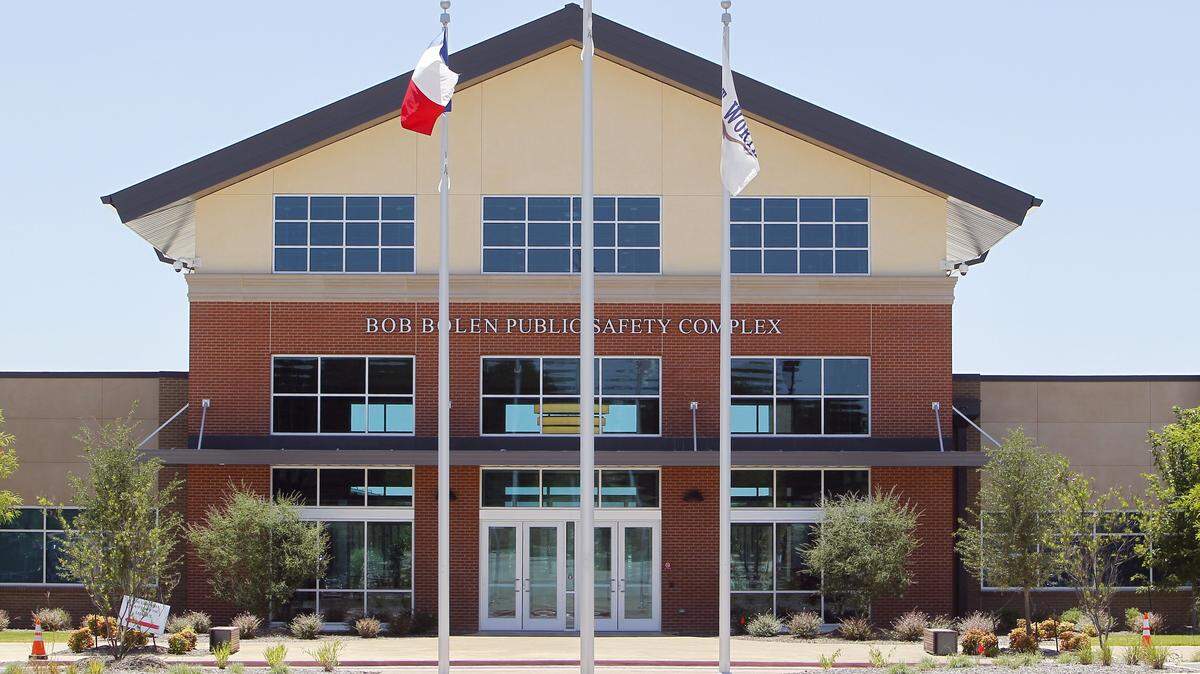
Fort Worth's $101.5 million police and fire training complex is tops in the nation, but nearly three years after opening, city leaders are learning that it is not making money, despite assurances that it would generate hundreds of thousands of dollars.
In fact, Fort Worth taxpayers have been subsidizing the training of officers from other agencies at the Bob Bolen Public Safety Complex at 505 W. Felix St. City administrators are unable to determine how much has been spent on the training.
"This has been ... a bit of mess," Mayor Betsy Price said.
City Manager David Cooke told the council recently that he was "coming clean" that the complex "isn't a moneymaker for the city," and definitely not producing revenue the council was led to believe it would. Cooke was not city manager when the project was approved.
"What we're sharing with you, is we're going to try and recover our costs," Cooke said. "It's very expensive to operate."
The fire and police departments now have a fee schedule as the city tries to recoup the estimated annual $220,000 associated with the training to outside agencies or the use of the buildings.
Flock to Fort Worth
When the Bob Bolen Public Safety Complex was under consideration, plans were to allow outside agencies to use the top-flight facilities at a cost. Discussions focused on the 83-acre center becoming a regional training hub with agencies flocking to Fort Worth to use them.
The council even wanted a marketing plan and saw the potential for hotel and restaurant growth in the South Hemphill neighborhood for the "significant number of visitors" it would draw. That hasn't materialized.
Since the complex, named for a former mayor, opened in mid-2015, expectations were it could make enough money to help offset some of the high cost to build it.
"It's a great facility and it is being used," Price said, but added, "What we were told and what has been delivered to council has not held true. ”
The Police Department has not been charging others to use the complex, but the Fire Department has made $35,988 on its programs since December 2015.
Assistant Fire Director Mark Rauscher, who oversaw the training center project as a senior capital projects officer, said the department allows free training for its mutual aid agencies, such as Burleson and Benbrook.
Sometimes, when vendors want to put on training and use the facility at no cost, they have been required to give a certain number of seats to Fort Worth officers or firefighters at no charge, Rauscher said.
Lt. Paula Fimbres, a Police Department spokeswoman, said the department hasn't been charging and only recently set up a required revenue account with the Finance Department.
Moreover, Fimbres said the department only recently learned how much it should be charging. Based on that fee schedule, estimates are the department annually could make about $40,000 on its firing ranges and $100,000 from its training courses.
Fimbres did not have a list of the agencies that have used the facilities or trained alongside Fort Worth's department available since it opened. She said Taser gun certification training just recently was provided to Texas Department of Public Safety officers at no cost.
Valerie Washington, an assistant city manager, defended the departments saying that they are "still working through moving in. They are grateful to have this facility."
Said Rauscher, "We're still in year three of the facility. We're still kind of working out some of the bugs and just growing into the facility and learning how to optimize its usage and looking for ways we can get creative with the facilities."
Between March of 2016 and March of 2017, the Fire Department used its training areas, which includes buildings that simulate fires and a dive tank to practice water rescues, 48 percent of the time. The Police Department used its area 70 percent, according to a staff report.
Moving forward, Rauscher said a fee-waiver policy will developed as well as marketing strategies. There's the potential to reach the 41 law enforcement agencies in Tarrant County.
Huge price tag
Construction on the training complex began in 2012 after the council said it saw the need, but balked at the cost. City employees pitched the project as the city's "No. 1 priority." The city paid $6.4 million for the property in 2011, the site of the Federal Depot. The complex replaced a 50-year-old training facility at 1000 Calvert St., near downtown.
Six of the current council members were not serving when the public safety complex was funded. District 6 Councilman Jungus Jordan was. Back at the time of the vote, Jordan said the city "should be able to generate revenue by training people to be as good as we are."
Jordan said he stands by the decision to approve the project. He said building the complex was the right thing to do and something the city should be proud of.
"We've got a state-of-the-art facility designed to keep up with growth," Jordan said. "I haven't given up on the idea there is a revenue source in the future."
Price said the city acquired the site before it was decided how it was going to fund the training facilities. In this case, Price said no back-up support on the figures was given to the council at the time.
"There’s a lesson to be learned here,” Price said. "We need to be very careful about commitments that are made that don’t have the proper supporting detail that we can deliver on.”
This story was originally published March 16, 2018 at 5:09 PM with the headline "Fort Worth leaders were told its public safety center would be a cash cow. It hasn't."