
Lakes west of Fort Worth still struggling despite spring rains
The spring rains have the countryside west of Fort Worth looking verdant.
Wildflowers are in bloom, hillsides are green, and many roadside ditches are filled with standing water.
Yet the Hubbard Creek Reservoir, a once-popular lake for bass fishing and skiing about two hours west of Fort Worth, is parched.
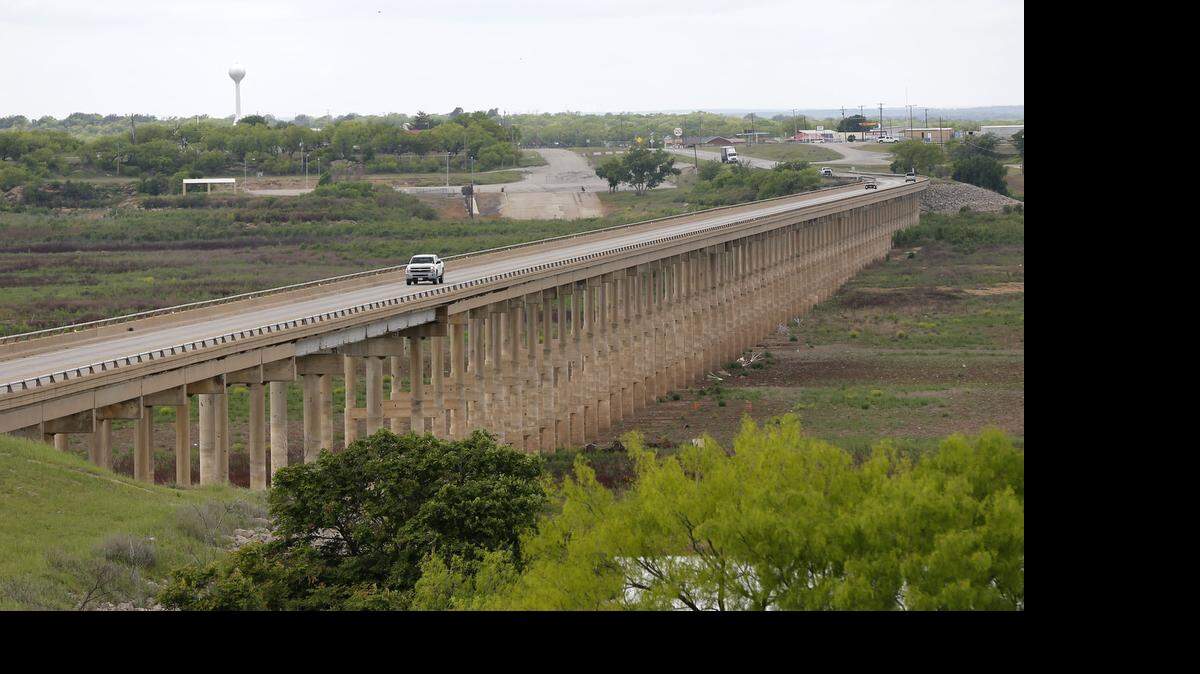
From atop the U.S. 180 bridge, which crosses the lake, the only water visible is in the small creek channel. Parts of the old highway bridge that were once submerged by the lake are visible, and the lake bottom is covered with water-sucking salt cedars and weeds such as bastard cabbage — courtesy of the ongoing drought.
From Johnny Stoker’s Sandy Creek Marina, the view is fairly stark.
“It’s pretty sad,” Stoker said. “I’ve been out here since ’72 and never, ever seen anything closely remote to this.”
Hubbard Creek is probably the most extreme example of the glaring divide across North Texas lakes.
While rain has been more plentiful this year for much of Texas, it has been stingy in areas west of Dallas-Fort Worth — with Mother Nature using Interstate 35 as a dividing line.
East of I-35, lakes have risen dramatically this spring.
Cedar Creek Lake, one of the lakes that supplies raw water to Tarrant County, is full.
Collin County’s Lake Lavon, which supplies water to booming Dallas suburbs like Plano and Frisco, is 91 percent full after reaching only half that level three months ago. Lewisville Lake is 95 percent full after being only 69 percent three months ago.
Other lakes that supply Tarrant County have also improved, including Lake Arlington, which is 93 percent full. Eagle Mountain Lake and Lake Bridgeport, both on the West Fork of the Trinity River, have climbed recently.
“Everything is better than three months ago, but the West Fork was better a year ago,” said David Marshall, director of engineering and operations Support for the Tarrant Regional Water District, which provides raw water to most of Tarrant County.
Rainfall isn’t the only reason the levels are affecting such lakes as Eagle Mountain and Benbrook; water is pumped into those lakes from Cedar Creek and Richland-Chambers reservoirs in East Texas.
Still dry out west
West of Fort Worth, Hubbard Creek isn’t the only lake that is struggling — although recent thunderstorms have also brought some hope.
Lake Palo Pinto, which supplies water to Mineral Wells and several other communities, is less than 11 percent full, though it has gained about a foot over the last week. Oddly, the much smaller Lake Mineral Wells, which isn’t a water source, jumped from 48 percent to 97 percent over the last three months.
The small Palo Pinto County town of Gordon, which has faced the risk of running out of water for more than a year, saw its lakes climb about 4 feet in the last two weeks.
“It’s looking a whole lot better than it did a few weeks ago,” said Kenneth Epperson, Gordon’s utilities director. “We might actually have enough water to get us through summer.”
Lake Granbury, where officials have blamed low levels on the Brazos River Authority, has also climbed to 70 percent after being 52 percent full a year ago.
While the East Texas lakes keep filling, Chris Wingert, the general manager of the West Central Texas Municipal Water District, which owns Hubbard Creek and provides raw water to about 175,000 customers in Abilene, Anson, Albany and Breckenridge, remains concerned.
“This is the historic low,” Wingert said. “Every day we set a new low.”
In some lakeside neighborhoods at Hubbard Creek, no water is visible. Houseboats sit atop dry inlets, docks are vacant and boats rest on nearby trailers, with nowhere to float.
‘We can’t survive …’
While the spring rains are welcome, officials aren’t counting on improvement at Hubbard Creek. Workers are building a pipeline to Possum Kingdom Lake, which will move water to Abilene. Possum Kingdom, which has a much larger watershed than Hubbard Creek, increased slightly over the last week and has held steady for a year.
If Hubbard Creek drops 4 more feet, Abilene will be cut off from the lake.
By the time this is projected to happen — in August — officials estimate that Hubbard Creek will have a 14-month water supply. To stretch that even further, plans call for building a cofferdam — or a temporary dam — to raise water levels and allow intake pumps to draw from the lake.
“We can’t survive if none of the lakes get any rain,” Wingert said.
Complicating matters for Hubbard Creek Reservoir is its unusual footprint. While most water flows north to south, the creeks that supply the lake travel from south to north.
“We’re kind of a back-asswards lake I guess,” said Stoker, the marina owner.
Thankful for every drop
While smaller lakes have been helped by rain, Stoker said, “an inch just fills the cracks in the ground” around Hubbard Creek.
Some ranchers have built even more stock tanks on their property, diminishing the runoff that reaches the lake, Stoker said.
“It’s a welcome relief and we’re thankful for every drop, but, no, it’s going to take something bigger to fill this lake,” Stoker said. “Typically, our major rainfall comes during the hurricane season. Of course what’s bad for the Gulf Coast is good for us.”
A decade ago, Stoker’s parking lot was full of bass fishermen and customers buying boats.
“This lake hosted 150 bass tournaments a year,” Stoker said. “Now we’re down to zero. I don’t think there’s a business around here that’s unaffected.”
At its peak, Stoker’s marina had a dozen employees. Now he’s down to a staff of one full-time and one part-time employee. He has survived by selling boats across the country and overseas.
“I just operate on faith,” Stoker said. “When you get to the point where God is the only one you can depend on, you’re probably in the right spot.”
Bill Hanna, 817-390-7698
This story was originally published April 25, 2015 at 12:05 PM with the headline "Lakes west of Fort Worth still struggling despite spring rains."