
Yikes! Bastard cabbage weed runs wild in North Texas
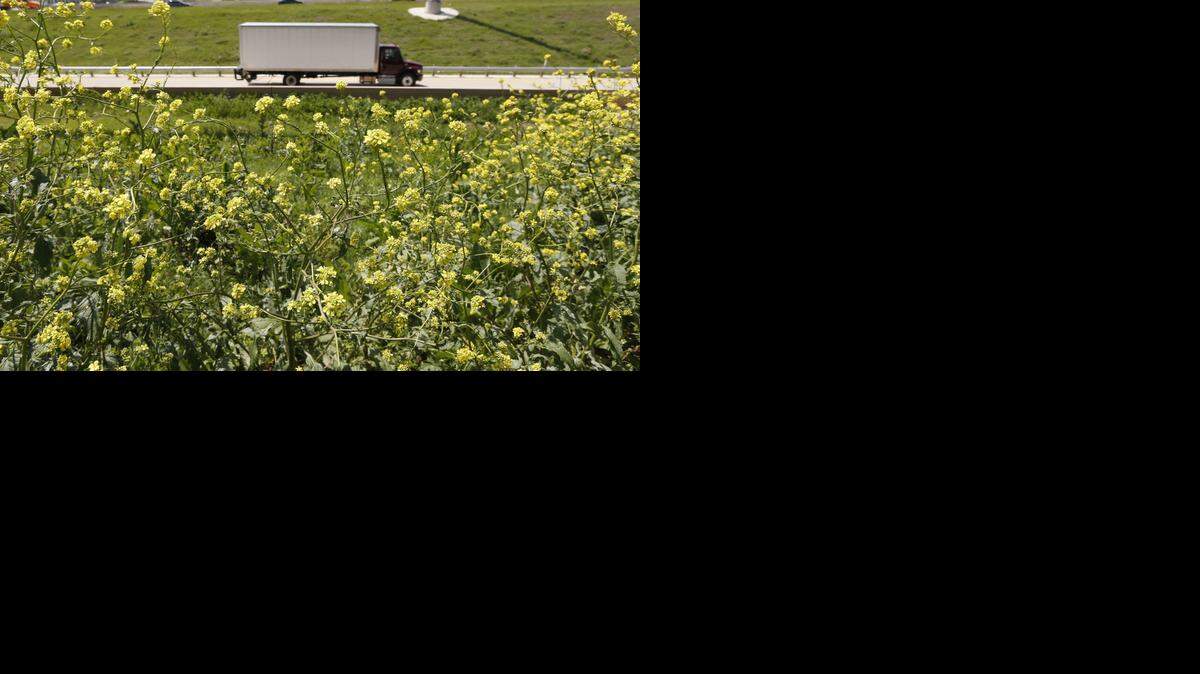
Forgive wildflower lovers for saying “you bastard” every time they see the yellow-colored plant growing along North Texas roadways.
They’re just calling out the aggressive weed by its name.
Bastard cabbage is an invasive species that tends to put down roots in some places popular with wildflowers. And because of the wet winter it’s growing like crazy in North Texas.
While some may mistake the patches of bright yellow for wildflowers, the Ladybird Johnson Wildflower Center in Austin says it’s no friend to the bluebonnet, the state flower of Texas.
“I think most people who like wildflowers are going to say it’s a really big problem,” said Hans Landel, interim invasive species coordinator at the Ladybird Johnson Wildflower Center.
The Texas Invasives website said bastard cabbage, which is also known as turnip weed, provides tough competition for native plants and can establish a monoculture, where it dominates other vegetation.
A map on the invasive website had reports of bastard cabbage sightings from Fort Worth to Austin to Houston. Some reports are saying it is now being seen as far south as Port Aransas on the Texas Gulf Coast.
It is unclear when or how it came to the U.S., but it may have arrived in grass mixes or mulch materials from Europe.
How great of a threat is bastard cabbage? Depends on who you ask.
“The data shows it’s just a really great invader and really tough to get out,” said Karen Hall, an applied ecologist at the Botanical Research Institute of Texas in Fort Worth. “It typically thrives in disturbed habitats. In other native habitats that don’t have the pressure of mowers and other human activity it may not cause as big of a problem.”
But Hall also remembers during the extreme dry conditions last year that bastard cabbage was the only flowering plant near some storm water channels in Fort Worth. Volunteers removed most of the bastard cabbage but left some for the pollinating insects that were draped all over the plants.
“Everybody hates this plant but here in this local instance, it was providing a benefit,” Hall said.
The only way to eradicate bastard cabbage is to pull it up — roots included.
Mowing may improve the look but the seeds will still be in place. The plant, which goes by the scientific name of Rapistrum rugosum, has also shown some resistance to herbicides.
One 2005 study suggested that bastard cabbage’s footprint may be limited by overseeding with Indian paintbrush.
Landel is advising private landowners to keep a vigilant eye to make sure it doesn’t creep into their pastures.
“I think it’s true that once established it will likely be there for a long time, but other wildflowers may be able to coexist with it,” Landel said. “Bluebonnet is pretty aggressive, too, so it’s not entirely clear what effect they have on each other.”
Jerry Parsons, a retired Texas Cooperative Extension specialist in San Antonio, doesn’t understand what all of the fuss is about.
“We had the rain at the right time that stimulated the growth of the weed population,” Parsons said. “The weed populations are terrible this year. Given less rainfall in an area, you’ll have the predominance of the bluebonnet and some other weeds that need less water.”
Parsons has also drawn his own share of attention by developing other colors of bluebonnets, including Barbara Bush lavender, Abbott Pink and Texas Maroon. Though retired, Parson is working on a red bluebonnet and a darker purple bluebonnet — not for TCU fans — but for Tarleton State University alums.
In San Antonio and the Hill Country, Parsons said this wildflower season is “maybe the best in 20 years.” In the northern half of the state, Parsons said grasses and weeds such as bastard cabbage could prevent a similar show of color in some areas.
But Parsons said bastard cabbage fluctuates every year.
“I’m not saying it will go away but it just won’t be a prevalent,” Parsons said. “It’s like the bluebonnet, some years they’re everywhere and some years they’re not — but they’re never really gone.”
Bill Hanna, 817-390-7698
Beating bastard cabbage
▪ The best remedy is to pull the entire plant before it can become established.
▪ Mowing may get rid of some of the plants but the seeds will remain, enabling another crop to grow next year.
▪ One study has suggested that overseeding with native plants such as Indian Paintbrush may reduce the footprint of bastard cabbage.
This story was originally published April 10, 2015 at 10:11 AM with the headline "Yikes! Bastard cabbage weed runs wild in North Texas."