
Tarrant County’s ‘famous’ case file won’t be destroyed
Buried for decades under millions of pages of nearly forgotten old court documents lay a political treasure.
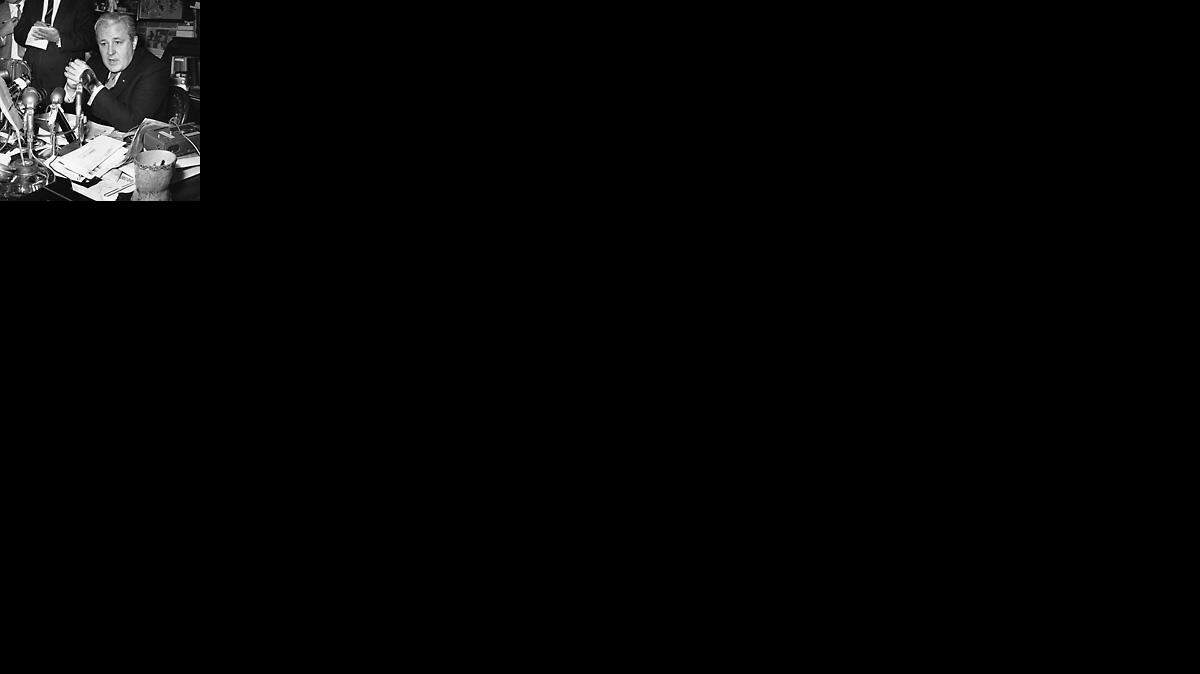
The nearly forgotten gem — an old Tarrant County court file that included documents trying to prevent the late, famed attorney Melvin Belli from representing Jack Ruby, who shot Lee Harvey Oswald — was unearthed last week.
Tarrant County workers, who were continuing a years-long effort to make electronic copies of old case files and destroy their paper counterparts, found the file and told Tarrant County District Clerk Tom Wilder.
“I thought it was a great piece of history,” said Wilder, who said the case belongs in the “famous files” category to ensure the paper version isn’t destroyed. “We don’t want to destroy a historical case.”
Dozens of other famous files are being preserved, including the Cullen Davis trials in which he was prosecuted for the slaying of his estranged wife’s daughter and in a murder-for-hire scheme in the 1970s; and the Koslow trial, where Kristi Ann Koslow and friends Brian Dennis Salter and Jeffrey Dillingham were convicted of killing her step-mother, Caren, and injuring her father, Jack.
Now the case file of Belli — who also represented sperstars such as Zsa Zsa Gabor, Muhammad Ali, the Rolling Stones and Mae West — will join other files at the Tarrant County’s Family Law Building.
The files are put in plastic bags to protect them from potential water damage if the sprinkler system goes off and are stored on shelves or in boxes for safekeeping.
“We would have the image file of this in any event, but I don’t want to destroy the paper,” Wilder said.
Melvin Belli’s files
Wilder said he was fascinated by the two files from 1966 in which attorneys encouraged the Texas State Bar to prevent Belli from representing Ruby, who gunned down Oswald on live television after he was arrested for killing President John F. Kennedy.
Belli tried to prove that Ruby was legally insane when he shot Oswald in Dallas more than 50 years ago. But Ruby was found guilty of murdering Oswald and sentenced to die.
Belli “exploded in rage when he heard the verdict and publicly accused Dallas of being ‘a sick, sick, sick city’ and said Ruby, a Jew, had been the victim of discrimination,” according to a New York Times article about Belli’s 1996 death.
Ruby’s sentence and verdict were overturned when judges ruled that a change of venue request should have been granted. He was preparing for a new trial when he became ill and died.
The Tarrant County files include a letter that Belli, based in San Francisco, sent to 96th District Judge Fisher T. Denny on June 10, 1966.
The letter stated in part, “I have no intention of being bound by [attorneys’] advice or suggestions. Knowing the facts, the State Bar of Texas may act as it is advised, and I say this respectfully.”
Also in the file are letters from attorneys throughout the state asking the Texas Bar to sanction Belli.
“Eventually the cases were dismissed,” Wilder said. “Both files have 99 pages and most are complaints about Belli’s conduct.
“Who would want to throw away [this file]?” Wilder asked. “I’m just not doing it.”
Electronic effort
Tarrant County employees have been working to input more than 3 million paper case files into an electronic system for years, with the hope of preserving records and freeing up space where old paper files are stored.
Officials have said they’d like to put images of files dating back 100 years into the system.
Wilder began the imaging project in 2003.
When a “famous file” is found, those versions are imaged as the others are, but the paper files are kept.
A group of local people worked on and off for years to develop a list of dozens of famous files that would not be destroyed.
“We don’t want to be like the government storage in Raiders of the Lost Ark, where the Ark was misplaced,” Wilder joked.
Anna Tinsley, 817-390-7610
Twitter: @annatinsley
Famous Tarrant County cases
Here’s a look at some of the famous court cases in Tarrant County. These files are among those that will be kept both on paper and in an electronic format:
Cullen Davis: In 1976, a masked gunman entered the opulent Davis mansion in west Fort Worth and shot and killed Andrea Wilborn, daughter of Priscilla Davis, and Stan Farr, Priscilla Davis’ boyfriend. Priscilla Davis and family friends Beverly Bass and Gus “Bubba“ Gavrel were injured. Gavrel was left paralyzed. Priscilla Davis’ estranged husband, Cullen Davis, was charged with the slayings. He was acquitted at a trial in Amarillo.
Koslow trial: In 1992, Fort Worth resident Jack Koslow’s daughter, Kristi, enlisted her boyfriend, Brian Salter, and his friend Jeffrey Dillingham, to kill her father and stepmother, Caren Koslow. Kristi promised them some of the inheritance she expected. Caren Koslow was killed and Jack Koslow was injured. Kristi Koslow was convicted of capital murder and sentenced to life in prison. Salter was sentenced to life in a plea agreement. Dillingham was convicted and sentenced to death.
Cadet murders: Diane Michelle Zamora and David Christopher Graham, two former military cadets, were convicted of capital murder in connection with the 1995 slaying of 16-year-old Adrianne Jones. Graham had a one-time romantic encounter with Jones, and Zamora allegedly said the only way to fix their relationship was to kill Jones.
Arlington murder: Amy Robinson, a mentally challenged young woman who lived in Arlington, was abducted in 1998 by co-workers Michael Hall and Robert Neville Jr. while riding her bike to her job at a nearby grocery. They took Robinson to an isolated area where they tortured her and shot her with a pellet gun and crossbow. She was killed by a shot to the head. Neville and Hall fled to the Mexican border, where they were arrested. They were convicted of capital murder and sentenced to death.
Underwood murder: Stephen Dale Barbee was sentenced to death after being found guilty of suffocating a pregnant woman and her 7-year-old son in 2005. Investigators said Barbee killed Lisa Underwood because he believed that he was the father of her unborn daughter and feared that Underwood would tell his new wife about the relationship. After killing Underwood, he smothered her son, Jayden. Barbee buried the bodies in a shallow grave.
Eaten heart: Joseph Frank “Joey” Cala II pleaded guilty to murder in the 2001 death of his mother, Lydia M. Cala. When police responded to the Cala home, they found a bloody, naked man standing over a woman’s beaten and bruised body, appearing to eat an organ. Police say her chest and abdomen were cut open, some organs were removed and part of her heart bore teeth marks.
Official misconduct: U.S. Sen. Kay Bailey Hutchison was charged in 1993 with misdemeanor and felony counts of official misconduct and records tampering dating to her tenure as Texas treasurer. She was acquitted on all counts when the case was dropped.
Courthouse shooting: George Lott was sentenced to death for the 1992 shooting in the historic Tarrant County Courthouse, leaving two attorneys dead and wounding two appellate judges and a third lawyer. Lott, who had been upset over the outcome of a custody dispute, confessed and was executed two years later.
Life support: Marlise Muñoz was 14 weeks pregnant when she was declared brain-dead at John Peter Smith Hospital in 2013. Her husband, Erick Muñoz, asked JPS to stop further medical procedures and remove his wife from respirators, ventilators or other life support. JPS refused, citing a Texas law that requires pregnant women to be kept on life support until the fetus is viable, usually at 24 to 26 weeks. Muñoz sued JPS and a judge ultimately ordered that she be removed from life support.
Windshield murder: Chante Mallard was convicted of murder in a bizarre 2001 case in which she struck a man while driving on a freeway, then left him to die while he was lodged in her windshield. Gregory Glenn Biggs, a 37-year-old homeless man, was walking along U.S. 287 in south Fort Worth when he was hit by Mallard, who had been drinking and taking drugs. She drove home and left Biggs stuck in her windshield before eventually dumping his body in Cobb Park.
Source: Tarrant County, Star-Telegram archives
This story was originally published March 23, 2015 at 2:16 PM with the headline "Tarrant County’s ‘famous’ case file won’t be destroyed."