
Depositions detail secret Keller split talk; ex-president ‘can’t recall’ details
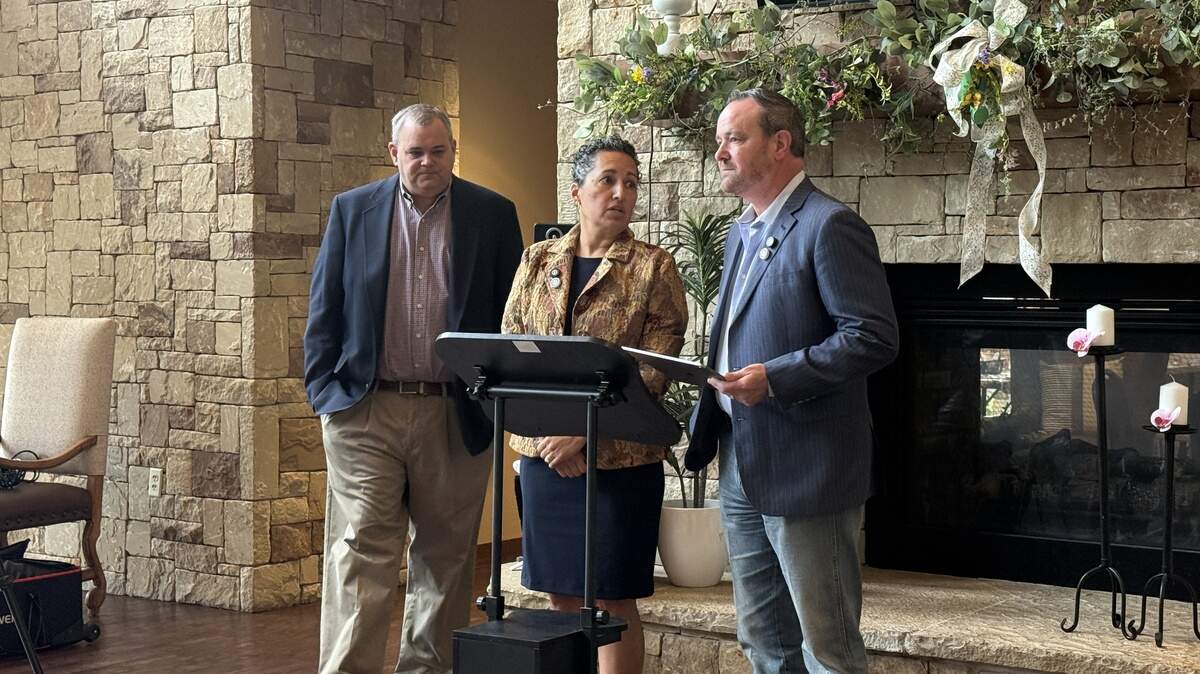
Keller school board members met privately to discuss splitting the district, but the former board president who backed the split said he has never read the Texas Open Meeting Act, according to depositions released last week.
Some meetings included Tim Davis, the board’s attorney at the time, and former board president Charles Randklev and former board member Micah Young. In other instances, the meetings included former superintendent Tracy Johnson, Grant Anderson of Texans for Educational Excellence, and Josh Haney with the audit firm Moak Casey, according the documents provided by the Heritage Legal Task Force., which represents a 3,200-home HOA in far north Fort Worth that is part of the Keller school district.
The task force has filed a lawsuit seeking to remove the board members who it says met in secret to plan splitting the school district along U.S. 377. The task force also seeks to prevent future boards from splitting the district.
President John Birt, Chris Coker and Heather Washington are the only remaining board members who backed the split. Coker is no longer a part of the lawsuit.
Cary Moon, a former Fort Worth City Council member and chairman of the Heritage Legal Task force, said his group has been willing to settle the case if Birt and Washington stepped down.
“We’ve had an open door for the board members to resign,” Moon said. “Trying to save the school district money by having this go away with their resignation, and we haven’t had any much luck with those conversations.”
Randklev does not recall details
Randklev, who was board president during the split discussions, consistently told attorneys that he could not recall or was not aware of board policy and procedures, Texas Open Meeting Act rules, or timelines related to the discussions, including board meetings.
The Texas Open Meetings Act requires the meetings of governmental bodies to be open to the public. Closed meetings are allowed only for specific topics.
Randklev resigned in December to run for a seat on the Keller City Council. Election Day is Saturday, May 2.
In a 124-page document of a June 4, 2025, deposition, Randklev said he didn’t recall or didn’t remember at least 80 to 90 times. He couldn’t recall his trustee email address or when the board hired the law firm Jackson Walker.
Randklev said he relied on counsel and district staff to know and execute key elements of his job. He said he was familiar with what the Texas Open Meetings Act is but had not read it.
Asked by an attorney for the Heritage Legal Task Force if he had read the Texas Open Meetings Act, Randklev said, “I don’t believe so.”
When asked if he had read any portion of it, Randklev replied, “No, sir.”
The line of questioning goes on to reveal that even after the lawsuit and accusation that he violated the Open Meetings Act, Randklev said he still had not read it at the time of the deposition.
At one point, the attorney asks Randklev if he is aware that the law requires elected officials to be trained on the Texas Open Meetings Act within 90 days of being elected.
“I guess,” he replied.
Asked if he had taken the required training, he said, “I believe so.”
The attorney then clarifies if his testimony is that Randklev went through the training, but had not read any part of the act.
“I guess so,” Randklev replied.
In his testimony, Young was asked how the discussion of a split came up, and he said that Randklev brought it to him.
The lawyer questioning Young states the split was a “crazy idea,” and Young replies, “We’re not afraid of looking at things that are outside the box.”
When asked what he thought the Fort Worth side of the district would think about the proposed split, Young said, “I wasn’t — to me, that wasn’t my initial concern or thought. My initial concern or thought was, could we make two districts more sustainable?”