Fort Worth ISD moves forward on plan to sell, develop land near Farrington Field
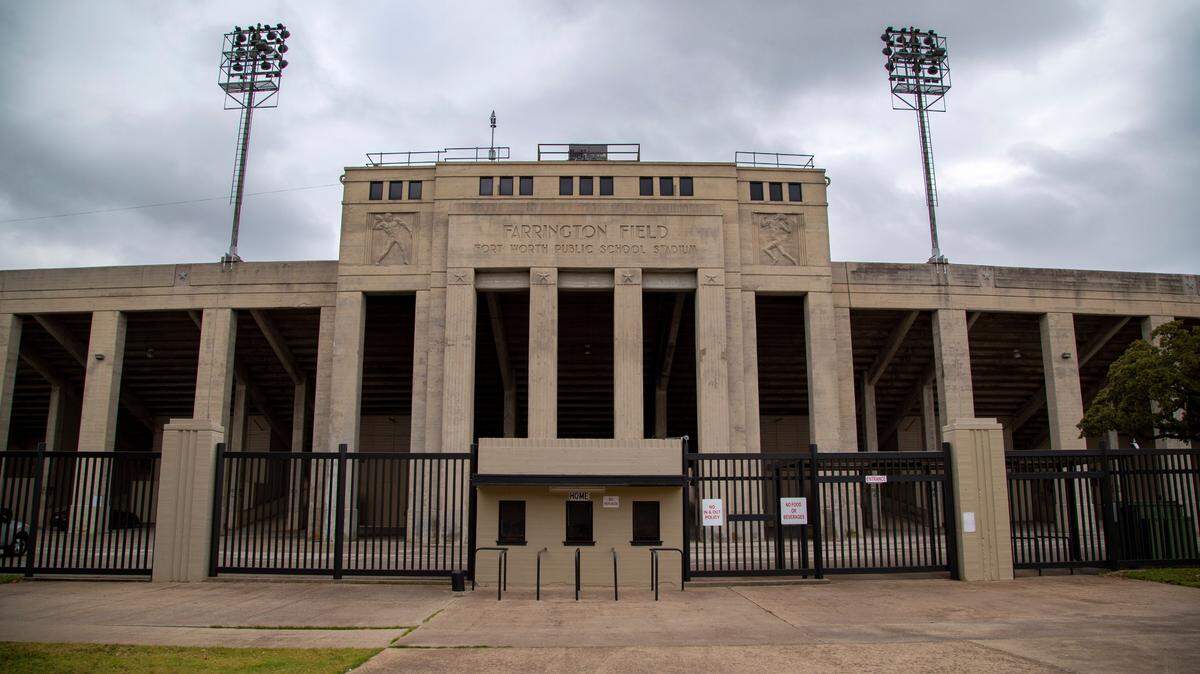
Fort Worth school district’s Board of Managers are moving forward with plans to sell and develop the land that surrounds Farrington Field, the iconic 18,000-seat sports stadium used by a number of high schools in the district.
During a special board meeting on Tuesday, board members discussed, in closed executive session, multiple paths forward for seven tracts of land that surround the field, which has stood at 1501 University Drive for the last 87 years.
The district said it received two purchase proposals for the stadium on Feb. 20 and sent questions to both interested parties on March 10. Interviews with both candidates were held on March 27, according to the district. A decision on a buyer is expected to come soon.
The selected proposal will be responsible for developing all or a portion of the tracts of land around the stadium as mixed-used sports development in order for it to receive tax increment funds that can then go toward paying the cost of possible improvements to the field. There was no action item regarding the sale or development of the land on Tuesday’s board agenda.
Brian Newby, a lawyer at Cantey Hanger who is working with the district as it navigates the sale and development of the land, presented a slideshow to board members during Tuesday’s meeting outlining where things stand and what next steps could look like.
“The sale doesn’t have to be just one mixed-use project,” Newby told new state-appointed superintendent Peter Licata and board members. “It could be multiple projects. But no determination is being made today. No determination is going to be made until you have all the evidence in front of you, and you make that decision on behalf of the citizens of Fort Worth.”
Once a buyer is selected by the board, Licata can enter into a stadium redevelopment plan and draft sale of land documents, Newby said.
Farrington Field is in need of at least $20 million in upgrades, including new turf, HVAC repairs and renovated locker rooms. It was listed as an endangered historic landmark seven different times between 2009 and 2025. In 2021, the stadium and the adjacent Billingsley Field House were officially listed on the National Register of Historic Places.
“The facility has tens of millions of dollars of need,” Newby said. “And the focus needs to be on how can we ensure that those needs are met, and at the same time providing an opportunity for the facility to continue being used in the future. Right now, if you are in a wheelchair and you want to buy a ticket to Farrington Field, you are going to have a difficult time. If you need to use an elevator, you are going to have a very difficult time. The locker rooms need renovation and there are safety improvements that need to be made as well.”
Fort Worth school district’s previous elected school board had called a special meeting in March to consider backpedaling on its request for proposals seeking development around the stadium, district records show.
But — following the Texas Education Agency takeover of the Fort Worth school district following a campus receiving a failing grade in the state’s yearly A-F accountability ratings — the future of the stadium and the land that surrounds it rests in the hands of the new state-appointed Board of Managers.
The district wants at least $250 million invested in developing the surrounding seven tracts of land. The district will still own the stadium and would make sure people can still park and easily access events at the field.
“I can remember the glory days of Farrington Field,” said Pete Geren, president of Fort Worth ISD’s Board of Managers. “I’ve got a lot of memories from that place, and it’s such an important part of our community. We take our charge very seriously in terms of what happens to it.”
Editor’s note: Pete Geren is the president and chief executive officer of the Sid W. Richardson Foundation, which is a funder of the Star-Telegram’s Crossroads Lab. The Star-Telegram retains independence in all coverage decisions.