
Keller ISD committee to unveil ‘tentative plan’ for school closures Thursday

CORRECTION: Cory Wilson is the superintendent of the Keller Independant School District. A previous verison of this story incorrectly referred to him as the interim superintendent.
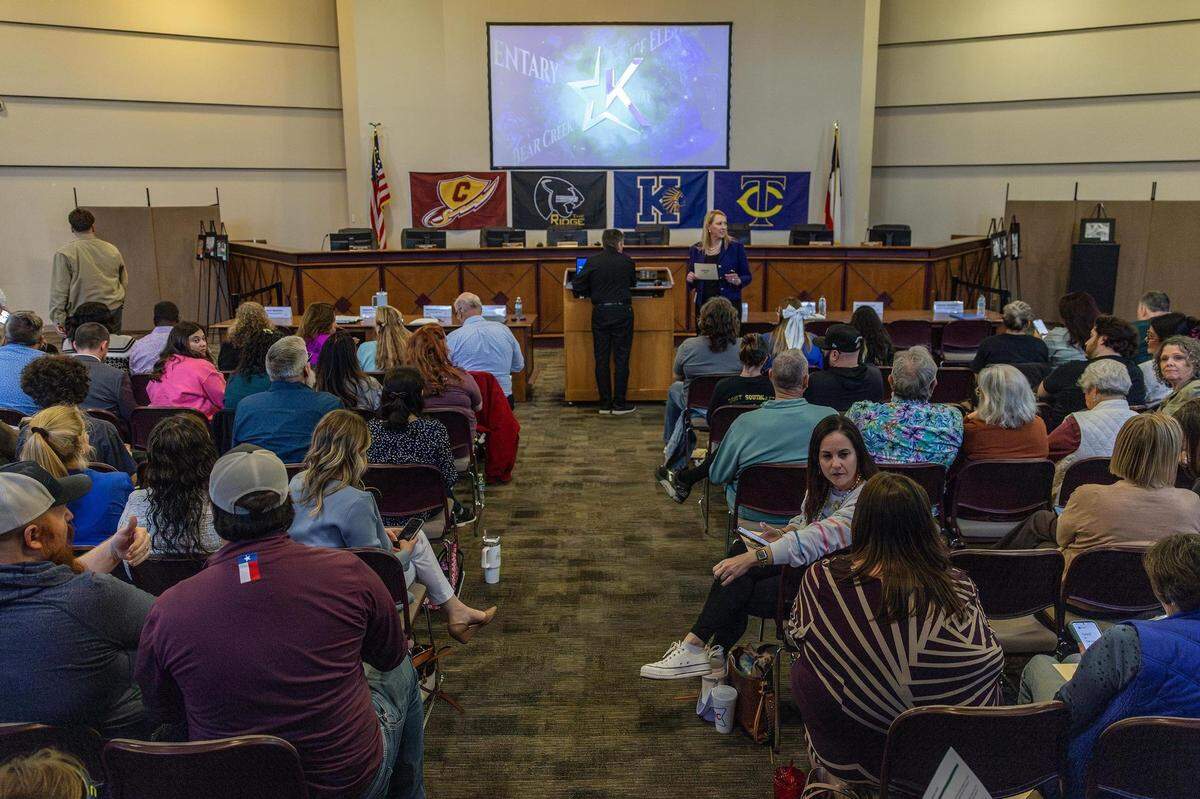
A Keller ISD committee is expected to announce school closure recommendations at its final meeting Thursday .
The district is facing strains due to aging infrastructure, low enrollment and utility costs. The committee will share the information with parents and staff on which campuses would be closed and more details on consolidation amid increasing financial struggles.
Keller ISD has about 30,000 students enrolled, but campus buildings are only 70% occupied. The district has about 2,660 high school seniors across four schools, but only 1,693 kindergarten students.
The Star-Telegram reported in January that Superintendent Cory Wilson said the committee meeting Thursday will present a list of “tentative recommendations” for the criteria that will be used to decide which school or schools will close. The meeting is 6 p.m. at the Keller ISD Education Center, 350 Keller Parkway.
After the plan is shared, the Citizens Bond Advisory Committee will bring recommendations to the school board for a bond election for capital improvements.
Iran war is increasing Keller ISD costs
Rising utility costs play a part in the financial strain. At a March 27 meeting, Chief Financial Officer Pamela Stranathan said that her office is working with departments on where the district can “cut back” and “have some savings.”
“I want to say that I’m very impressed with the departments and how they’re approaching it and coming into our meetings with really positive attitudes,” Stranathan said. “We’re all trying to find ways to stay as far away as we can from any type of programming.”
The district has two electric providers: Tri-County Electric Cooperative and Oncor.
Deputy Superintendent John Allison said the district has negotiated with Oncor on a fixed kilowatt cost per hour, but Tri-County doesn’t have similar agreements. Because of that, the cost of electricity fluctuates.
“Because of the issues in the Middle East with fuel prices rising, they have given us a heads-up that they will be considering a change in pricing per kilowatt-hour that could be anywhere from 10% to 40% increase,” Allison said.
Allison said the district will have more information later this spring and that it may impact the budget.
The district is also looking at how to pay for aging equipment including heating, ventilation and air conditioning, which could require at least $500,000 in budget increases.
Allison said the cost of the district’s portable spot coolers has “almost doubled” because while they own some, they have to rent more units for the times when the HVAC system has issues.
“So we always get to this point in time of year and hope that our weather stays more moderate that we don’t see increases between now and May and a requirement for spot coolers,” Allison said. “But we’ve seen over the last week or two that that is probably not going to happen.”
According to Allison, in last year’s budget the district allocated nearly $1 million for the HVAC system.
“It is something as our equipment continues to age, it's becoming much more expensive, not only in being able to hire technicians and parts. We are just seeing more failure because of the age of the equipment, which will continue,” Allison said.
The district is taking into consideration other restrictions at campuses including removing school microwaves to cut costs after it does an audit. “It’s a legitimate concern, when you take a look at both of our power suppliers also have a demand fee, so your kilowatt hours are more expensive during high-demand (times),” which are usually 10:30 a.m. to 1 p.m., Allison said.
Other budgetary implications the administration is looking at is how senior attendance will play a part in state funding near the end of the year, as more seniors skip classes. Attendance right now at most campuses is 94% to 95%.
“There are still aspects of the last legislative session that TEA still has to make decisions about, how we’ll receive funding, what some of those stipulations will be, and some of those are scheduled to come in June, July and August,” Allison said.
This story was originally published April 2, 2026 at 4:00 AM.