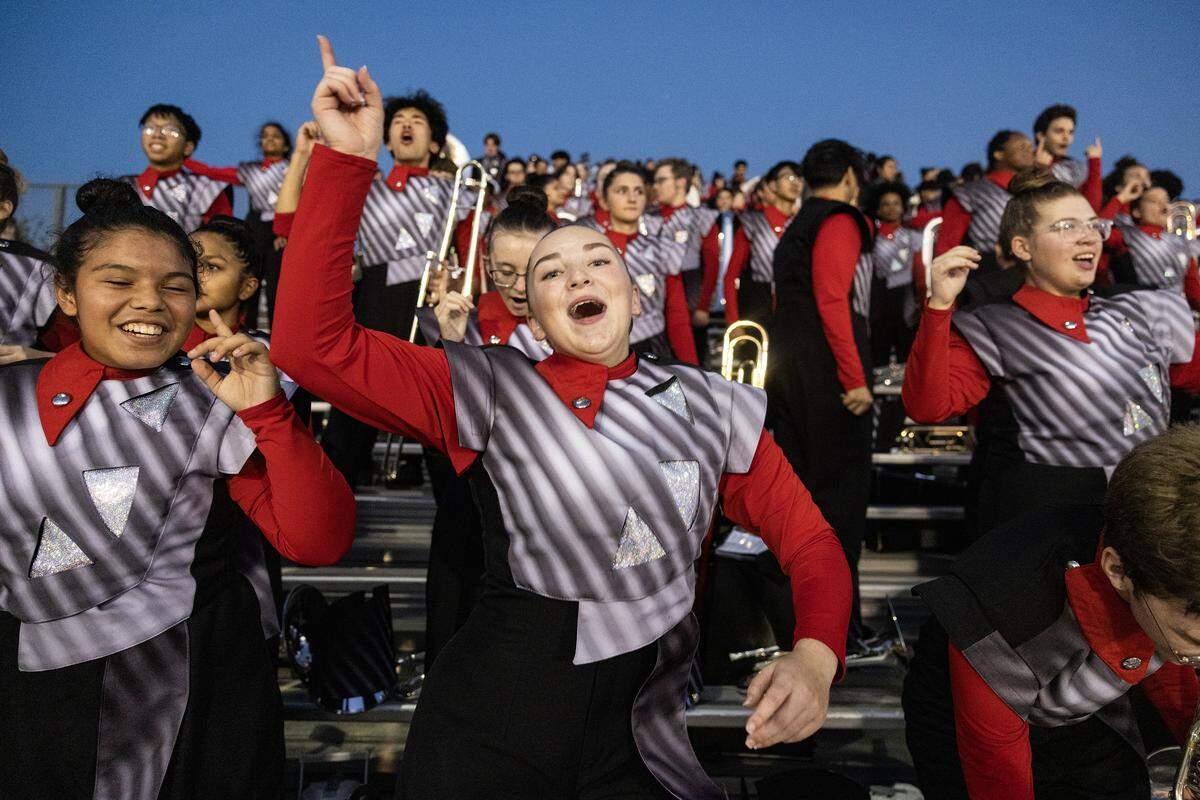
Texas HS marching bands perform only 8 minutes. But the lessons last a lifetime
On the same field high school football players hash out long-standing rivalries and get discovered by recruiters, marching bands are granted eight minutes to draw the crowd’s attention and forge an electricity in their souls.
Anyone living within a mile of a high school is familiar with the piercing “tink, tink, tink” of the metronome that drones on from August to November.
The metronome commands each step, each horn movement, each note. Across North Texas, high school band programs are filled with hundreds of students eager to perfect their show for the chance to impress a statewide audience in November at the Alamodome in San Antonio.
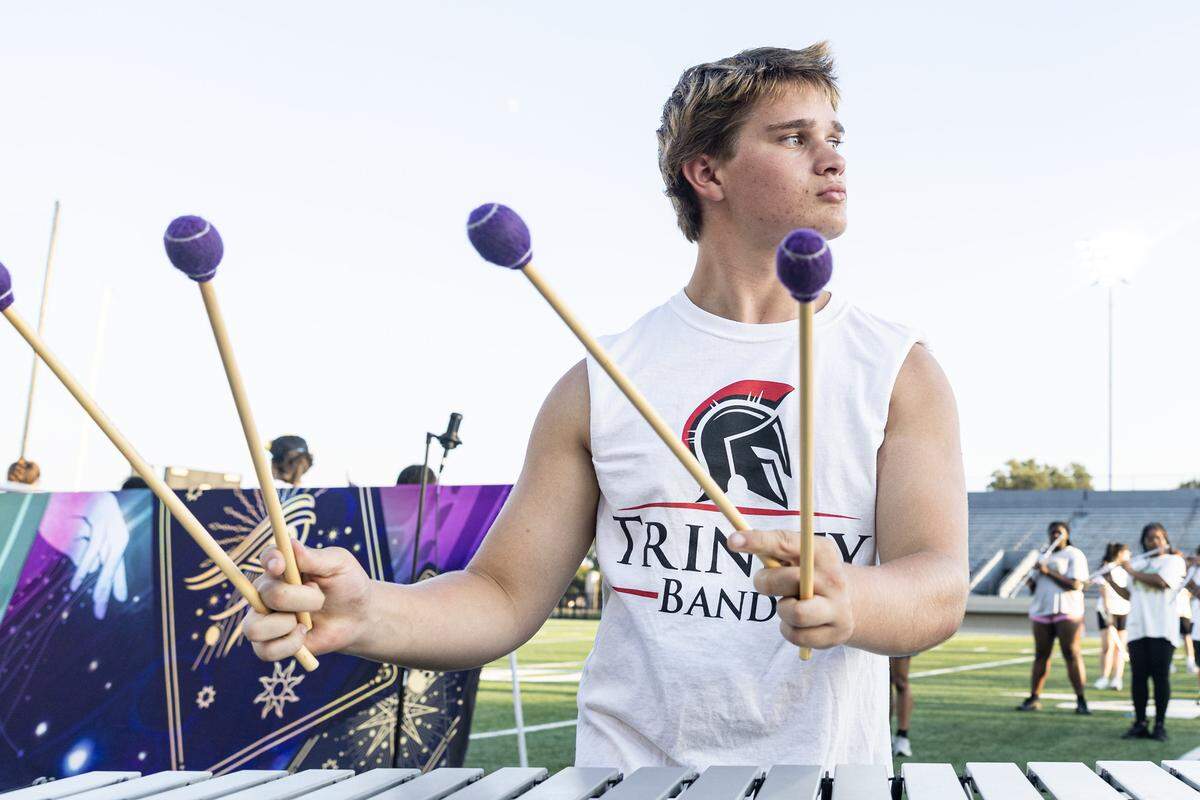
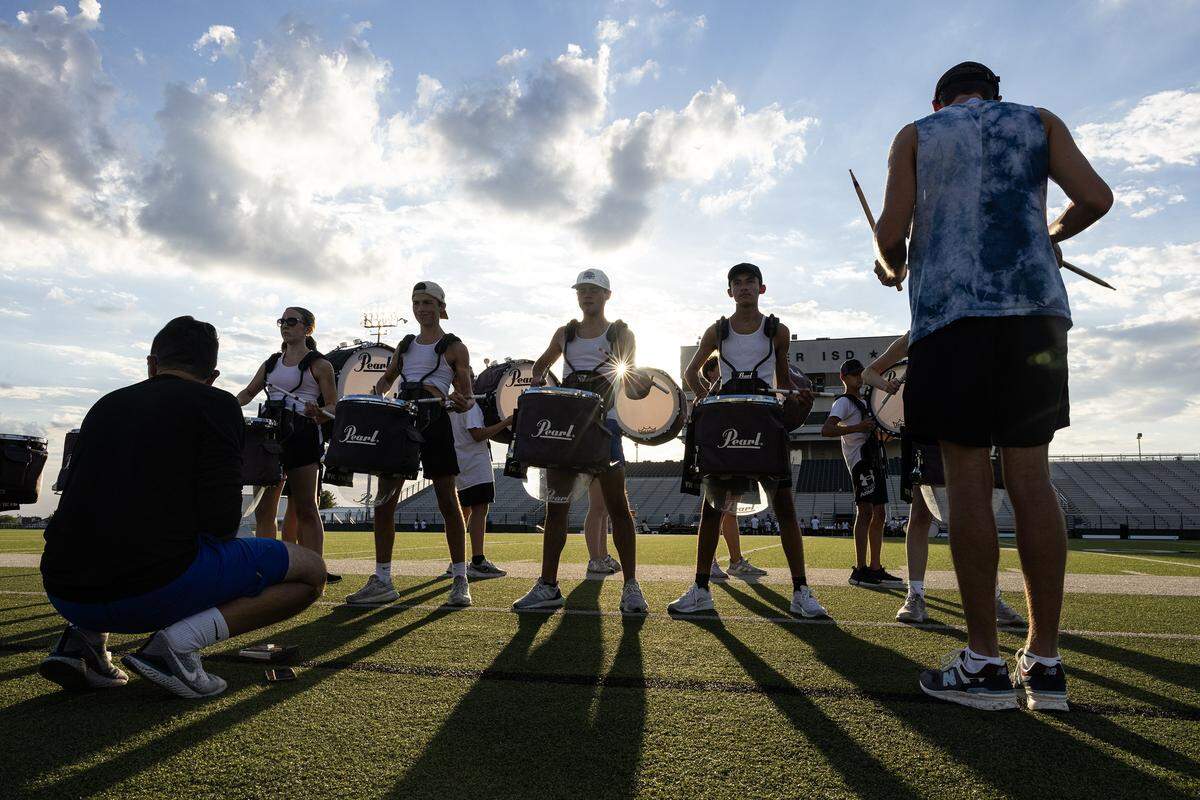
October is the biggest time of year for most Texas band programs because of the demanding schedule. Between homecoming, football games and marching competitions every weekend, band students are spending more time with each other than at home. Most of the programs have between 200 and 300 kids, often making band the largest student organization on campus.
In a state that sets the standard for music education and a region that pushes the limits of what marching bands can do, directors meticulously correct every arm angle, facial expression and the spacing between each marcher. Adding in choreography to each still moment, North Texas bands are expected to create the biggest impact they can visually without allowing the musicality to degrade.
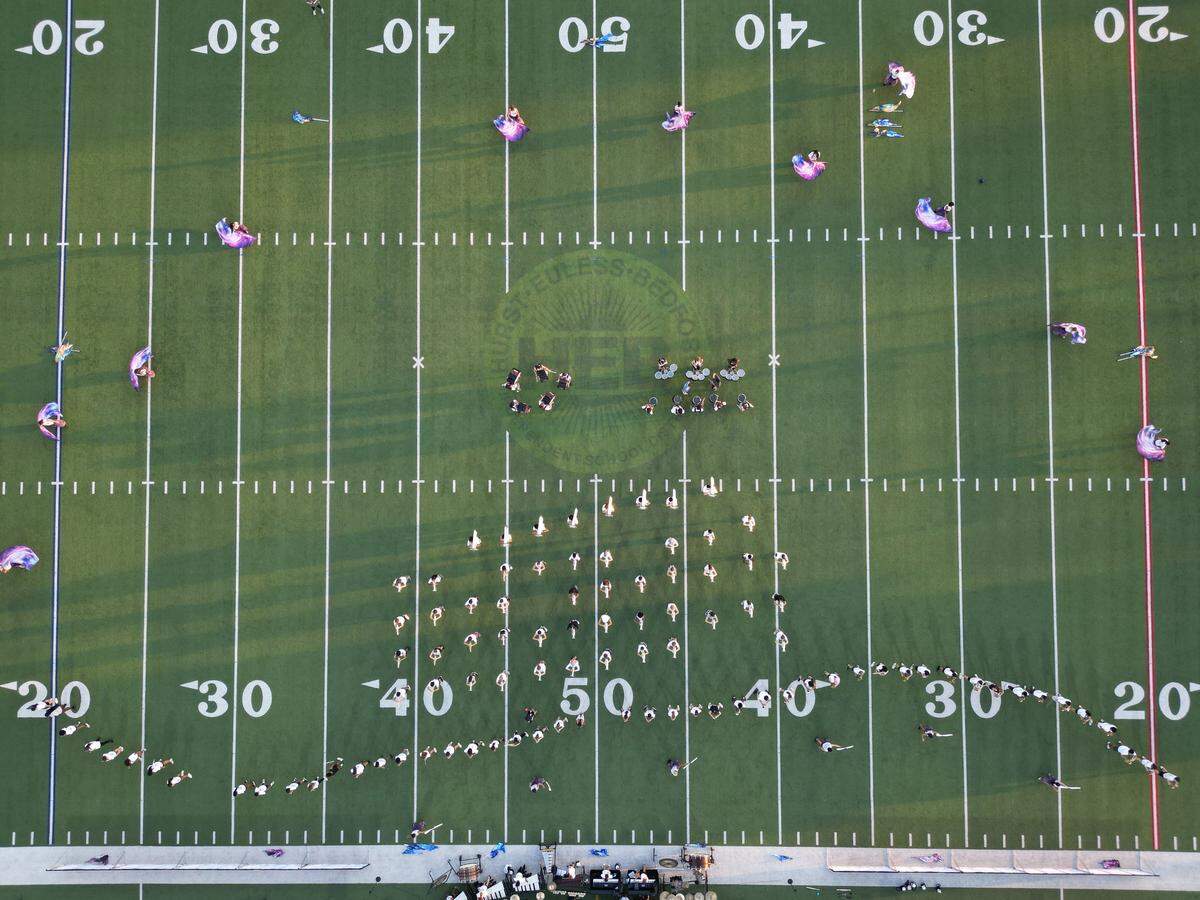
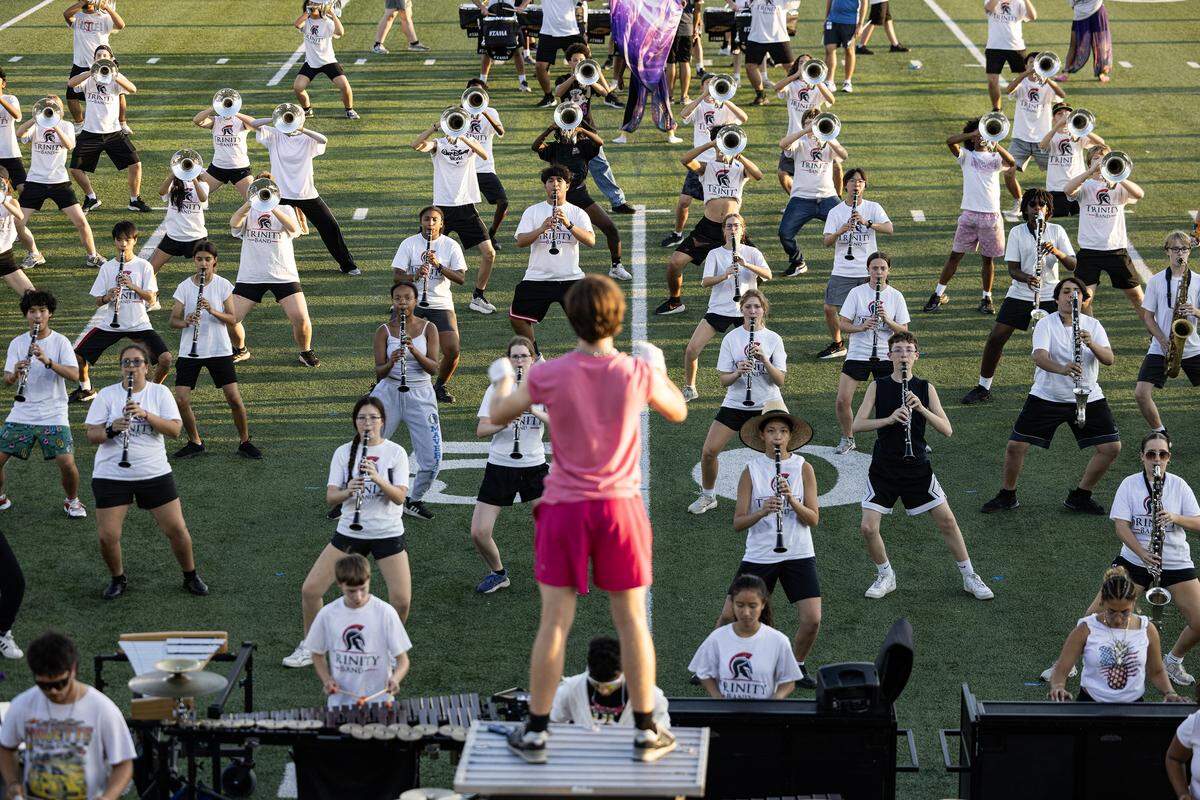
There’s no one reason why band is such a big deal in Texas, but more of a cumulation between Friday night lights, funding from districts and having an active advocate for the arts in the Texas Music Educators Association. Within North Texas, there are three renowned professional ensembles and highly-regarded universities which means the level of instruction is elite. On top of that, iron sharpens iron. When one marching band is consistently creating competitive performances, the surrounding bands are held to a higher standard.
Inspiring crowds of hundreds
Per UIL, bands are allotted only eight hours of practice time outside the school day, so directors run each rehearsal with velocity and rigor to make the most of each moment. During rehearsals, teams of marching technicians, student teachers and band leaders nitpick the show to perfection, sometimes spending much of their practice time going through the show second by second.
If the band does its job right, audiences are left with goosebumps on the final cut-off. Whether the show is about light slowly creeping in on the longest night or an uncomfortable journey someplace, somewhere, marching bands have only eight minutes to get through to each person’s soul.
After a good run, the students know they did just that.
For Aiden Delgado, Boswell Band of Gold drum major, the surge of pride caught him by surprise at the band’s first competition.
“I started smiling,” Delgado said. “I did not expect that, because, obviously when you’re performing, you’re locked in. I didn’t really look at the people in the audience. I was obviously watching the drum major, but seeing it [from the back of the field] I just saw everyone’s face. That was a really cool moment, to see that reaction.”
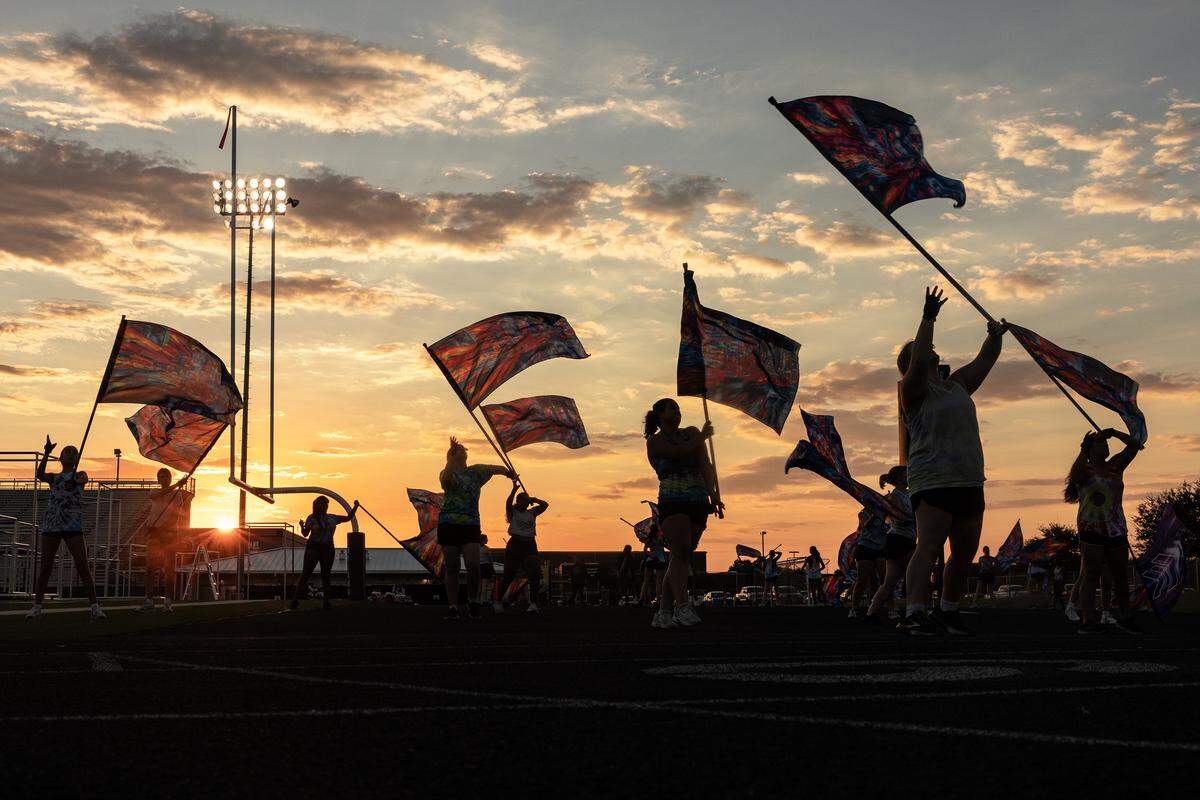
Colleen Joyce, a Timber Creek band parent, is a member of the army of volunteers who help staff the concession stand, fit uniforms, move props on or off the field and feed the students before games. She said she’s never once been in the audience and not lept to her feet to cheer and applaud the students marching.
“I have an incredible sense of pride, because I see the inner workings,” Joyce said. “I see how hard they work. The amount of human beings it takes to pull this program off and to pull it off well is incredible.”
Of her three kids, two have gone through the band program. As she spoke, the third and youngest was trying on his sister’s uniform and pretending to play her trombone. Joyce’s oldest child now goes to the University of North Texas, and Joyce said she’s seen how his time in marching band is benefitting him beyond the field.
“It is a lot of early mornings, starting mid-summer. It’s late nights, it’s days off,” Joyce said. “When some kids are vacationing, they’re practicing. But at the end of the day, they build their best friendships in the program, and they learn how to work hard and how to overcome and persevere. They have good days, they have bad days, but they’re there to lift each other up.”
Teaching from sun up to sun down
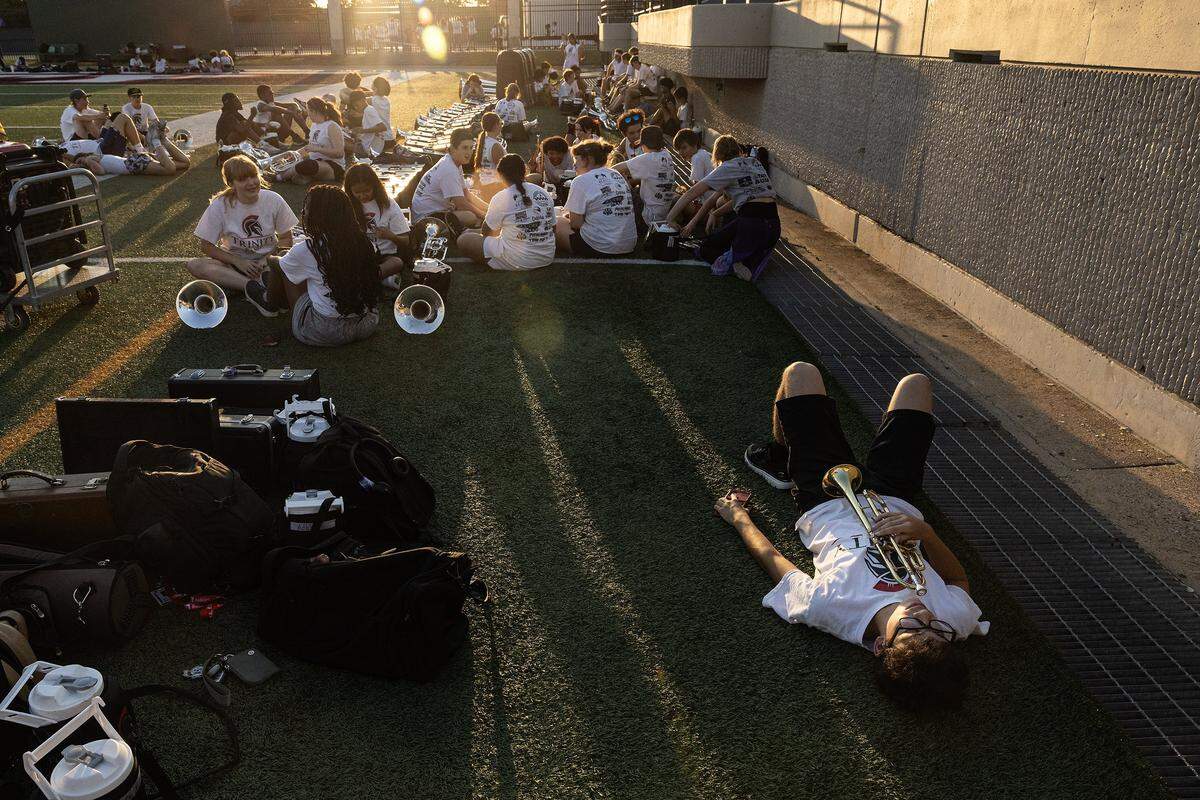
Students often join high school marching band just because their friends are doing it, yet they walk away with much more than a bad tan and a few trophies once their four years are up. There’s an unspoken prophecy that they will leave as more mature and well-rounded individuals than when they first stepped into the band hall.
Because of all the extra hours students spend outside the band class period, directors have a unique position to instill life lessons and model good behavior.
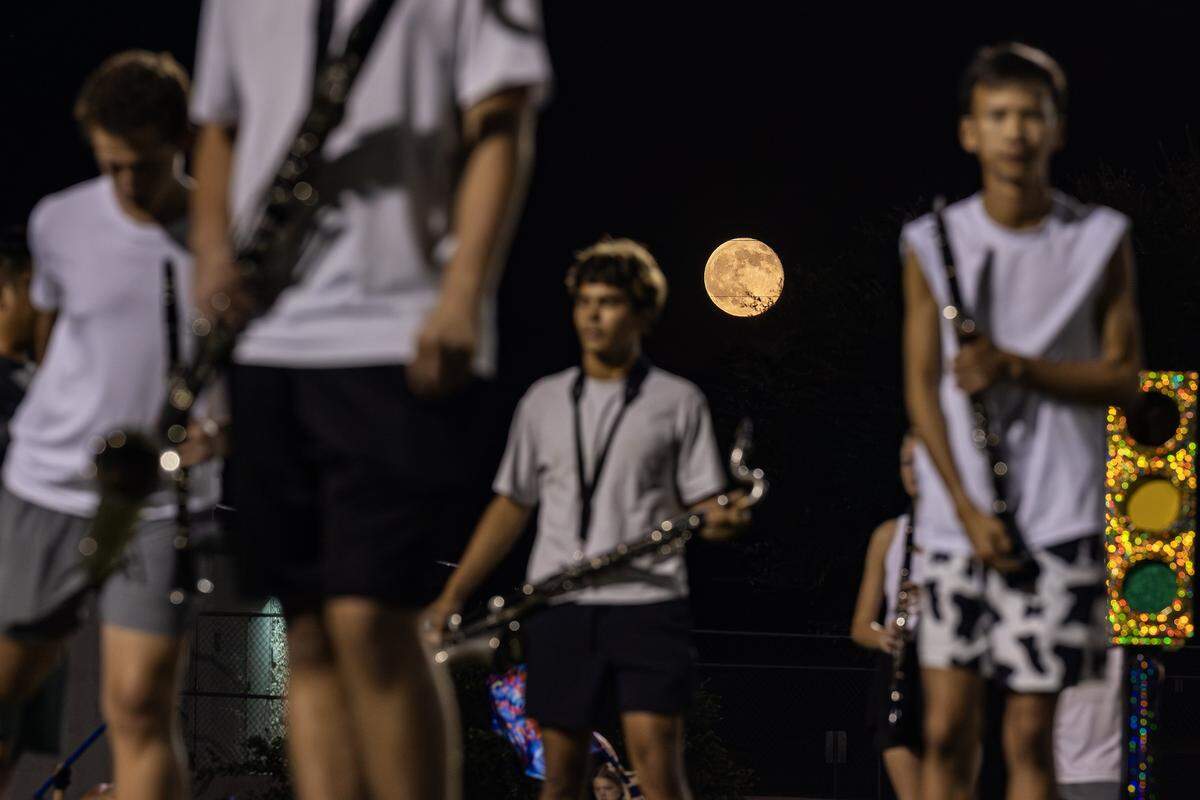
On the field, students get near-constant reminders to hold themselves to a higher standard, be accountable for their actions and take pride in their work. Through the clear dedication and respect band members treat each other and their instruments with, it’s evident to any onlooker that those lessons are being internalized.
“I really think kids this age, they want adults to teach them about life and how to adult, and I think we do that through this activity,” Suzanne Dell, head director of the Hurst L.D. Bell Blue Raider Band, said. “I think kids crave that kind of interaction from adults because they see themselves as on that threshold between being a child and being an adult, and so they’re looking to adults that they can trust to go, ‘Here’s how to do it. Let me give you some tips.’”
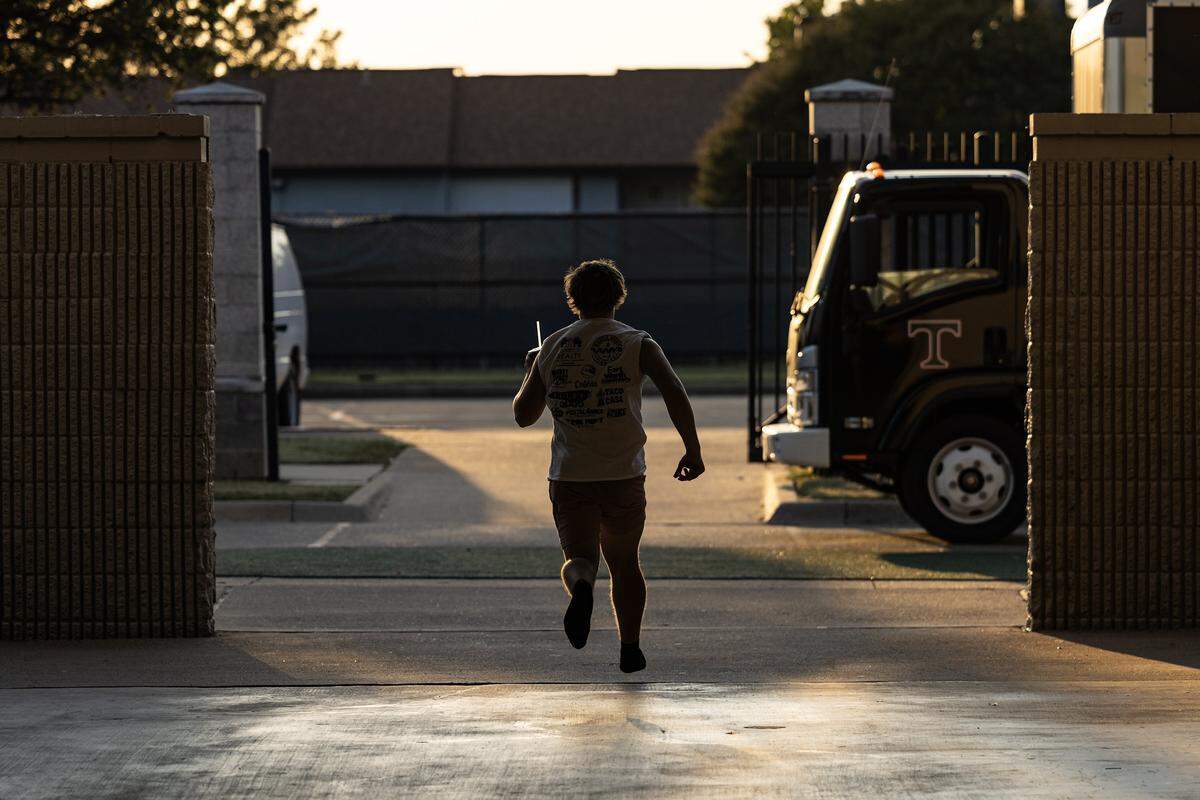
With hundreds of students in the band program at a time, Keller Timber Creek director Brad McCann might see a handful pursue music as a career. But that’s not the goal, he said.
“I’m not in the business of making little ‘me’s,” McCann said. “I’m in the business of making students that are well-rounded, that can be good human beings with each other and have a respect and a passion for band and fine arts.”
Helping high schoolers come into their own
Nathaniel Kelley, Boswell clarinet player and varsity football starter, said band taught him the hard work and dedication he applies to being on the football team. His team is filled with hard workers, he said, but it’s different when you’re getting all the glory.
Band kids, Kelley said, are “wonderful humans” who treat people well and are at the top of their class. He said when his brother went through the marching band program, Kelley saw how it made him into a better person, and that’s why he decided to join too.
Southlake Carroll Dragon band director Ken Johnson said students in his program learn time management and how to work with all kinds of personalities, but they also learn how to properly send an email.
If he receives an email without a salutation, a body and a “Cordially, yours” or some other sign off, Johnson responds with two words: “try again.” Earlier this year, a student who graduated from Carroll five years ago reached out and thanked Johnson for teaching him that.
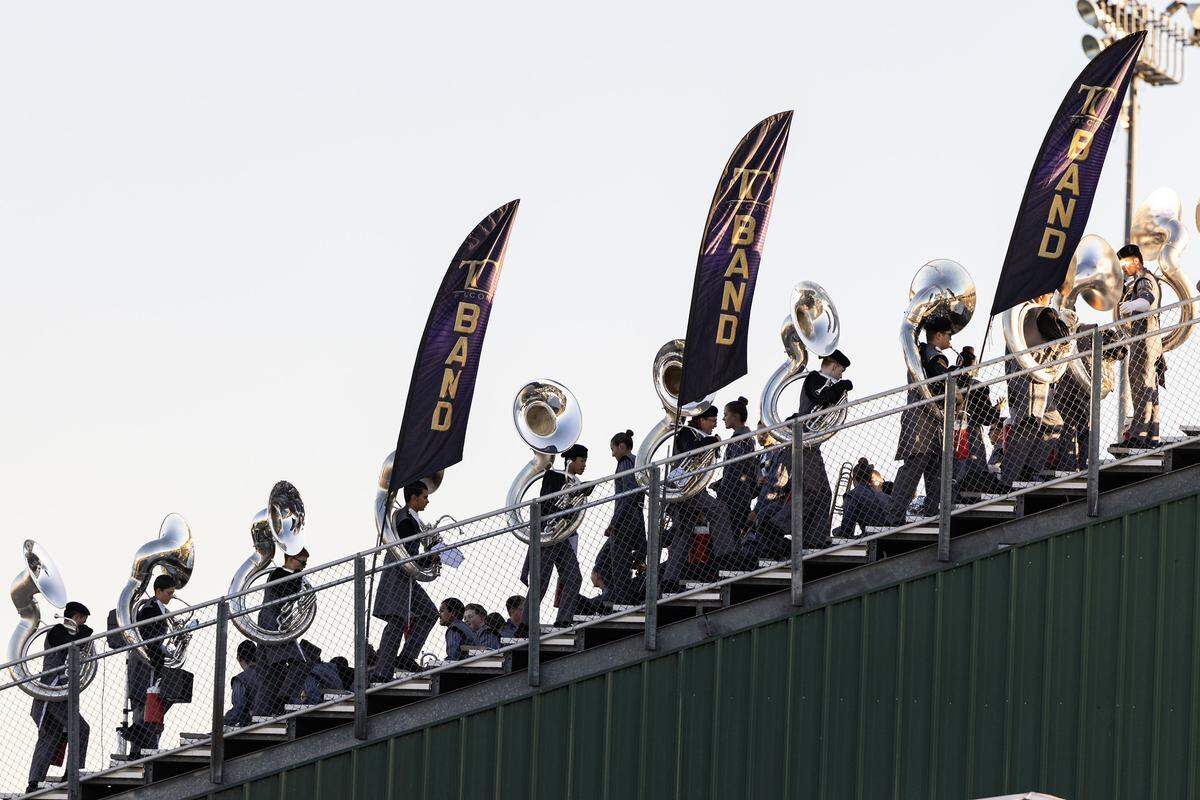
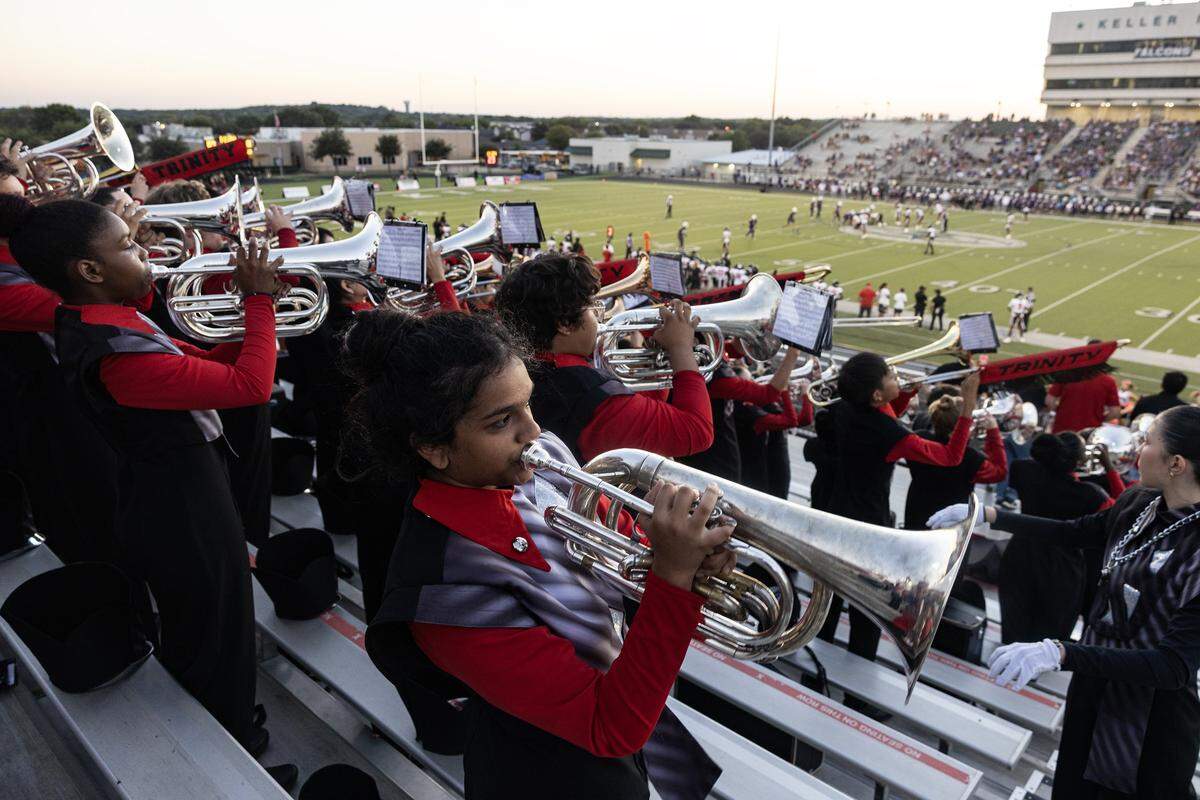
“He said, ‘I want to thank you because my boss complimented me on the professional email that I had sent to him.’ He said, ‘I don’t think that would have happened had I not had your guidance on things like that,’” Johnson said. “You don’t know if they’re always listening in the classroom, but when they reach back out as alumni and say, ‘I remember when you said this, or I remember when you did this, and it made a difference,’ that’s when it pays off.”
Nick Travis, a student teacher for the Euless Trinity Trojan Band, said he’s learned that teaching music is about 10% of the band staff’s job. The other 90% is helping students become inspired and discover who they are.
Another Trinity student teacher, Emily Dean, said she pursued music because she loved how band made her a better person, and it continues to do that for even though she’s not the one being taught anymore.
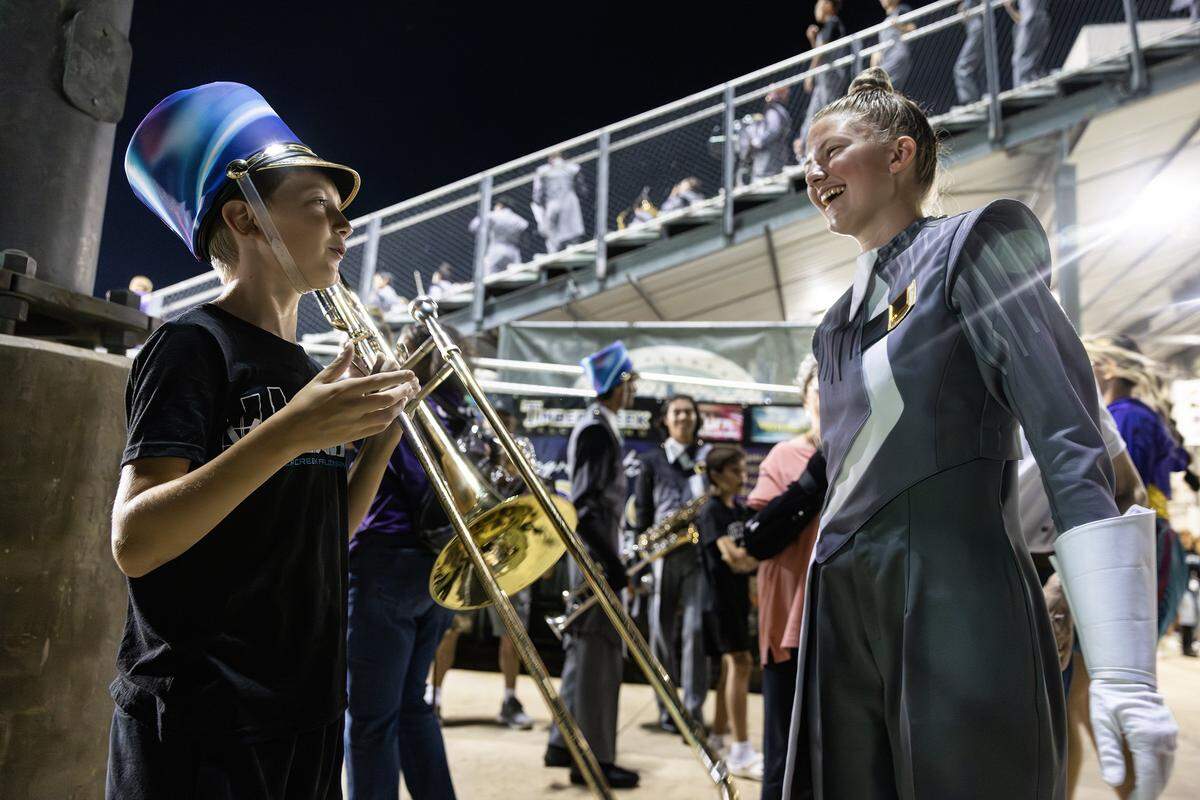
“Being on the teacher side, we’re pushing these kids to do their best and encouraging them, like, ‘Hey, how you do the small things is how you do everything.’ The more that we say these things, I have to stop and reflect on myself,” Dean said. “I’m holding these kids to such a high standard, I got to make sure that I’m holding myself to the same standard.”
In a world where technology can give someone instant hits of serotonin, McCann said marching band is the embodiment of delayed gratification. It takes months of grit and determination, McCann said, to leave the audience with an innate need to smile and cheer at the end of those eight minutes.