Fort Worth ISD’s new transportation director aims to make bus system more efficient
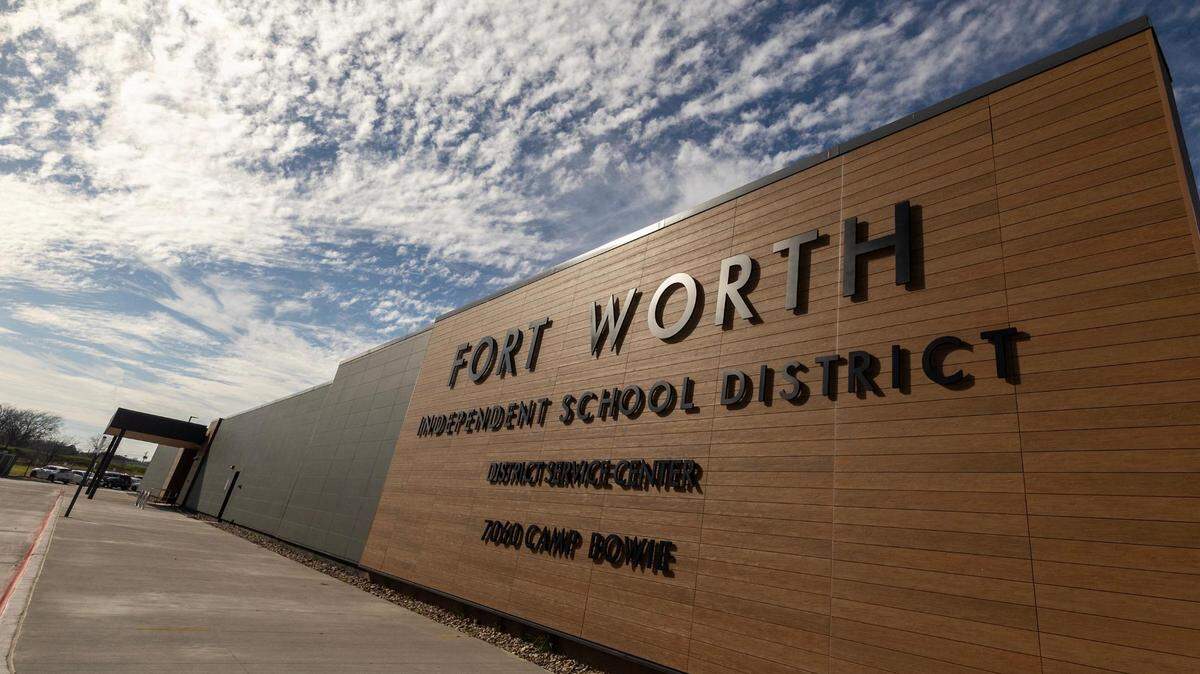
The Fort Worth Independent School District’s new executive director of transportation presented his plans to turn around a department clouded by a poor reputation and recent scrutiny by its workers.
Nathan Graf shared his initiatives with school board members to make the district’s bus system more efficient and more engaging for students on their way to and from school. During the Tuesday, April 8 board workshop, he said he wants to consolidate the district’s routes from 216 to 190 and hire and train at least 30 more drivers by the upcoming school year. He’s created a committee to help identify the newly combined bus routes and will host weekly job fairs where current drivers are recruiting new ones.
He acknowledged the department lacked structure and facilitation of employee feedback but said he’s eager to turn it around.
“I have not seen anything over the last five weeks that we truly cannot overcome, and my goal for our transportation department is to be the best, not just in the city, but in the state and in the nation,” he told school board members.
Graf’s been with the district for five weeks, excluding spring break, and previously oversaw Houston and San Antonio school district transportation departments, he said.
Since coming to Fort Worth ISD, he’s moved his office to the same spot as the department’s drivers and workers to be more accessible and also shared his personal phone number with employees, who he said “all seemed a little bit surprised by that.” The department has three locations that he’s centralizing into one, and its dispatch center is being redesigned for better productivity, Graf said.
Drivers and employees are also weighing in on an update of the department’s decade-old handbook and helping to create a new policy that determines who gets to pick up field trip gigs.
“The way that our drivers make money is through their routes and through field trips. Field trips are a really, really big deal. We do a ton of field trips here, and so it’s important that those field trips are distributed equitably and transparently to our drivers,” he said. “They’ve told me that they didn’t have a seat at the table before. Any decision that we make, we’re going to bring the drivers and monitors in, and you’ve got greater buy-in if they have that seat at the table.”
Under Graf, the district is also rolling out a program that will automate the district’s routes and notify parents if, for example, their child’s bus is late or if their child leaves something on the bus.
In the fall, school start times will also be adjusted so drivers can transition between their routes in a timely manner, he said. New technology being eyed for the fall would also allow students to use a badge when boarding and exiting the bus.
He is also introducing a Rolling Readers program where bus drivers will play audio books for students during the morning and afternoon rides. Their buses will also be decorated to match a monthly theme.
“Of course, it benefits the kids, but then it keeps the kids occupied when they’re on the bus, and so that way, the driver can focus to make sure all the kids are safe, and then the driver can also readily focus on the road,” Graf said. “Plus it makes the drivers feel like… they’ve got a part in our kids’ education. And it ties them even greater, to the district, to the kids, to the parents, and to our department.”
School board member Wallace Bridges complimented Graf on his enthusiasm and overall plans for the department. He had always heard about obstacles with retaining bus drivers but never heard a plan to keep them with the district until Tuesday, Bridges said. He’s also received several calls from parents about their child’s bus being late and was eager to see the notification system come to fruition after Labor Day.
“I love that you came in and said, ‘Hey, here’s some of the problems,’ and being upfront about that. And ‘here’s some strategies and solutions,’” Bridges said. “Shout out to you, my man.”
Graf’s presentation comes two weeks after transportation department employees shared their frustrations during the public comment portion of the district’s last school board meeting. At least three bus mechanics and maintenance workers raised concerns about staffing levels and outside contractors.
During the meeting, the board approved a three-year contract for fleet management that totals more than $7 million. Board member Camille Rodriguez was the lone dissenter during the board vote. School board member Kevin Lynch said he appreciated the maintenance workers who came to speak and share their concerns, but said the contract was a necessary measure for students to get to school.
George Thomas, who has worked with Fort Worth ISD for 35 years, said the department is down to two mechanics. He urged the board to postpone its vote on the contract and urged them to raise wages that would draw more in-house mechanics.
“Thirty years ago when I started, we ran three shifts. We had about 28 mechanics. Now we’re down to two for all 300 buses,” he said. “Somewhere, no one kept an eye on that.”
Jose Lopez, another Fort Worth ISD mechanic who is also a district parent, said two years ago when he spoke up about his concerns regarding school bus maintenance, supervisors hired outside contractors “to put a Band-Aid on the situation.”
“As we have previously told the last three transportation directors, we need more mechanics,” Lopez said. “It’s a big concern. I’m here to ask some questions that the immediate supervisors cannot answer — Why are you willing to spend millions of dollars on a private contractor taking over the shop, and why is it happening?”
Emily King, a Fort Worth ISD parent of five students, said her family has been impacted by bus delays almost every week this year without notifications or warnings. Her daughter who has dyslexia and receives special education services misses out on crucial learning time as a result.
“I have called, I have talked, I’ve asked for further information… I’ve come up at brick walls. While this is a major inconvenience for any family, it is particularly harmful for students with the special education services who rely on every minute of their IEP support,” she said. “When (my daughter) arrives late due to transportation issues that the district does not proactively address, she loses her services she is legally entitled to. This is not a small issue. These lost minutes compound over time, and when you as a district fail to meet her needs, you widen the gap that she’s already fighting so hard to close.”