
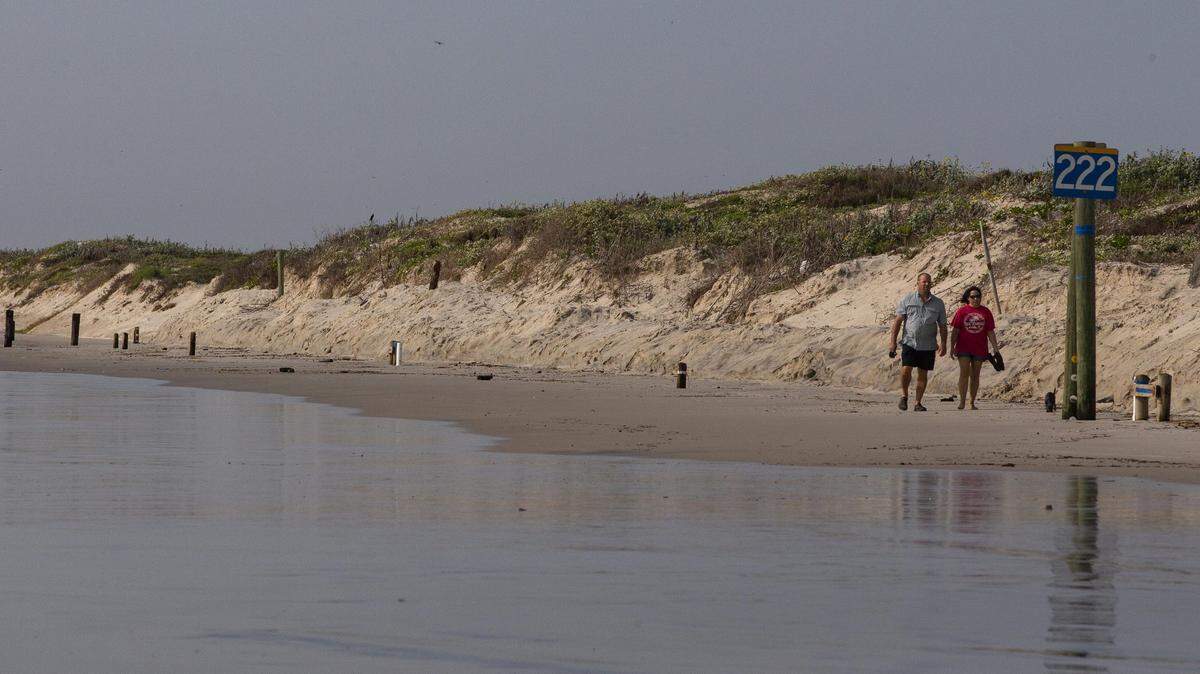
How will the Texas Coast look in 100 years? A UT Arlington professor is working on that
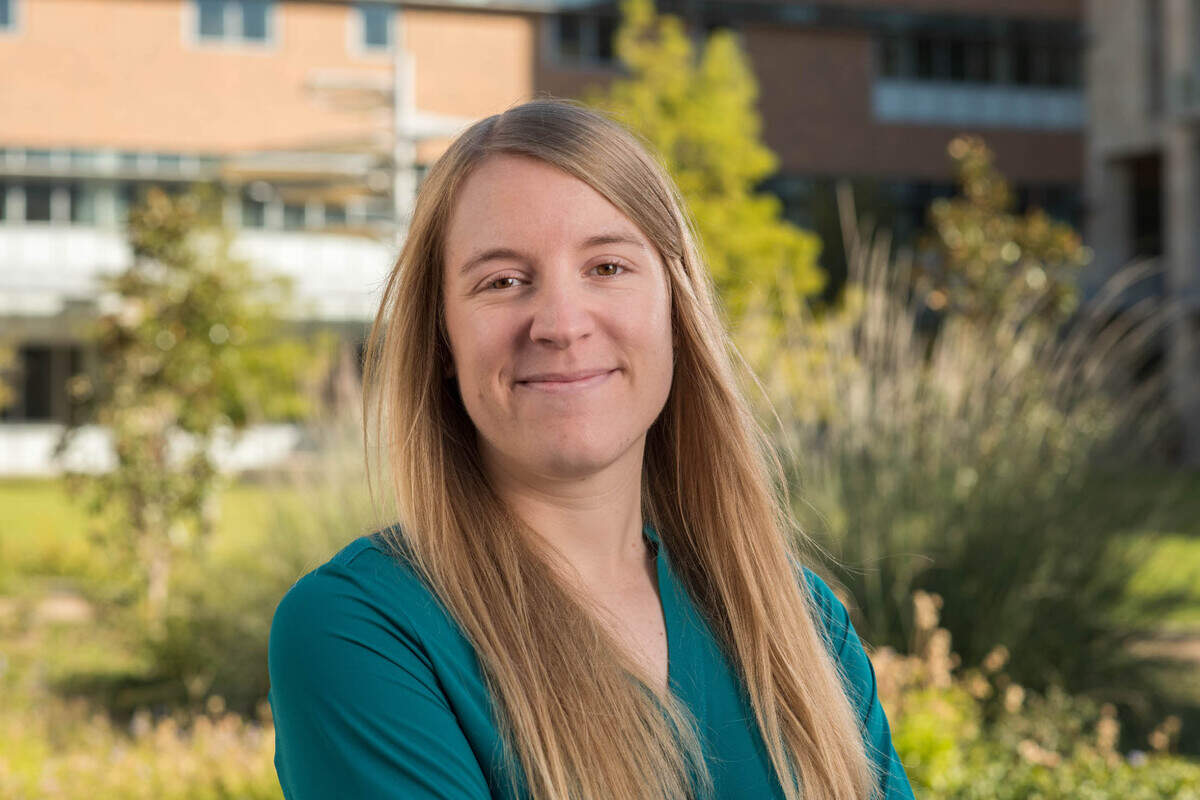
You’ve likely never heard of University of Texas at Arlington associate professor Michelle Hummel. Why should you have? Unless you’re one of her students in the school’s civil engineering department — or just a real big fan of engineers — Hummel’s name has probably eluded you. But it’s one to take notice of because Hummel is doing more for our state and its people than you realize.
In February, the National Science Foundation awarded Hummel with a Faculty Early Career Development Program award, known as CAREER, for her research into engineering solutions to mitigate the impact of flooding on the Texas coast. Hummel’s latest project, which began in March and will run until February 2030, is being funded by the nearly $560,000 grant that comes with the award.
Add that money to funding Hummel has received for other ongoing projects, and she’s working with nearly $5 million in grants to further her investigations.
.JPG "DSC_4499 (1).JPG")
When asked if that dizzying number is acknowledgment of ground-breaking research, Hummel is humble, saying it has more to do with her area of focus.
“I think the topic is probably the main thing,” she said, pointing to the fact that coastal flooding is a growing area of concern. “Given a lot of the large events that we’ve seen recently, hurricane events and other heavy rainfall, things like that, there’s been kind of a renewed interest in the last 10 years or so about how we are going to respond.”
Hummel said sea levels are rising rapidly across the globe. An Environmental Protection Agency study cited by the University of Texas at Austin shows it’s happening even more rapidly along the Texas coast than in many other places. The EPA estimates the gulf will rise by as much as one foot by 2050. Over the next century, a rise of up to four feet is possible, which “could cover a substantial amount of land along the Gulf Coast.”
With the expectation that this is going to happen, and that it will likely have dire consequences for coastal residents and economies, Hummel is searching for novel ways of helping communities adapt and prepare for an uncertain future. To do that, she’s using San Francisco as a case study.
In 2014, San Francisco city leaders adopted a strategy that takes sea level rise — which could be as much as 66 inches by the end of the century for the Bay Area — into consideration for urban planning and development purposes. When you see the numbers, it’s easy to understand why: approximately $55 billion worth of property in San Francisco would be at risk of flooding under the worst-case scenario
While the financial impact to the Texas coast would be considerably less than that, assuming property values in each region remain relative, it would still be in the billions of dollars. And it’s even more costly when you consider the potential loss of life.
San Francisco’s strategy is three pronged: it calls for some combination of raising or otherwise waterproofing at-risk property, creating barriers to protect at-risk property and/or relocating at-risk property. This is where Hummel’s expertise comes into play.
Focusing primarily on Corpus Christi, Hummel is looking at using natural barriers like vegetation and wetlands to create frictional buffers against storm surges and flooding. In areas where there isn’t space to design a natural barrier, she’s looking at engineered solutions like sea walls as well as options for raising structures to allow for floodwaters.
“We’re going to have to get creative about what we’re doing in our communities,” said Hummel, adding that it can be challenging since coastal property is highly coveted by residential and commercial developers.
“I think many of the communities are kind of trying to balance the need for more housing and the need for supporting the tax revenue while at the same time recognizing that if we build in those areas, we’re going to either have to implement very expensive protective infrastructure or be willing to accept repetitive flooding or even permanent inundation in the future,” Hummel said.
It is precisely that relationship between humans and the environment that first got Hummel interested in civil engineering. She grew up visiting national parks with her family, and she noticed how next to these beautiful natural spaces there were oftentimes people trying to make a living off the land itself through mining and agriculture.
“I was always fascinated by the kind of complex management and decision-making processes involved,” said Hummel. “When I went to Berkeley to study for my masters degree and Ph.D., I was presented with the opportunity to work on sea level rise, which fits very nicely into the conflicts between human desires and societal needs versus what is happening from the natural standpoint.”
While San Francisco can provide a useful blueprint for planning for rising sea levels, Hummel says comparing the Bay Area to the Gulf Coast is like comparing apples and oranges. For one, California’s steep coastal mountains create a barrier that keeps floodwaters from extending over a large area. The Texas Coast, on the other hand, is low lying, putting a greater area at risk. There’s also what Hummel calls the “downstream impacts” of flooding on our oil and gas industry, which is heavily concentrated around the gulf.
“In Texas, the energy infrastructure also has obvious economic implications that extend not just locally, not just through Texas, but really nationally.”
Hummel is quick to point out that finding solutions to rising sea levels requires an interdisciplinary approach between physical scientists and engineers, and she says her success in getting funding is due in large part to her students and colleagues at UTA who have helped with her research and with grant proposals.
As for how recent executive orders from Washington impacting federal funding will affect the money she needs to continue this work, Hummel declined to speculate. In a statement, a university spokesperson said, “UTA is continually monitoring evolving executive orders, guidance and directives to assess and understand potential impact.”
Regardless, Hummel remains hopeful, despite what she believes is coming with rising sea levels.
“I think we have a lot of smart people working on this problem,” she said. “I’m optimistic because people seem to really recognize these threats and they’re talking about them more ... There are a lot of conversations here in Texas, even if we might seem to be not as far ahead as some other areas, there are a lot of conversations going on here with state agencies, with academic partners and with communities to try and discuss what the flood needs are, particularly for coastal areas.”
This story was originally published March 4, 2025 at 3:40 PM.