Why does TCU want to be ‘R1’? What a top-tier research university will mean for Fort Worth
TCU’s recently announced goal of becoming an “R1” university, a prestigious designation awarded to the nation’s top research institutions, is considered a big deal in the world of higher education.
But what exactly does that mean for TCU — and more broadly, what would it mean for Fort Worth?
The university is embarking on its plan at a time when Texas A&M — already an R1 university — is building a campus in downtown Fort Worth that has been lauded as a “game changer” for the city. UT Arlington, also an R1 institution, is moving into west Fort Worth with a new satellite campus. And just last month, rival SMU in Dallas achieved R1 status, which its provost described as a “game-changer” for recruitment, innovation and a “focus on shaping world changers.”
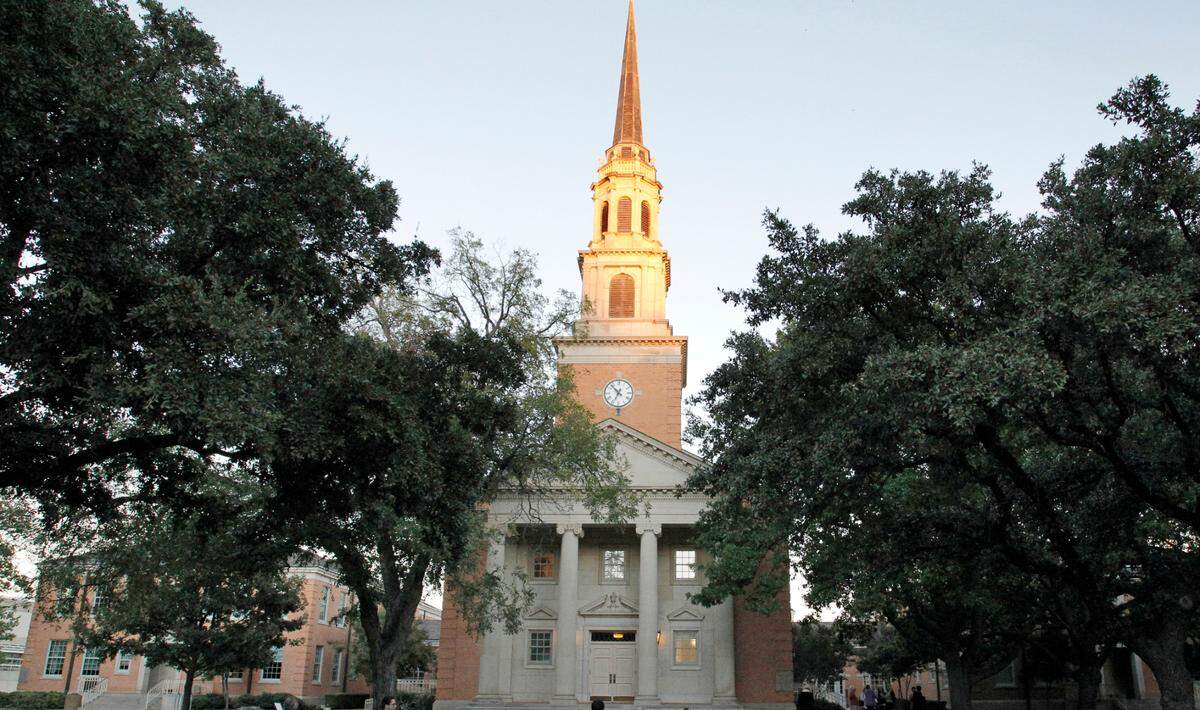
TCU is signaling that it too intends to be a game-changer. Its strategic plan for growth, unveiled in January, states that achieving R1 status by 2035 will “solidify its position as the premier academic partner for the Fort Worth and broader North Texas community.”
Though becoming an R1 will take time, the university has already started boosting investments in research. TCU’s president and next chancellor, Daniel Pullin, told the Star-Telegram in January that the university isn’t single-mindedly pursuing R1 status. He said the achievement will be a product of a larger, more important goal: improving academic rigor.
What is an R1 university?
As of this year, only 187 universities in the U.S. have R1 designations, including 16 in Texas.
Among those in North Texas are UT Southwestern Medical Center in Dallas, the University of North Texas in Denton, UT Dallas and Baylor University in Waco.
There are enormous variations between R1 institutions, from the number of students they enroll to the fields their subjects research.
The designations, awarded every three years by the American Council on Education and Carnegie Classification of Institutions of Higher Education, have multiple tiers. R1 means “very high research activity.” TCU is currently an R2 university, meaning “high research activity.”
So, why do universities care so much about achieving R1 status? The designation is widely viewed as a ticket to securing more grant funding, top faculty and the prestige that comes with being in the same category as every Ivy League institution. R1 universities are also believed to drive economic growth in their communities.
To attain R1 status, institutions must award at least 70 research doctorates and spend $50 million on research annually. TCU has been increasingly investing in research for the past few years, but it has a ways to go.
During the 2022-23 academic year, TCU awarded 51 research and scholarship doctoral degrees. The university’s research operating expenses were over $17 million for the 2023-24 academic year, up from over $14 million the previous year.
The university spent over $8.7 million in federal funds alone on research and development in the year ending May 31, 2024, according to TCU’s most recent audit.
Though institutions celebrate R1 status, the designation is more bragging rights rather than a prize. Carnegie classifications don’t rank colleges, and a designation isn’t a requirement for grants or other funding opportunities.
“It’s really just a marker of the amount of the breadth and the types of research that are happening at the institution,” said Mushtaq Gunja, executive director of Carnegie classification systems and senior vice president at ACE.
“It really varies significantly, sort of institution to institution,” he said, “and so it’s a little bit hard for us in some ways to be able to give a one-size-fits-all answer to like, what it means to be an R1 institution, because it just varies so much.”
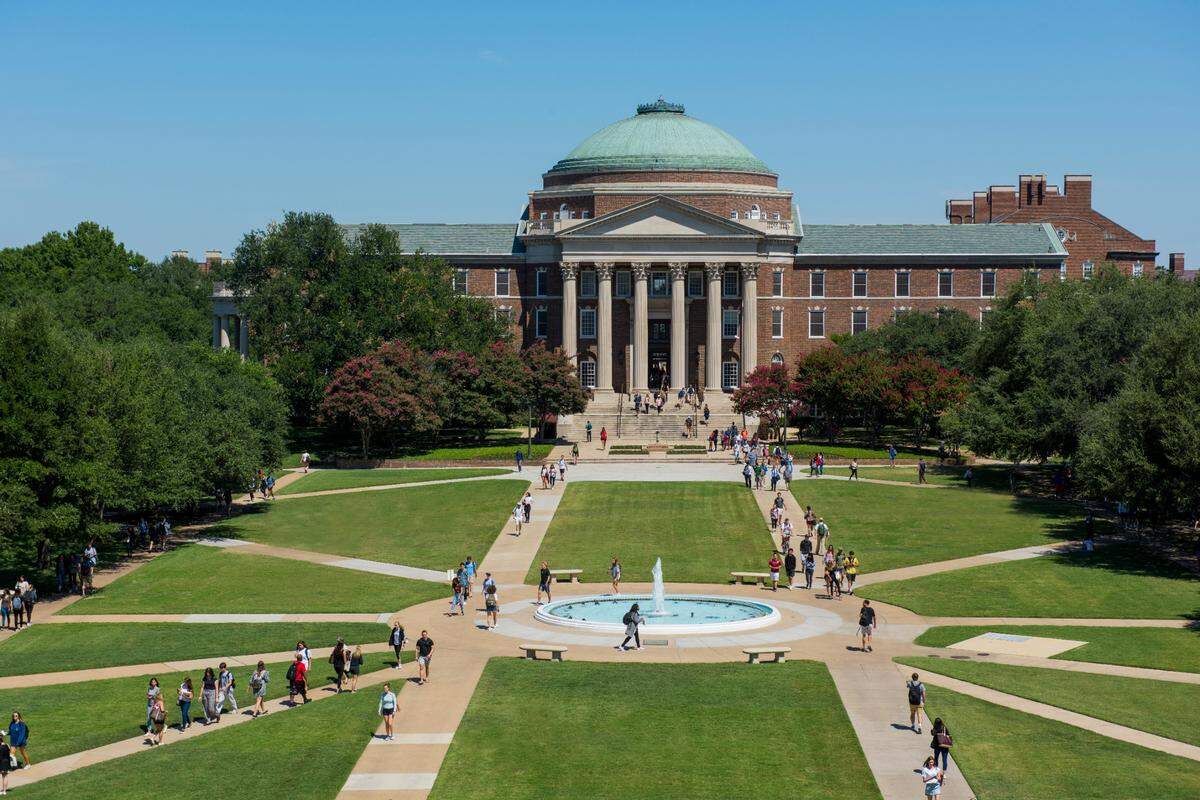
How SMU became an R1 university
SMU had been pursuing R1 status for over a decade, said President R. Gerald Turner.
“We have anxiously awaited it, and we’ve had our whistle blows and fireworks ready to go now for about six months,” Turner told the Star-Telegram. “So, it was good to finally hear that they made it official.”
After the Great Recession, SMU realized it could gain R1 status without investing in traditional “wet lab” research like in chemistry and biology, Turner said. Instead, the university began growing its advanced computing program.
SMU got a supercomputer and hired faculty who could use the data it generated for research across a range of subjects, including English and history. It more than doubled the number of research and scholarship doctorates awarded from 2010 to 2023, to a total of 139 research doctorates in 2023, according to data from the National Center for Education Statistics.
SMU is now home to a cutting-edge AI data center called NVIDIA DXG SuperPOD. When it was installed in 2021, SMU was one of only two universities in the country to have the technology.
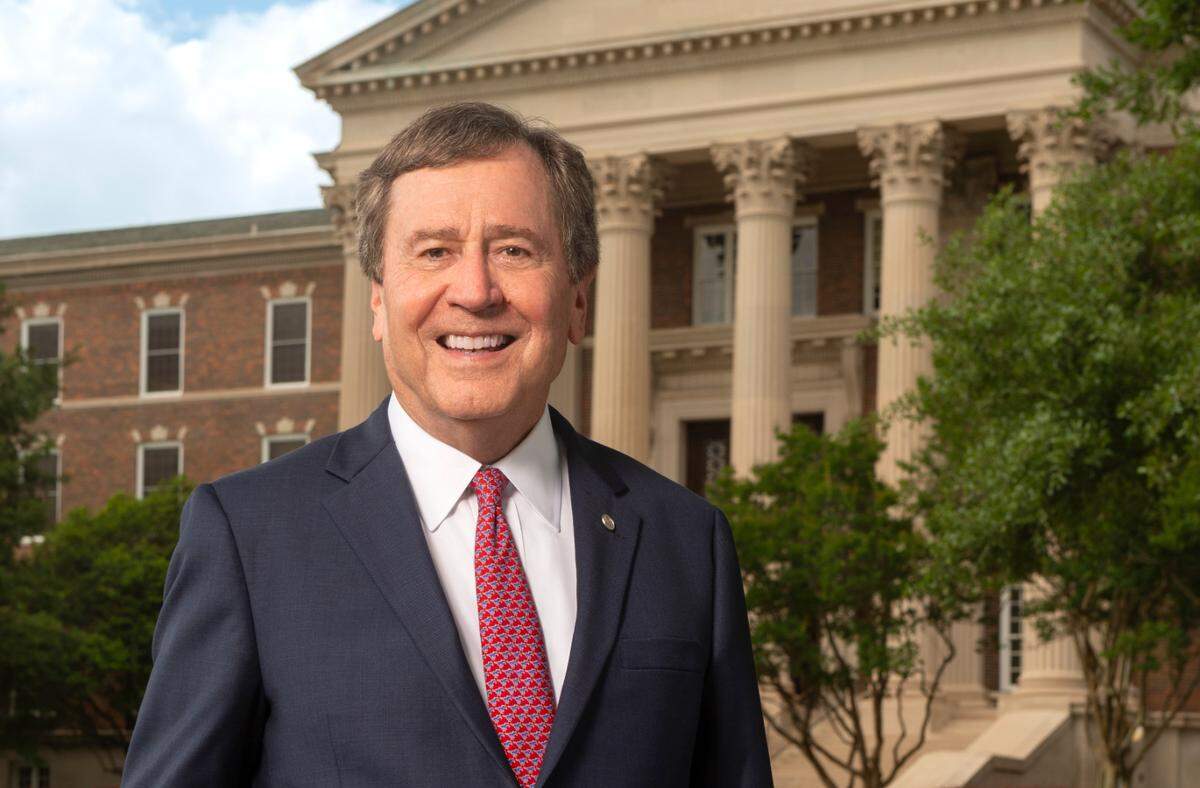
Turner said the number of endowed faculty at SMU has tripled since the university began pursuing R1 status, none of which have been funded by the state. Recruiting was an expensive endeavor that wouldn’t have been possible without the support of alumni and boosters, he said.
“You have to get the faculty that can do this,” Turner said.
Recruitment has become easier since SMU joined the Atlantic Coast Conference in July, which deepened its ties to other research-focused institutions like Duke University and the Georgia Tech.
The R1 label demonstrates to prospective graduate students and faculty that an institution is serious about research, Turner believes. The region needs more top-tier universities, he said, because there aren’t enough highly educated people to work at some of the companies expanding in the Metroplex.
“It’s good for Dallas to have as many high ranked institutions as possible,” Turner said.
Turner is confident TCU can achieve its goal of being designated an R1 institution by 2035.
“They’ll get there,” he said.
‘The mythos’ of R1
TCU’s path toward R1 status might be a little easier to navigate than in the past.
Ahead of releasing this year’s list, the Carnegie Foundation changed its methodology. Sara Gast, deputy executive director for the Carnegie classifications, said the old methodology required universities to have a specific research footprint, and its complicated formula made it difficult for colleges to determine if they would make the list.
It also only allowed for the top half of research schools to be classified as R1.
“I think it created some, potentially, just challenges on campuses to really try to put every single thing you could toward achieving this designation, because you were in competition with other institutions for these limited slots,” Gast said. “It didn’t really matter if you increased research spending by $50 million, if everybody else around you increased by $51 million.”
Gast said even with the new methodology, the Carnegie designations only manage to capture the scope of research at about half of the country’s universities. Besides, becoming an R1 university after being an R2 doesn’t automatically open new doors.
“We want this to be very clear, what it takes, and we don’t want the mythos around it to sort of outweigh what it’s really measuring, which is a very high amount of research activity,” she said. “It doesn’t say anything more than that.”
Still, Texas A&M’s decision in 2022 to build the downtown Fort Worth campus attracted much attention, particularly because it would be the city’s first R1 institution.
Since then, UT Arlington has announced plans to build a $150 million, 10,000-student satellite campus in western Fort Worth, just over the Parker County line, with a focus on fostering economic development. Tarleton State, which is part of the Texas A&M University system, expanded its campus in southwestern Fort Worth and plans to double enrollment by 2030.
Is Cowtown the next Silicon Valley?
Robert Ahdieh, dean of the Texas A&M School of Law, thinks the universities’ growth is laying the groundwork for an ecosystem of higher education that could set Fort Worth onto a similar trajectory as Silicon Valley.
The School of Law will be one of three new towers on the downtown campus.
Every investment in higher education across the region is a step towards making the Metroplex a higher education hub to spur economic development, Ahdieh said.
“To my mind, there’s no reason why Fort Worth can’t be kind of a leading hub for innovation and economic growth and entrepreneurship in the country,” he said.

Texas A&M-Fort Worth will have a focus on research and host public-private partnerships with some of the city’s largest companies, including Lockheed Martin Aeronautics and eyecare maker Alcon.
Ahdieh said innovation isn’t new for Fort Worth, a city that pioneered advances in food preservation a century ago in the Stockyards, and where RadioShack grew into an electronics retail giant. He believes the metrics that measure R1 universities, like number of doctorates awarded and dollars spent on research, are important for cities.
“Those things translate pretty directly into commercialization, innovation, new companies, etc., that really then drive lots of growth in a community, and not just growth in research, but growth in jobs and all those other things as well,” Ahdieh said.
No university’s research focus, or journey to becoming R1, is identical to another’s — including TCU.
“They’re not trying to be all things to all people, but rather to figure out where the particular areas, what are the particular opportunities for research, impact, that they can have, invest in and then gradually get to that R1 status,” Ahdieh said.
This story was originally published March 19, 2025 at 11:16 AM.