TCU’s winning football season scores big for the university and city of Fort Worth
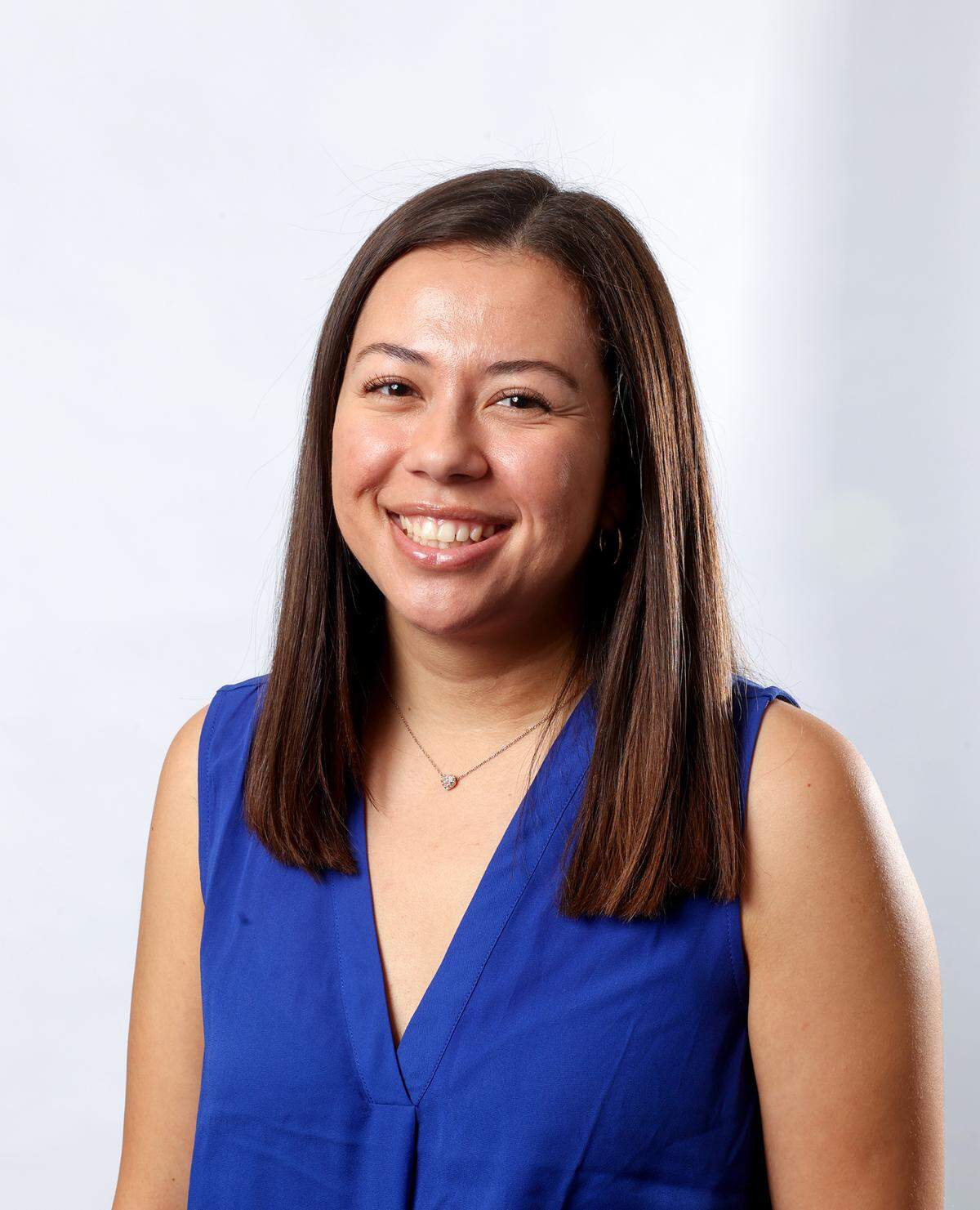
Briana Wucinski remembers the excitement of putting on her purple dress and cowboy boots and walking across the TCU campus with friends to attend home football games. She detailed the vibrant stadium atmosphere: band playing, cheering alongside her fellow TCU students and rooting for her friends on the football team who lived down the hall in her dorm.
She still recalls the time her alma mater’s football team made it to the Rose Bowl 12 years ago. Her entire family traveled to California to watch the 2011 game against Wisconsin. TCU was in the Mountain West Conference at the time, playing the champions of the Big Ten.
“We were just these little Horned Frogs going to the Rose Bowl,” Wucinski said. “It was so exciting. I don’t think I realized until we were in Pasadena how much of a big deal it was.”
When she returned for her next semester at TCU, there was a noticeably different buzz on campus, Wucinski said. Following the Rose Bowl victory, TCU saw a more than 40% increase in applications as the university gained national exposure from the game.
“If TCU wasn’t already on the map, that really put them on the map,” said Drew Harris, former associate director of TCU’s athletics media relations.
Now tiny TCU (undergraduate enrollment is 10,523) is in the national spotlight again. Behind Heisman Trophy runner-up Max Duggan, the Horned Frogs are in the College Football Playoff, where they’ll face Michigan at 3 p.m. Dec. 31 at the Fiesta Bowl in Glendale, Arizona. The winner faces the winner of Georgia-Ohio State in the National Championship on Jan. 9 in Inglewood, California.
The Horned Frogs’ undefeated regular season and appearance in the Big 12 Championship elevated TCU’s national presence and will have a significant impact on the school’s brand, demand for admissions and the local economy, experts said.
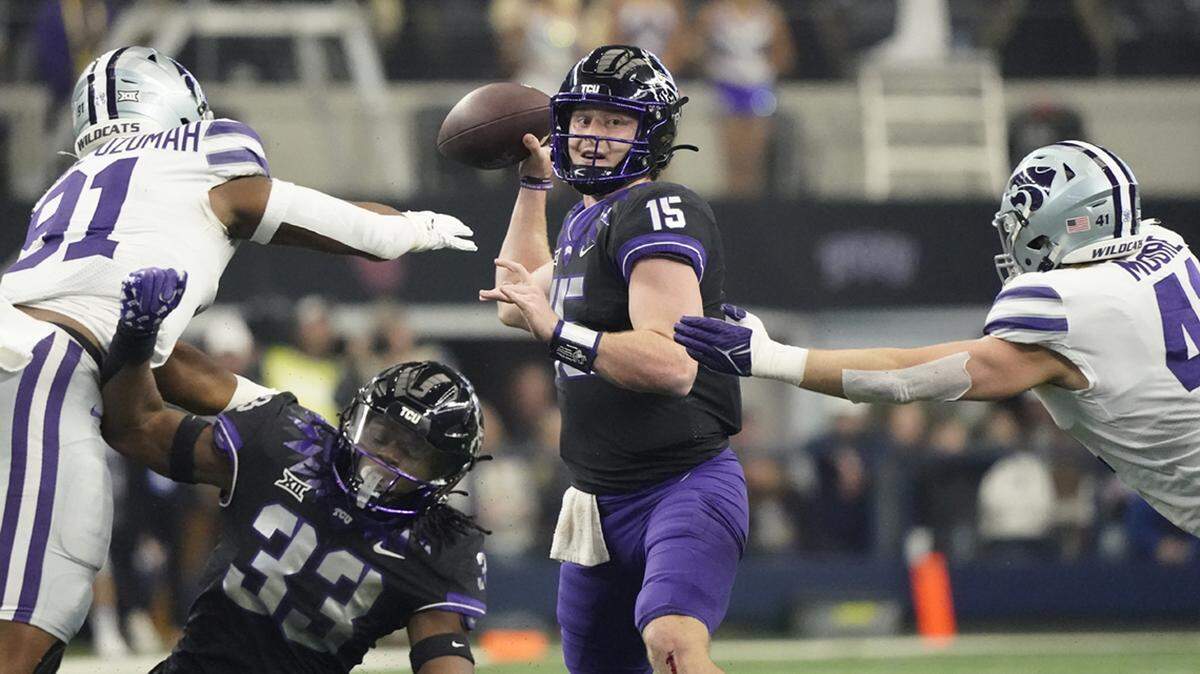
The Big 12 Championship between TCU and Kansas State University garnered 9.4 million viewers on ABC, a 17% increase compared to last year’s game.
“National exposure is talked about every time college football is covered,” said Jennifer Davis, an advisory board member at The Players’ Lounge, a New York-based online sports platform that connects athletes with their fans. “There’s no way a school that size could pay for this kind of national brand exposure. It’s really priceless. Throughout the season as the school went undefeated and as the program rose in visibility, they were getting millions and millions of dollars of exposure at a national level.”
College sports impact has been proven over decades
Davis referred to this as the Flutie Effect, named after Boston College’s Doug Flutie. When the he threw a Hail Mary to defeat Miami in 1984, Boston College saw a 30% increase in applications in the next two years.
“It is a documented effect of the value of doing well in a prominent nationally covered sport and the short term and long term effects that has on things like applications to the school, enrollment numbers and the like,” Davis said. “It’s as predictable as gravity at this point. It’s called the Flutie Effect, and multiple schools, multiple programs and even multiple sports have benefited from it.”
Harris, who is now the owner of First Pitch Public Relations, said he expects TCU to have more requests for admission and an increase in traffic on their website.
Baylor University saw a similar trend when Brittney Griner led the women’s basketball team to a 40-0 record and national championship in 2012. Baylor’s applications shot through the roof and allowed the university to be more selective in reviewing college essays, grades and SAT scores, Davis said.
“Applications to TCU have consistently risen over the last several years,” a TCU spokesperson said. “We expect to rise again next year, with one of the factors being the university’s surge in the national spotlight. Currently, completed applications are up 8.6%, and we are ahead 31.2% in completed early decision applications from students who are saying TCU is their top choice school.”
Success in sports also leads to increased revenue through the sale of game tickets, jerseys, concessions and other merchandise.
“They can take those revenues from winning seasons and put it back into the university to make the campus more livable, more attractive, use money for marketing dollars to build the brand, and push it out through advertising,” said Bob McKay, founder of digital media agency McKay Advertising + Activation in Tampa, Florida.
Victories lead to greater donations
The benefit of increased exposure comes at the perfect time as TCU prepares to celebrate its 150 year anniversary in January.
The university began its most ambitious philanthropic campaign to date back in 2019 with the goal of raising $1 billion to support scholarships, research, professors and its endowment. Referring back to its original fundraising campaign, the 150th anniversary theme “Lead On: Celebrating 150 Years of TCU” will be another opportunity to get alumni, fans and Fort Worth residents interested in donating.
“The secret to our success — and what makes Fort Worth so special as well — is the sense of community many feel the moment they walk onto campus or when they meet another horned Frog in Fort Worth or across the globe,” said TCU Chancellor Victor Boschini. “We’ll be celebrating this, and 150 years of leadership throughout 2023, our Sesquicentennial year. It’s a great opportunity for TCU and the City of Fort Worth to come together to celebrate — and appreciate — our amazing city, residents, students and businesses.”
The football team’s success coinciding with the 150th celebration is likely to have a large impact on donations, experts said.
“People are far more willing to make donations when there’s success in athletics and there’s success across the board,” said Harris. “People absolutely love getting involved when there’s something to be excited about.”
These donations don’t just stop at football but will go back to a number of programs across the university, experts said.

Over the past decade, TCU has invested more than $1.2 billion in improvements and new buildings, including the world-class Van Cliburn Concert Hall at TCU that opened last year. The university also recently unveiled plans for a $40 million campaign to fund a football performance complex and athletic wellness center.
“If they have a winning season, that attracts a lot of money in many ways,” said Gary Orosy, adjunct professor of marketing at the SMU Cox School of Business. “Not only to sports programs and scholarships for players, but it also attracts money for other university development programs.”
TCU’s new 100,000-square-foot medical campus could be one of these programs. Development of the new campus in Fort Worth’s Near Southside will build up and give back to the local medical community by educating future physicians.
“Even if football is what got you excited, it very well may make you more excited to give money to a different area of campus,” said Harris. “I think that’s definitely possible. They’re in the middle of or nearing the end of their goal of raising $1 billion, and I think this absolutely can help give them the push to reach the goal as they hit that 150-year mark.”
Why does TCU’s success matter to Fort Worth?
Jennifer Davis, the marketing expert, described the symbiotic or mutually beneficial relationship between schools and their city. When something positive happens at a university, it highlights the strengths of the community. When a city is doing well, it creates a stronger impression for local schools too.
“Universities are very important for the local economy,” Davis said. “That’s athletics certainly, but it’s even beyond athletics. Universities are employers. Universities put out talent into the marketplace that is snatched up by companies that want to grow and innovate. Many universities like TCU have research departments that are forwarding their disciplines and fields.”
It creates an opportunity not just for TCU’s national exposure but also Fort Worth. During championship games, universities will often get background pieces covering not just their school but the city they are from, what their city is doing, the major companies present and how the city has developed over the last few years, Orosy said. This really promotes economic development, Orosy said.
“Our beautiful 302-acre TCU campus is an economic engine in the heart of Fort Worth — and it is one of the keys to our success,” Boschini said. “Prospective students and families, plus talented faculty and staff that we attract to Fort Worth love the city, our neighborhood and the exceptional experience that TCU offers.”
Harris said he thinks TCU’s success helped put Fort Worth on the map and shows outsiders the loads of opportunities the city has to offer in terms of sports and entertainment.
“A lot of the kids who attend TCU stay in Fort Worth, and I think that’s a big part of it,” Harris said. “You get them into school, and they end up staying here, becoming successful and raising families here. It’s kind of a perfect situation.”
Much of this trend applied to TCU alum Wucinski, who spent her childhood growing up in Dallas. As a TCU graduate, she “fell in love” with Fort Worth and eventually started work for a non-profit organization that directly benefits the city. As a marketing and communications manager for Fort Worth startup accelerator TechFW, she was able to use her degree in the city that equipped her and become involved in her university again.
This past year, the business incubator supported more than 50 startups, connected 24 TCU undergrad students with TechFW members for internships and gave $10,000 in awards to seven female startup founders, according to the organization’s 2022 TechFW Annual Report.
Bringing a school like TCU to the national stage gives back to the local economy and it draws people from larger states to Fort Worth for their own education, which can mean great things for the local business community, Wucinski said.
“Once you have more people from outside the state coming in with different perspectives, I think it breeds a more diverse economic space for things to develop,” Wucinski said. Once you start bringing in more outsiders, you have this melting pot or a mixing of ideals, and I think that genuinely breeds a stronger city overall.”
This story was originally published December 27, 2022 at 6:00 AM.