Fort Worth district is requiring schools to fund libraries. What could that do for grades?
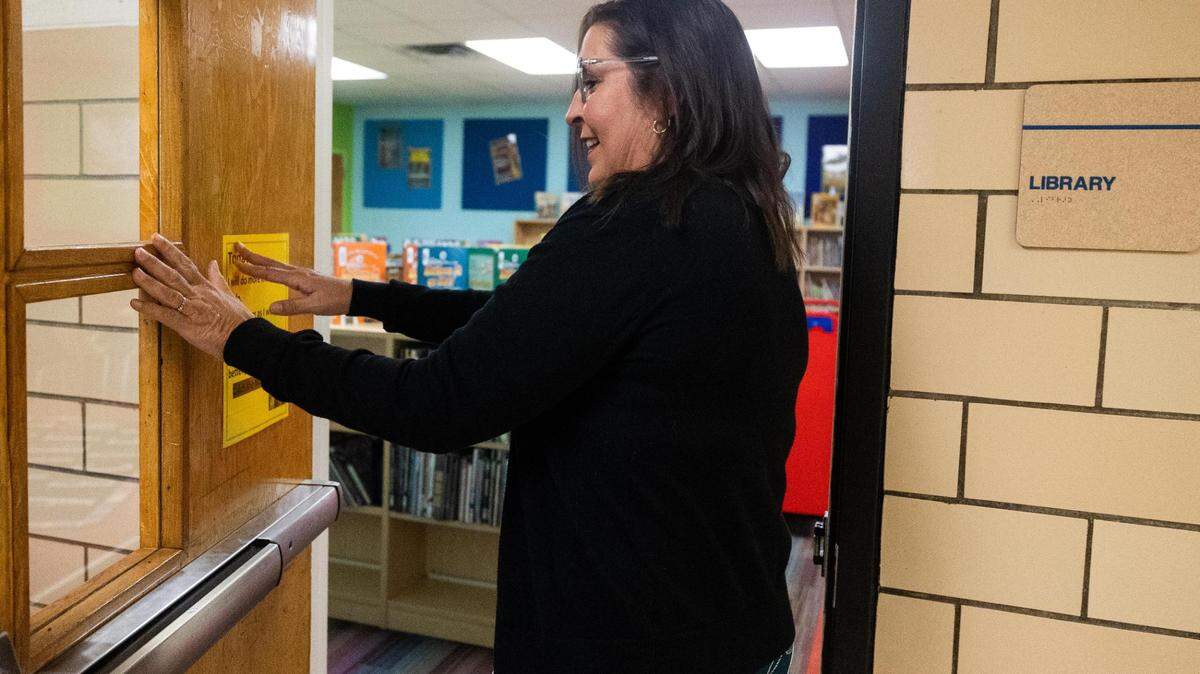
Books in Fort Worth ISD school libraries are more than a decade newer on average than they were just a year-and-a-half ago, when the Star-Telegram reported on vast gaps in library funding across the district.
At Morningside Middle School, books went from an average publication date of around 2001 to an average publication date of around 2016.
The dramatic improvement comes after investments in collections from COVID-relief dollars, and an update to district policy making investments in libraries by campuses a requirement, instead of a recommendation.
Prior to that, some libraries went years with no investment, leading to aged collections and low-quality books.
“It’s just been a godsend,” Morningside Middle School librarian Matthew Booth said. “We’ve always had low budget amounts that were Title One, and it was usually a fixed amount. So these extra funds have been much greater and allowed us to do a lot more.”
Librarians have been able to weed out old books, invest in new copies, invest in Spanish-language books and expand digital offerings with the money.
Marcey Sorensen, the chief academic officer for the Fort Worth district, said the administration is requiring schools to invest in libraries to ensure equity of access to reading materials from campus to campus.
“It was a requirement,” she said. “But it was a requirement that wasn’t always followed up on as strictly as we did this past year … so (Chief of Schools Jerry) Moore, and I worked very closely to ensure and mandate that it was taken care of.”
Not all schools funding at district required level
Despite the changes, however, not all campuses are abiding by the district’s newly enforced expectation that at least $8 per student per year go toward library books.
School librarian Teresa Guardiola, who said donations and COVID-relief funds have also transformed her collection, said De Zavala Elementary School allocated $7.40 per student this year.
District officials said they were unable to confirm the amount spent at all campuses on library books as of Tuesday. Private donations, and philanthropic efforts through projects like DonorsChoose have filled in some of the gaps.
“The campus is slowly acquiring brand-new, very current books … and it is not dependent on the sole funding from the campus,” Guardiola said.
While the large infusion of COVID funding is limited to the last two years, librarians say the jump start has the potential to keep libraries up to date for years to come.
Some libraries went without funding for years
Last year De Zavala Elementary School allocated only $4.60 per student, a far-cry from the $8 per student now required by district administration, and even further from the $20 recommended by the Texas Library and Archives Commission, which sets standards along with the Texas Education Agency.
This year’s investment of $7.40 is moving in the right direction, Guardiola said.
Years of inadequate funding led to a library full of outdated books, in information and physical quality. Books ranged in age from 15 to 90 years old, Guardiola said.
Without the full district spending data, it is unclear how the overall trends have evolved across Fort Worth ISD under the new requirements.
Overall spending on school libraries had been declining since 2014, when schools across the district spent $977,229.82 on books. In 2019, only $561,172.94 was spent, as 22 campuses chose to spend nothing on their collections. The 2021-22 school year, which included the first round of COVID-19 relief funding, saw the lowest level of campus investment since before 2008 with only $434,846.33 spent across all campuses, according to obtained by the Star-Telegram.
Librarians across the district have shared concerns about the age of books, and the struggle to convince campus leaders to prioritize the library in recent years.
But the movement this year is progress, librarians say.
Libraries update Spanish collections with new funds
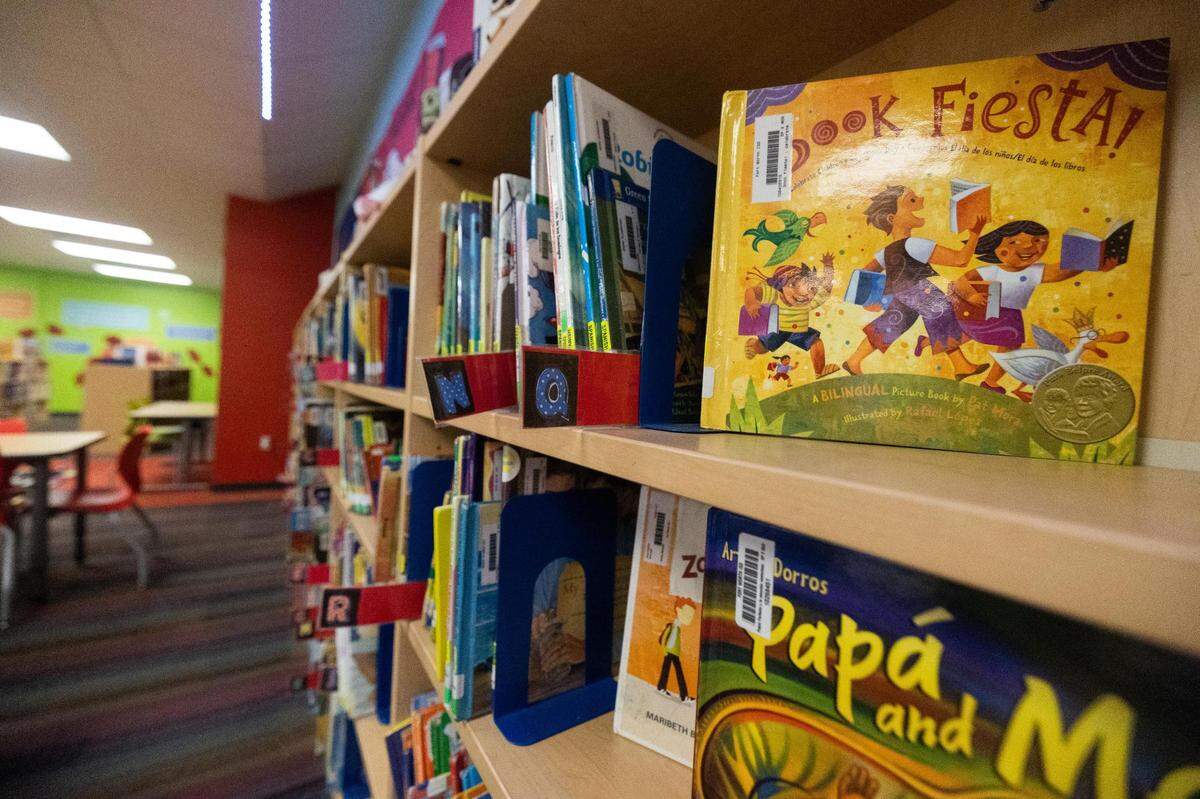
M.H. Moore Elementary School has benefited from regular and sufficient investment in library funding for the last several years. But with a growing Spanish-speaking population, the necessary amount of books in Spanish lagged behind.
COVID-relief dollars allowed the campus to reinvigorate those collections, along with a district-wide effort to promote electronic resources that allow students to check out books on district devices.
“We’ve tried to use our ESSER funds to acquire more Spanish resources, because we started out at 23% and now we are at about 30%,” campus librarian Linda Abeyta said. “We would like to go more than that because we have dual-language classes.”
Abeyta pointed to a wall of new books in a brightly painted library.
“We’re really proud of it,” she said.
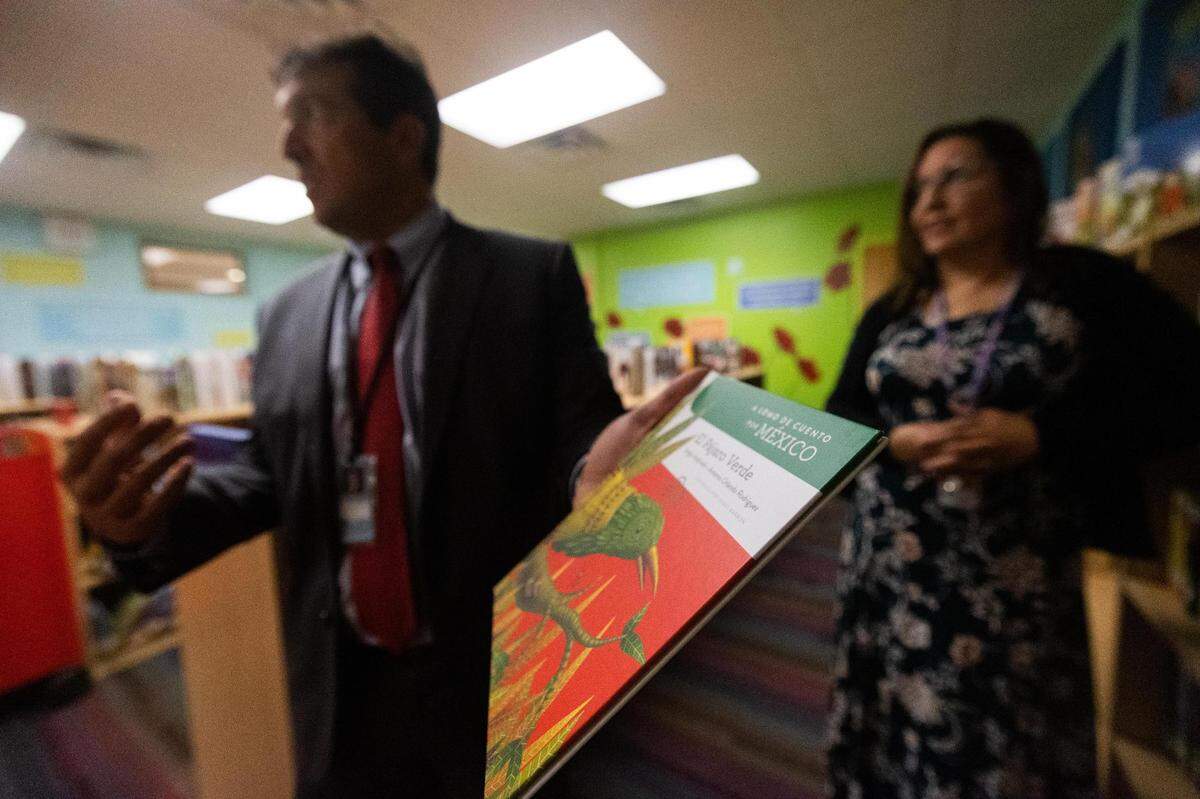
In addition to the new books, district efforts to increase literacy including competitions and the installation of a book vending machine have led to a surge in interest and circulation at the library.
The average number of books checked out per student went from just over 103 in the 2019-20 school year, to over 171 in the 2021-22 school year at M.H. Moore Elementary School.
Those numbers are important.
Higher circulation tied to better grades
Carter Cook, who led the Library Media Services Department for years before leaving the district, studied the relationship between library circulation and academic achievement in 2016.
Cook examined the quality of elementary school library collections, collection usage statistics, campus-based funding for school library collections and Accelerated Reader student participation data.
The purpose, he explained to the Star-Telegram in 2021, was to determine if there was a significant difference between the schools flagged by the state for chronically low academic achievement and the schools with high achievement despite a greater than 70% economically disadvantaged population.
“Our findings were that students at the higher-performing schools checked out twice as many books as students at IR (Improvement Required) schools and the circulation of Spanish-language books was 40% higher,” Cook said. “The higher-performing schools allocated an average of $2.30 more per student for library books than the IR schools and had 15% more books in their library collections.”
When asked about the analysis, new Library Media Services Director Victor Chapa said it is time for the district to do a similar analysis to measure the gains made following years of intentional investments.
Chapa, who was a school librarian for years, learned to read as a preschooler in the very same building where he now works finding ways to increase literacy, and make the library a destination on campus through innovation.
“I have a surreal experience every morning walking into my office, knowing that this is where I learned to read,” he said. “So I carry that intention with me in all my work as a former librarian, a former student of the district, in trying to reform the identity of librarians in our district, built around teaching and learning.”