New Texas social studies curriculum delayed after fears of ‘woke indoctrination’
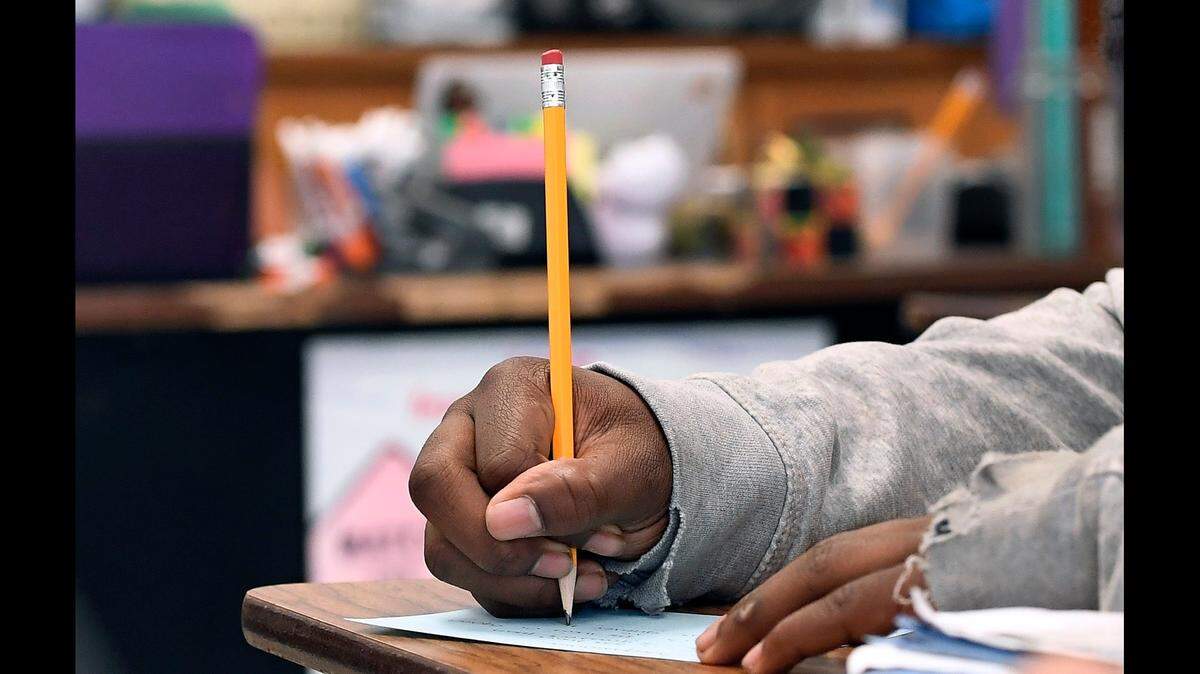
What was supposed to be the first major rewrite of Texas social studies curriculum in more than a decade has been delayed after a Friday vote by state education officials.
State Board of Education members on Friday voted 8-7 to push the update to 2025 and use the next two years to investigate the curriculum’s framework.
The standards will be updated to comply with new legislation lawmakers passed in 2021 aimed at preventing the teaching of critical race theory, an academic framework that Texas educators have said isn’t being taught in grade schools.
Work groups have been developing draft recommendations for the social studies rewrite, but many of those ideas may not make it into the standards that are ultimately adopted.
The board on Friday opted to use the existing curriculum as the starting point for crafting the new standards in fourth, fifth, seventh and eighth grades. In kindergarten through third grade and sixth grade, the “best of” parts of the draft recommendations will be used to start the updating process.
Among the proposed changes was a more chronological teaching of history in elementary and middle school and the removal of a stand-alone Texas history class in fourth and seventh grades.
Opponents of the delay say the changes in the standards are needed sooner rather than later and would make curriculum more representative of different cultures. But the proposed revisions have gotten backlash from conservatives, including members of the Texas Legislature who say topics linked to critical race theory would be taught and the teaching of Texas history diluted.
In a Wednesday statement, Texas State Teachers Association President Ovidia Molina blamed the delay on “the extremists’ latest attack.” The Association of Texas Professional Educators also criticized the extended timeline in statement after Friday’s vote.
“Today’s decision, simply put, is disrespectful to Texas public educators,” the group’s Executive Director Shannon Holmes said. “The State Board of Education has wasted the time of the volunteer educators who spent hundreds, if not thousands, of hours revising state standards as members of the Social Studies TEKS work groups.”
Holmes added, “The curriculum-writing process must not be usurped by political winds.”
The Texas Freedom Caucus, a coalition of conservative lawmakers, celebrated a Tuesday preliminary vote to delay as helping protect children from “woke indoctrination” in a Twitter post on Tuesday. The caucus previously wrote a letter to the board’s chair opposing the proposed standards and warning of potential legislative intervention if they weren’t substantially changed.
Fort Worth-area state board member Aicha Davis on Wednesday joined advocates in opposing the move. She called on her colleagues pushing to postpone the update to reconsider and stick with the initial plan to finish the process by the end of the year.
Davis, a Democrat representing District 13, told the Star-Telegram on Wednesday she likes that the proposals include more information about African Americans, Mexican Americans and the pride movement in the LGBTQ community. She also liked that the proposed standards challenged students to look at different perspectives on events like the siege and fall of the Alamo.
Tarrant County’s other State Board of Education member, District 11 Republican Patricia Hardy, was in favor of pausing the update. On Wednesday, she said board members needed time to “do some more homework” and raised concerns with material being taught in a more chronological way. She also worried curriculum would be inappropriate for students’ grade level and opposed including teachings about the pride movement.
Fort Worth-area members respond
After Friday’s vote, Hardy stood by her support to delay. In speaking with her constituents, she said, there were strong contingents of people who wanted to see the rewrite postponed. Hardy also said the process was rushed.
“This delay is a very good thing,” Hardy said. “Until we get more feedback from the constituents, be they parents, be they students, be they teachers. We need to hear more feedback from them before going forward.”
Hardy said it is possible the social studies standards update happens sooner than 2025. It depends on how long it takes the board to update the math curriculum, she said.
“It’s not like this stuff is leading kids down a primrose path of lack of information that some of my colleagues would like to make you think,” Hardy said.
Davis’ main concern after the final vote was confusion that may be caused for local school districts. The existing social studies curriculum is set to be updated by the end of the year to meet the standards of Senate Bill 3, the legislation related to critical race theory. It’s unclear when districts would need to establish the changes required by law.
It’s possible that in the next several years schools will be asked to make the changes to comply with Senate Bill 3, and while they’re still adjusting to the updates, the board comes out with another set of changes, Davis said.
“These next couple of months and this next year or two for our social studies teachers, they will be in limbo, and it’s going to be difficult for them because we were indecisive,” Davis said.
Davis said she’s hopeful that the updates for Senate Bill 3 will allow board members to adopt by the year’s end “something that’s good for our students to use” over the next couple years. The legislation can be interpreted to allow for changes that diversify social studies curriculum, she said.
“I plan on interpreting it to make sure that we do have every single student feeling comfortable and learning about themselves in classrooms,” Davis said.
Public speakers address board members
Public speakers were not allowed to speak directly to the proposed social studies standards because of procedural rules, but a handful of people spoke on related topics as they addressed members of the board before their vote.
Kennedi Searl, who is from Fort Worth and attends Texas Southern University, told the board that materials and standards that don’t reflect the totality of history are a failure to students.
“We do not need revisionist history,” Searl said. “We need factual history.”
Kendell Fields questioned how students can “be leaders of tomorrow if they don’t know the history of yesterday?”
“Removing vital curriculum in schools across Texas is teaching students not to be accountable,” said Fields, who is from Fort Worth and attends Prairie View A&M University
“It is not strengthening their moral compass. It is furthering the encoding of bias, racism and inequality in a country for the people.”
Jason Sutherland of Waxahachie told board members “the purpose of government is to secure our God given rights” and stressed the importance of children being taught “America is exceptional.”
“We need to teach them to love freedom and to love limited government,” Sutherland said. “We need to teach them the value of hard work and the free market economy and the benefits that that would hold for them. To propose or replace those things with things that are going on in our world now with globalism, foreign relations, LGBTQ agenda, Marxism and other foreign ideas ... to swap those would be against the will of Texans and would be terrible.”
The Dallas Morning-News reported that a petition from Grapevine-based Patriot Mobile — a conservative Christian cell phone company that has waded into local school board races — was distributed at Tuesday’s meeting. The petition said the standards had a “globalist view” slant and tried to promote “gender fluidity, sexual orientation, and Critical Race Theory,” according to the report.
Was the delay politically driven?
Ahead of the Nov. 8 election when board members and hopefuls will appear on the ballot, members of the board have suggested the delay to 2025 was political. Both Hardy of District 11 and Davis of District 13 are among those up for reelection.
“It seems from some random comments that I’ve heard that this is really about making sure that a different board decides on this process,” said Board Member Rebecca Bell-Metereau, a San Marcos Democrat. “And that would really be a shame to have political motivations rather than the education of our children be the factor that we have to consider.”
Board Chairman Kevin Ellis, a Lufkin Republican, pushed back.
“I disagree with the premise of this is a political motivation for a future board,” Ellis said.
He said the board hasn’t yet determined what’s going to be taught at each grade.
“I don’t think it was new makeup of the board,” Hardy, the Fort Worth-area board member, said. “I didn’t care about that. I just wanted it to be a new makeup of the framework.”
This story was originally published September 2, 2022 at 2:30 PM.