Texas Tech establishes scholarships named for George Floyd, Fort Worth’s Tim Cole
Two recently established scholarships supported by Texas Tech University will bear the names of Black men who have died while in the custody of the criminal justice system.
One scholarship will be named for Tim Cole while the other will be named for George Floyd.
Cole, a Fort Worth native, died in 1999 in prison after serving 13 years for a crime he did not commit. Cole was convicted of raping a classmate at Texas Tech University in 1985, but was later cleared by DNA evidence and the confession of the man who said he committed the sexual assault.
Floyd, 46, who never made it to trial, died on May 25 after having a Minneapolis police officer’s knee pressed against his neck for nearly nine minutes. That former officer, Derek Chauvin, was arrested and is facing murder and manslaughter charges in connection with Floyd’s death.
Floyd was accused of using a counterfeit $20 bill to purchase a package of cigarettes.
According to reporting from KAMC Television, efforts to raise the scholarship funding were initiated by the Texas Tech University Black Student Association. The scholarships will provide financial support to current and future Texas Tech students active in serving organizations working to assist minority communities, the KAMC story said.
A statement posted on the Black Student Association’s Twitter feed says there was some positive and some negative feedback that resulted from the announcement of the scholarships, and members felt compelled to clarify their intentions.
Some who spoke in opposition against the scholarship said they understood honoring the memory of Timothy Cole, but questioned the inclusion of George Floyd — citing a previous criminal record and allegations about Floyd’s state at the time of his arrest, a story from KCBD Television said.
Cole had a spotless record and was a military veteran majoring in business with an eye on getting a law degree and becoming a corporate attorney, a family member said.
The Black Student Association replied that George Floyd’s death triggered a worldwide awakening that opened the eyes of many to the systemic racism faced by communities of color.
“We want to express that despite their respective backgrounds, they are a part of a larger picture that encompasses the unfair treatment of minorities in this country,” the student organization said on social media. “There is a need for active change in how Black and brown people are seen, heard and treated. By being a catalyst for change, Texas Tech University is taking a stride in the right direction with their contribution to these scholarships.”
Texas Tech University administration officials and representatives of the university’s Black Student Association did not immediately respond to a request for comment.
Tim Cole’s brother, Cory Session, said his family is appreciative of what the Texas Tech students are doing to honor Cole, and cautions against jumping to conclusions regarding Floyd’s legacy.
“The final chapter of George Floyd has not yet been written,” said Session, Innocence Project of Texas vice president. “We fully support George Floyd’s name being attached to one of these scholarships.”
In their statement, Black Texas Tech students indicated that Floyd served as a flashpoint that spurred worldwide protests against police brutality.
Session said it was providence.
“It is ironic that God had a lot of people at home when George Floyd was killed,” Session said. “People developed 20/20 vision in 2020, and his death allowed people to see clearly what others had been blind to for so very long.”
In their own way, the deaths of each man was transformative, Session said.
After his death, Cole’s story helped to reform the state’s treatment of how those who were wrongfully imprisoned were treated in the state of Texas.
Texas’ compensation program is among the most generous in the nation, though several states have no such laws or cap the total amount an exoneree can be paid, according to the Innocence Project.
The compensation program is based on the Tim Cole Act, legislation enacted in 2009 and named after the former Texas Tech student. Before then, the state had a less generous payment structure.
Generally, someone whose conviction is thrown out and is declared by a judge, prosecutor or appellate court to be “actually innocent” is eligible for a lump sum payment equal to $80,000 for each year they spent behind bars. In addition, they become eligible for monthly annuity payments for the rest of their lives, unless they are later convicted of a felony.
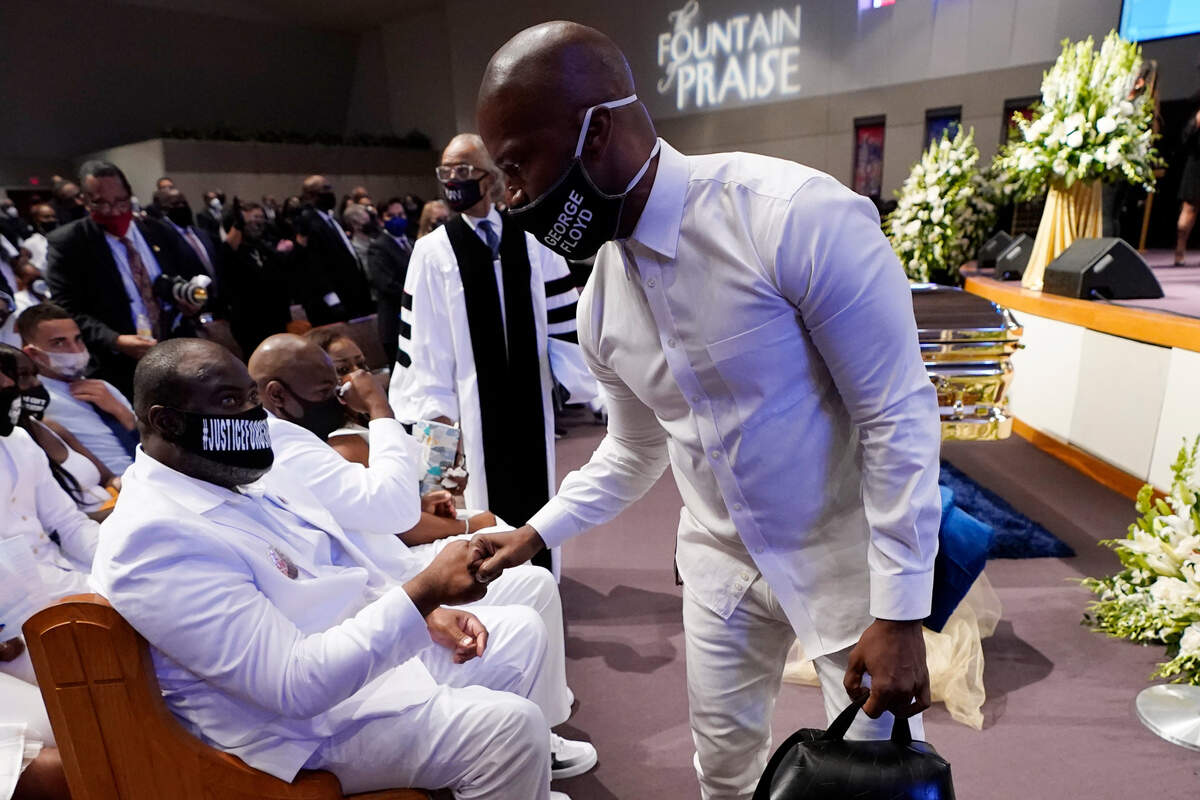
Since Floyd’s death, in addition to protests in the United States, protesters have rallied in the United Kingdom, France, the Netherlands, Germany, Australia, Spain, Italy, South Korea, Brazil, Kosovo, Tunisia, Belgium, Japan, Bulgaria, South Africa, Switzerland, Hong Kong and Portugal, at least.
Cole rejected parole offers that would require him to admit guilt, and long after his death, his family engaged in a protracted war with state officials to clear his name.
Even after years of prison life, Cole never lost faith in the system. Session said he was a sacrificial lamb.
According to Session, his brother told him: “I still believe in the justice system, even though it doesn’t believe in me.”
“Even though there is injustice, we believe in the American justice system,” Session said. “We’ve come a long way, but we still have a long way to go. If this scholarship will help some young man or woman further their life, I think it’s needed. Those who are awarded the Tim Cole scholarship, I’d like to see what path their lives take.”
According to nationwide figures complied by the Sentencing Project, an organization that works to free the wrongfully imprisoned, 375 people have been freed from prison by DNA evidence for crimes that they did not commit. Of those 375 people, 60% were Black. Blacks make up about 13% of the U.S. population.
This story was originally published September 18, 2020 at 6:00 AM.