Why are the Fort Worth district’s plan for this campus drawing concerns?
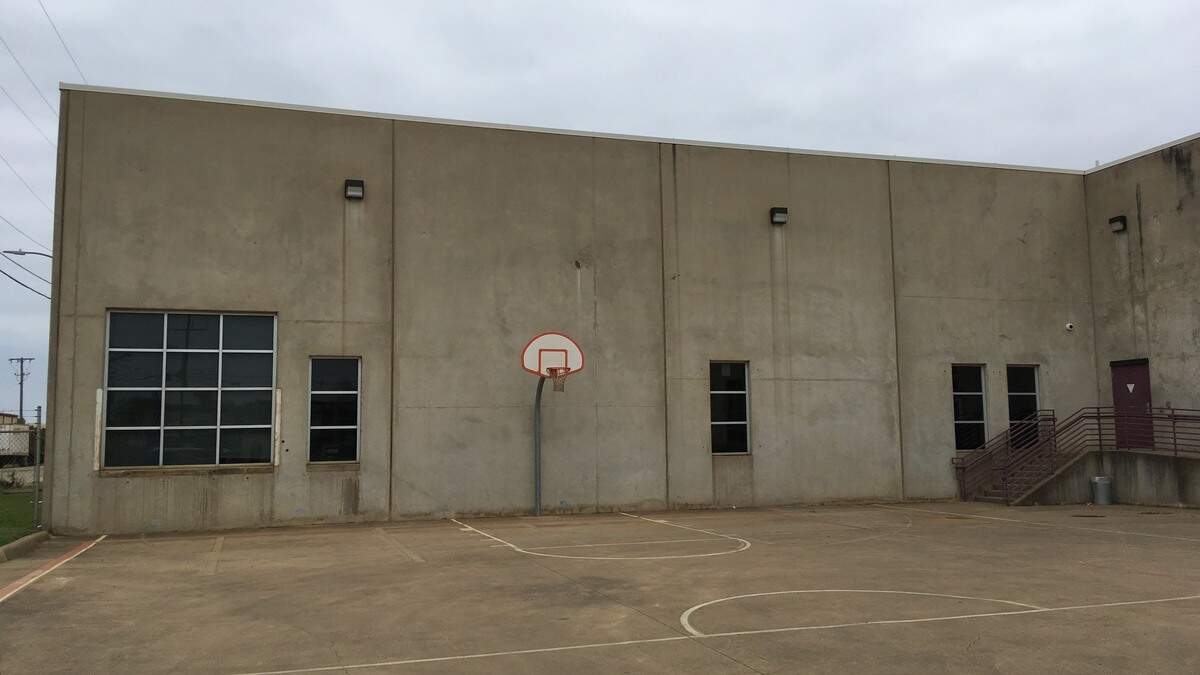
The Fort Worth school district’s efficiency plan for art classes at Metro Opportunity High School is prompting worries that students will no longer benefit from a role model in the arts who can steer them on the right path.
Metro, located at 2027 Cullen St., is an alternative school established in 1979. It allows students to remain in a classroom setting when they are suspended from their home campuses.
Starting next school year, the art classes will be delivered via web-based curriculum instead of a classroom teacher.
“Part of our mandate is to use the dollars we have as efficiently as we can,” said Clint Bond, spokesman for the school district in an email. “Sometimes, that means we have to make hard decisions about changing certain aspects of the programs we offer based on student interest and enrollment.”
The district has been examining different ways to save dollars and run programs and staff more efficiently. This move is not a school board decision, Bond said.
“The teacher is still teaching art but doesn’t have to travel to as many locations (such as Metro) and can spend more time in a traditional classroom with more students,” Bond said.
The district’s plans drew concerns in Fort Worth’s Northside community, where some members worried students would lose a valued space. The issue mobilized some via social media to express their concerns to the district.
“I know for a fact that Art class provides a healing space and offers students tools to reflect, express, create, and heal,” wrote Arnoldo Hurtado, a Fort Worth native and an artist, on Facebook. “I had the pleasure and opportunity of visiting students at Metro on multiple occasions, and I can tell you that without this space, they are being undeserved, and cut off from a powerful and transformative opportunity.”
Low campus enrollment
The district said Metro’s enrollment is often low and fluid so it falls below the threshold for providing a teacher.
On May 30, Metro had 36 students enrolled and only 20 were in attendance, according to the district.
The web-based approach allows the district to continue art instruction without completely eliminating it, Bond said. It will also allow students not to miss instructional time while being on an alternative campus, he said.
Additionally, students typically return to their home campus after completing their time at an alternative campus, the district said. Art classes at the students’ home campuses are in a hands-on environment.
The district uses a variety of online programs. For example, in the area of credit recovery, students can make up lost time in a classroom by arranging to do extra work in programs purchased by the district.
At Metro, an art teacher will review the work, but the teacher doesn’t establish the online program. The program is a product purchased by the district. Bond said this is not a district-wide effort in art education.
“Except for the Metro Opportunity school, all other schools that have art have a teacher in the classroom,” Bond said.
Hurtado called the plans for art at Metro “fishy.”
The Fort Worth native is a traveling artist who focuses on engaging communities of color to learn, participate in and enact positive grassroots change.
He said Metro is an alternative education program and he fears the school is “a stop” on the school-to-prison pipeline that he says affects students of color. He worries there is a narrative that students at Metro are criminals.
“We need to write a new narrative,” Hurtado said.
Though the situation at Metro may be a budget issue, Hurtado believes the district is using that as an excuse. He said that art was getting in the way of the “system,” and he believes there is more to the situation than just budget cuts.
“I think it’s part of the system,” he said. “The system is made to function a certain way.”
Bringing art to Metro
Hurtado, who is friends with a retired teacher who taught art at Metro, has visited the class and enjoyed interacting with the students. He was even able to expose Metro students to art during a presentation on Artscream Truck, his mobile art gallery.
Before word of the district’s plans spread, Hurtado was planning to create a mural at Metro in collaboration with students. This was something he did at another alternative school, Juvenile Justice Alternative Education Program. He said the first mural was a success and he was hoping for the same thing at Metro.
However, he canceled his plans for the mural at Metro after he felt like they were taking too long to give him a definitive answer, a budget and more details. It was just a few weeks later that he found out the art program was being taken away. Hurtado believes that the decision to cut art had already been made at that point.
“What is actually going on behind doors and leadership?” he asked, rhetorically.