Do you have to work, exercise outside in the North Texas heat? Here’s how to do it safely
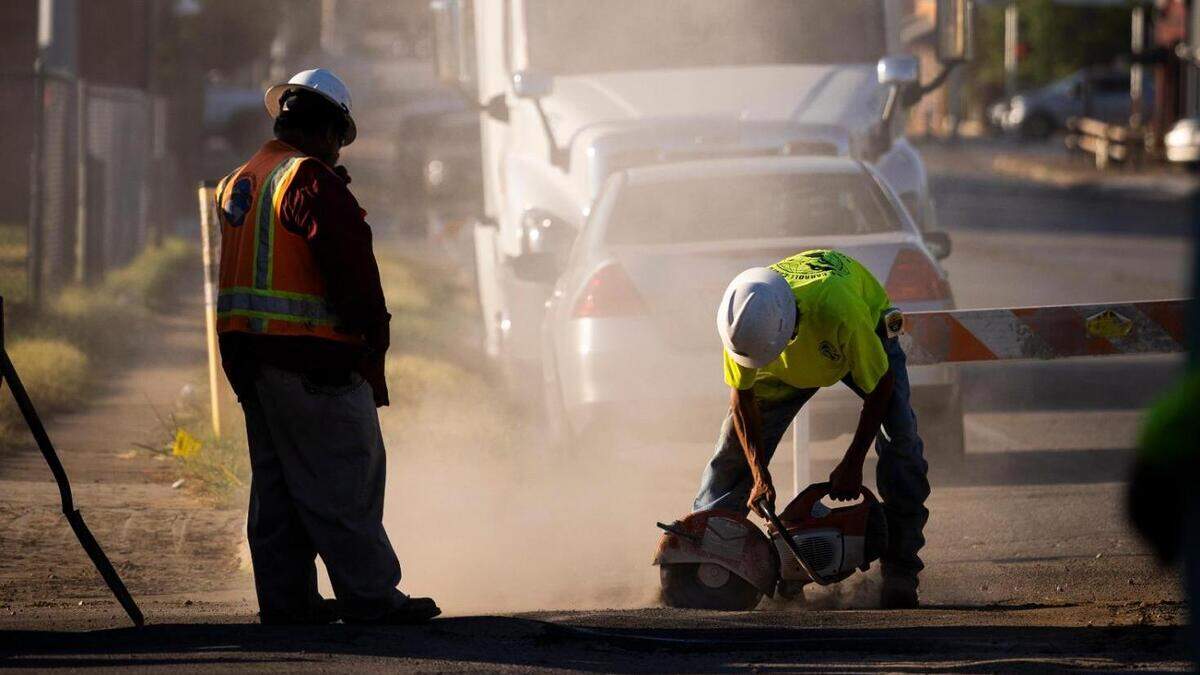
No one in Fort Worth has been immune to the effects of this summer’s unusually hot weather.
But for some people, like those who work outside, who are homeless, or who exercise outside, the extreme heat is particularly exhausting and potentially dangerous.
Extreme temperatures are generally recognized as the most deadly weather event for humans. Hot weather can cause heat stroke, heart attacks or other heart failure, and even an infection in the gut, all of which can be fatal.
But there are steps you can take to acclimate your body to hot temperatures and to make spending time outside during heat waves safer.
Getting acclimated to heat
For both recreational and professional use, researchers who study how the human body responds to hot temperatures said the best way to prepare is to slowly get your body used to the combined stress of heat and exertion.
Margaret Morrissey, president of the National Heat Safety Coalition at the Korey Stringer Institute in Connecticut, said gradually getting your body used to hot temperatures will actually result in your core body temperature getting lower. If you have a lower core body temperature, it will take longer for your body to overheat and get to the point of heat stroke, which happens when your body loses the ability to cool itself.
For people who work outside, like construction and agricultural workers, Morrissey recommends starting with a shorter work day and then adding to the numbers of hours outside slowly.
“For example, maybe on day one, they’re performing 20% of what they would normally perform on a normal day,” Morrissey said. “And then slowly increase that.”
Many employers don’t have safety protocols in place for outdoor workers and few have implemented a gradual introduction to working outside for their employees, Morrissey said. So if you can’t acclimate while on the job, try doing so before you start working. Morrissey recommended aiming for about 90 minutes of exercise in a hot environment for 10-14 days, and slowly increasing the duration or intensity of the work.
Nearly three out of every four fatalities from heat illness happen during the first week of work, according to the Occupational Safety and Health Administration.
Exercise in heat
For Texans who want to be able to exercise outside, a similarly gradual approach will help get your body used to the summer temperatures, said Steven A. Romero, an assistant professor at the University of North Texas Health Science Center. Romero recommends starting with a brisk walk early in the morning for about 30 minutes per day. If you repeat that every day, your body will likely have adjusted well enough for you to do a brisk walk or a slow jog by the seventh day, depending on your baseline fitness, Romero said.
This acclimation process changes the body in multiple ways.
Heat-adjusted bodies are generally able to sweat more and actually have more blood plasma, said Craig Crandall, a professor at UT Southwestern Medical Center. These changes reflect the body’s improving ability to cool itself, which is primarily done through sweating and by increasing blood flow to the skin. When your body is adapted to hot temperatures, it will even have changes down to the cellular level, Crandall said, as heat-adjusted bodies have cells with more proteins that protect the cell from heat damage.
But even a relatively well adapted person should be cautious when the temperatures reach triple digits.
Romero said he recently saw a jogger head out for a mid-afternoon run when the temperature was over 100 degrees.
“I thought he was crazy,” Romero said. Unless you’re training for an extreme competition, like the Badwater Ultramarathon, where runners race in temperatures above 100 degrees, “you’re not doing yourself any favors,” Romero said.
There’s no known cutoff for when it’s similarly too hot for any person to work or exercise outside. Typically, it will depend on the individual’s starting core body temperature.
Cooling off period
The other important caveat to adjusting your body to the heat is that your body will ultimately need a chance to cool itself back down. Romero, at the Health Science Center, studies how focused use of heat can actually help people by mimicking the benefits of exercise. But a key part of the body’s response to that heat is that it gets a chance to cool down afterward.
That’s why people who have chronic heat exposure, like those who live without air conditioning or who are unhoused, are at high risk for heat-related illness and death.
“Where people really get in trouble is when the mean temperature throughout the 24-hour period is always high,” Romero said. “It’s high during the day, but then during the heatwave, it doesn’t go down. It stays hot.”
So far in July, the minimum temperature in Fort Worth has gone below 80 degrees only seven times, according to the National Weather Service Fort Worth. And the temperature hasn’t dipped below 75 degrees at all. Historically, the average minimum temperature for this time of year is usually between 75 and 77 degrees, according to the Weather Service.
“The overnight lows have actually been warmer than the normal,” said meteorologist David Bonnette. “We just haven’t been cooling off very much.”
Although temperatures have been hot this month — between July 1 and July 26, 22 days had highs over 100 degrees — many heat experts say the greater concern is when the lowest temperatures also remain high.
Researchers don’t yet know what minimum temperatures are most dangerous for people without air conditioning.
“Humans are not machines, and there’s variability,” said Crandall, the researcher at UT Southwestern. “So for one, that temperature may be 80 degrees at night. For somebody else, that temperature might be 95 degrees at night.”
The warm weather has caused a surge in heat-related injuries. MedStar, the emergency medical provider for Fort Worth and 14 surrounding cities, had responded to 609 heat-related calls this year as of July 27, an increase of 126.4% compared to the same time frame last year.
In addition to people who labor outside and people who are homeless, people 65 and older are at particular risk during heat waves, because the ability to cool themselves by pumping blood to their skin and by sweating is greatly reduced.
Crandall said there are a few low-tech steps that people without air conditioning can take to keep themselves cool. Regularly misting yourself with water of any temperature can be helpful, he said, as can taking a T-shirt, dumping it in water, and then wearing it during warm temperatures.
He also said cooling stations, like those offered by nonprofits and local governments, are critical for people without air conditioning.
“They’re going to save lives,” he said.