Does your Fort Worth student spend hours waiting for the school bus? You aren’t alone
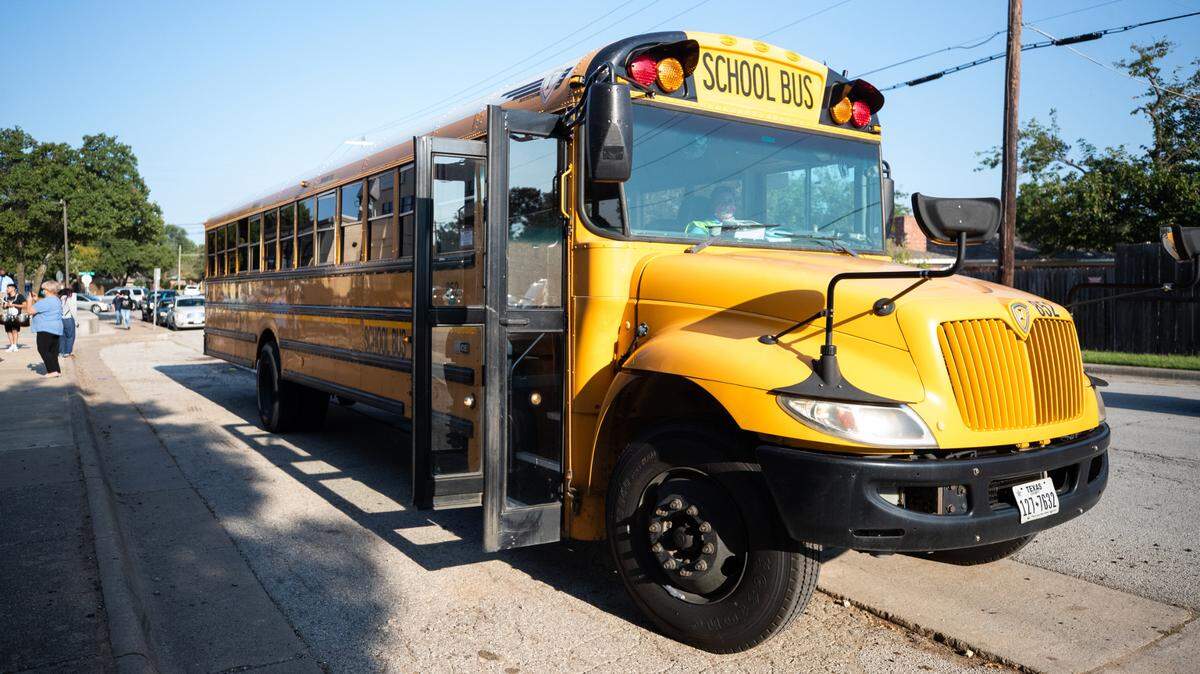
On any given school day, if no driver calls in sick and everyone shows up to work on time, there are more than 40 bus routes in the Fort Worth school district that don’t have a driver.
The district doesn’t have substitute bus drivers. So every day, many bus drivers finish their regular routes, then go back and cover the routes that don’t have a driver. The district sends parents of students on those routes emails letting them know that the buses will be very late and advising them to make other arrangements, if possible.
The district will always find a way to get students to and from school, said Joe Coburn, chief of district operations. But it may take a while.
Like many districts across the country, Fort Worth is struggling with a major shortage of bus drivers. District officials say the shortage is a symptom of massive changes in the national labor market that came as a result of the COVID-19 pandemic. But the director of a national student transportation association says the problems were decades in the making, and were only exacerbated by the pandemic.
Fort Worth schools streamline bus routes to cope with driver shortage
The Fort Worth school district has only been able to find drivers to fill about 72.5% of its jobs. The shortage forces the district to ask its drivers to work overtime. It also means that students who can’t find another ride to and from school sometimes arrive at school hours late or wait there for hours at the end of the school day. District leaders say they’ve tried increasing pay and offering bonuses, but to little avail.
“You can’t shake a tree and find enough bus drivers right now,” Coburn said.
Coburn said the shortage of bus drivers has forced the district to rethink every aspect of its student transportation system. The district has streamlined bus routes, he said. District leaders are continuing to look for ways to make those routes more efficient, he said. One option could be to have a single bus route that drops students off at more than one elementary school, he said. The district has never tried that idea before, he said, but it could help the district make do with fewer drivers.
The biggest challenge, Coburn said, is that the COVID-19 pandemic changed the national labor market more quickly than school districts were able to adapt. But he said he thinks those changes are likely permanent, meaning the district will need to find permanent solutions, as well.
“We had a system that had always been designed for certain labor conditions, and those conditions don’t exist,” Coburn said.
One solution the district has already tried is increasing driver pay. Last fall, the district raised starting pay for bus drivers from $18.45 per hour to $22 per hour. The district is also offering $500 cash bonuses to employees who refer someone who is later hired on as a bus driver, said Raul Peña, the district’s chief talent officer.
Peña said the district is willing to offer whatever incentives it takes to get bus drivers in the door. But he said it seems like those incentives are only one of several pieces of the overall solution to the problem. District officials are still trying to figure out what the other pieces are, he said.
“We’ve got gigantic money carrots out there, and not a lot of people biting,” Peña said.
Peña said district officials are already looking at next year’s transportation schedules to see what they can streamline. That could even involve partnering with other districts, he said, though district officials don’t yet know what that collaboration would look like.
Shortage leaves Fort Worth students waiting for hours
Teachers at three schools in the district told the Star-Telegram they often have students show up hours late for school because their buses didn’t pick them up in the morning. Generally, they get an email warning them about the late bus route and asking them not to count those students absent or tardy.
In other cases, the district sends emails to teachers in the middle of the school day asking them to warn students that their buses will be very late that day. Earlier this month, teachers at Arlington Heights High School received an email advising them that one bus route would be running two to three hours late because a replacement driver wouldn’t be able to get to the school until between 5:40 and 6:40 p.m. The email asked teachers to tell students on that bus route to find another way to get home, if possible.
David Martinez Esqueda, a 10th-grader at Southwest High School, is often one of those students. Martinez Esqueda said he got stuck at school several times this semester after a bus driver told him he didn’t have room for him on the bus. A second bus always came along eventually, he said, but usually an hour and a half to two hours later.
Through an interpreter, Martinez Esqueda, who is an English language learner, said the situation left him confused and frustrated. He and his friends would talk about whether it made more sense to wait for the second bus, or try to walk home, which would take an hour and a half. Sometimes, he would get tired of waiting and call an Uber to take him home.
Now, Martinez Esqueda, 17, has a car and can drive himself to and from school. But he worries about friends who still tell him about getting stranded at school for hours after the school day ends.
School bus driver shortage predates COVID-19
Mike Martin, executive director of the National Association for Pupil Transportation, said bus driver shortages didn’t begin with the pandemic. The problem dates back decades, Martin said, at least to the early 1990s. But the pandemic exacerbated long-standing issues, he said, turning what was already a problem into a crisis for many districts.
One of the main issues leading to an ongoing shortage of bus drivers is a relatively high barrier to entry, Martin said. School bus drivers must have a commercial driver’s license, which requires more classroom and behind-the-wheel training than an ordinary license. They also have to go through consistent and ongoing training once they’re licensed, he said. That training is typically paid, he said, but it can still be a challenge for drivers to find time to do it.
Licensure and training are necessary safety measures, Martin said, but at the beginning of the pandemic, when public safety offices in states across the country shut down, there was no way for candidates to train for or take the test to get a CDL, he said. Those closures affected the pipeline of new bus drivers coming into districts that already had shortages, he said.
Even before it was common in other workplaces, school bus drivers had to undergo random drug and alcohol tests, he said. The industry has generally embraced those barriers, Martin said, because they keep students safe on their way to and from school. But, even if they’re appropriate, they may still contribute to the ongoing shortage of bus drivers, he said.
Full-time hours, benefits could attract more bus drivers
Another challenge is that many people find the work schedule unappealing, Martin said. Bus drivers typically work a split shift, working a few hours in the morning before school and a few hours in the afternoon after school. Those hours typically don’t amount to full-time work, and bus drivers generally aren’t given benefits like health insurance, he said. Even in districts where bus driver pay is competitive, the lack of full-time hours or benefits often keeps potential candidates from applying, he said.
Some districts have found creative ways to keep their bus drivers employed full time, Martin said. Drivers are generally only an hour and a half or two hours a day away from full-time work, he said, so some districts have contracted with delivery services in their areas to have drivers make deliveries for a couple of hours each day before driving their after-school routes. Other districts have found other work for drivers to do in the middle of the day, like building maintenance or food service, he said.
Some drivers may be retired after careers in fields like IT or finance, he said. In those cases, districts could find ways to use those workers’ expertise in other departments in the middle of the day, he said.
Driving a school bus is also a difficult way to make a living, Martin said. Handling the bus itself is only about half the job, he said. The other half is managing the students on the bus, he said. Some people who are fully capable of driving a bus safely may not be interested in or good at that part of the job, he said. Those people are more likely to bypass a job as a bus driver in favor of working as a delivery driver, he said. Even if they offer better pay, full-time hours and benefits, districts are unlikely to be able to attract those kinds of candidates, he said.
Unfortunately, Martin said, there may not be an easy solution to the bus driver shortage. It’s a long-standing problem for school districts, and he hasn’t seen a district in the country that’s come up with a silver bullet for recruiting and retaining bus drivers, he said. The organization conducts regular surveys of school district leaders across the country, and the only change he’s seen recently Is that more district leaders are reporting that a shortage of bus drivers is their district’s biggest challenge.
“The pandemic has exacerbated the problem. It’s made it particularly difficult for us to address some of the pipeline issues,” Martin said. “But it’s always been challenging to recruit and retain school bus drivers.”
Staff writer Mariana Rivas contributed to this report.