Event marks beginning of affordable lending for city’s low-income business owners
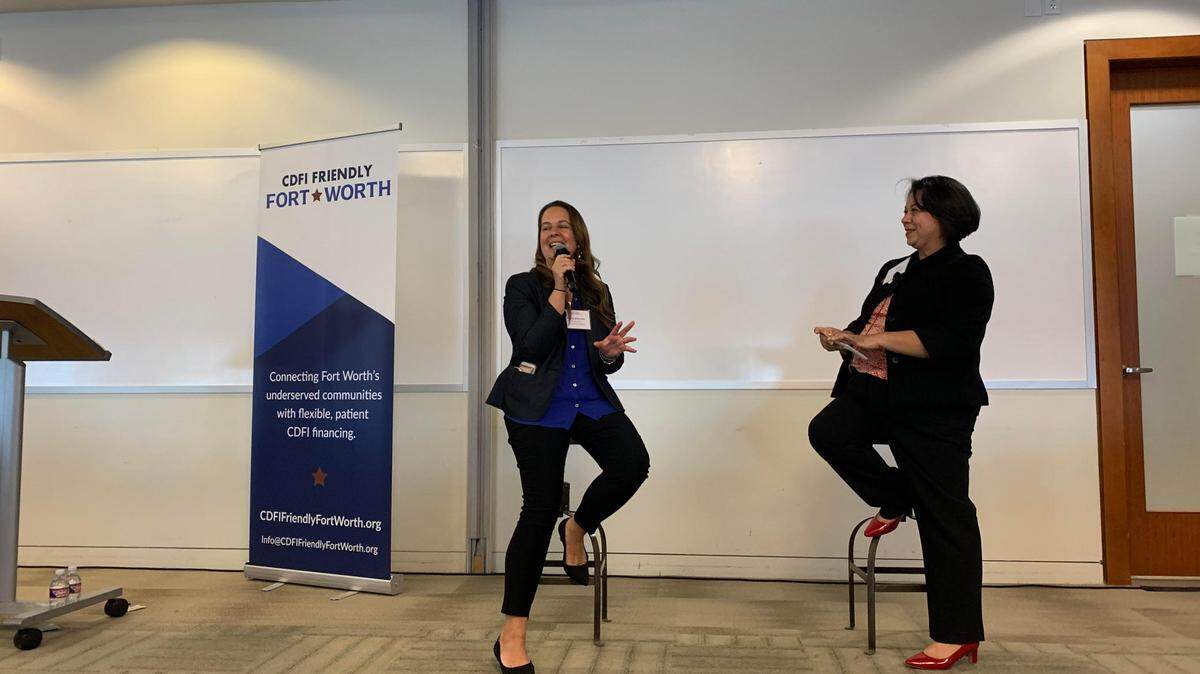
The city launched an initiative Wednesday that will bring up to $250 million in lending to communities that haven’t had access to capital for businesses or affordable housing development projects. CDFI Friendly Fort Worth will connect potential borrowers with Community Development Financial Institutions, which provide loans to low-income people and businesses.
Fort Worth Mayor Mattie Parker celebrated the start of CDFI Friendly Fort Worth during an event at the new City Hall.
“Fort Worth has really for a long time struggled, frankly, to focus in our communities that need us most, especially our Black and Hispanic communities that have amazing businesses that really teeter ... month to month to just make it,” she said. “That’s frustrating, because we know that their capacity is so much bigger.”
Fort Worth has not received as much Community Development Financial Institution funding as other Texas cities. Mark Pinsky, CDFI Friendly America’s founding partner, said he believes that’s because the institutions haven’t paid enough attention to Fort Worth’s market.
“One of things we know about CDFIs is they can do amazing things where they’re working. If they’re not working there, nothing’s going to happen,” Pinsky said.
Robert Sturns, the city’s economic development director, said data shows minority-owned businesses have a harder time running and scaling compared to their white-owned counterparts. Minority-owned businesses are more likely to be in the service industry, which have been most severely impacted by the pandemic, he said.
They’re also significantly more likely to show limited signs of financial health, which is compounded by their limited access to capital, Sturns said. Even successful minority-owned businesses tend to be 30% smaller than the average white-owned business.
“You don’t need to look at the data, look at trends to understand that businesses in our underserved areas are not thriving as well as they should be,” Sturns said. “You can take a simple drive around Fort Worth ... and you can see that there are areas that still need assistance.”
Community Development Financial Institutions manage financial risk by making lending more affordable, Pinsky said. They charge less for a typical loan than a bank or credit union might and they delay payment schedules when entrepreneurs need it.
“The business model is to be profitable, but not profit maximizing,” Pinsky said.
Additional profits are put into helping entrepreneurs gain necessary skills to succeed, Pinsky said. They help them do things like update their bookkeeping system or connect developers with the right contractors to build projects under budget.
Marla Bilonick, the president and CEO of National Association of Latino Community Asset Builders, said the funds make their lending decisions based on the borrower’s character rather than specific aspects of their financial history. They also have a greater cultural understanding of their clients than traditional financing institutions.
“Cultural competency as it pertains in the Latino community is not having someone at the reception desk speak Spanish. It’s really much deeper than that, and it’s having individuals on staff who have lived the immigrant experience,” Bilonick said.
At Bilonick’s Latino-oriented institution, Latina clients find chairs next to them to place their purses because they typically don’t feel comfortable placing them on the floor.
For more information, visit cdfifriendlyfortworth.org/borrowers.
If you or someone you know has had negative experiences seeking funding for a business, please text or call 817-390-7041 or email at mrivas@star-telegram.com.