Fort Worth’s pediatric hospital is at capacity as omicron surge continues
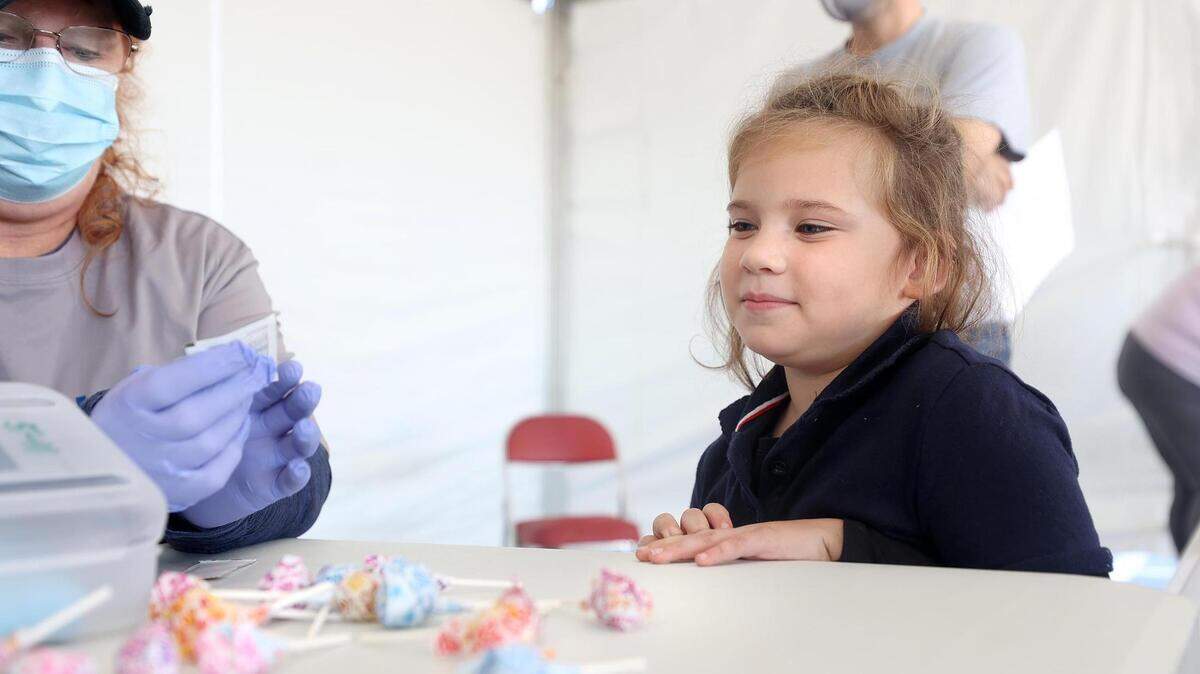
Cook Children’s Medical Center had 69 COVID-positive children admitted to the hospital Wednesday, the highest at any point during the pandemic, officials said.
Of those 69 patients, nine children were still waiting in the hospital’s Fort Worth emergency room when officials briefed reporters on the crisis at 2 p.m. Wednesday.
“We just didn’t have enough medical-surgical beds in the hospital,” said Cheryl Petersen, the medical center’s vice president of patient services and chief nursing officer.
The highly contagious omicron variant continues to drive a surge in hospitalizations in North Texas and the U.S. But unlike in previous surges, more children are testing positive and requiring hospital care than in the past.
COVID-19 still poses the greatest risk to older adults and to adults with chronic conditions or who are immunocompromised, and especially to adults in these groups who are not vaccinated. Children are less likely to need hospital care or to die after being infected with the virus. Since the pandemic began, 841 children have died from the disease in the U.S., according to the U.S. Centers for Disease Control and Prevention. Another 55 children are believed to have died from multisystem inflammatory syndrome in children, a rare condition that has been linked to COVID infections in children. In all, more than 840,000 Americans have died from COVID-19, according to the CDC.
But with omicron’s increased ability to infect people and the fact that children under 5 still aren’t eligible to be vaccinated, there are simply more kids getting infected, meaning more kids getting sick enough to require hospital care, Cook Children’s leaders said.
“Right now it’s a numbers game,” said Dr. Bianka Soria-Olmos, a Cook Children’s pediatrician. “When the positivity in the community is this high … it’s really hard to shield the vulnerable. And in my mind, unfortunately, that’s every child, but in the situation we’re at, it’s definitely every child that can’t be vaccinated.”
The hospital has been at capacity for weeks, Petersen said. Last week, the hospital admitted 51 children who had tested positive for COVID, another pandemic record before the increase in patients reported Wednesday.
The hospital as a whole was 94% full the week of Dec. 30, according to data reported by the hospital to the federal government, with kids in 325 of 347 total inpatient beds. The intensive care unit was full that week, according to the data, with all 33 beds occupied.
Petersen said a full intensive care unit was not unusual for the hospital during winter months, when seasonal viral illnesses like the flu and respiratory syncytial virus frequently infect children. But the fact that the hospital overall is at capacity is what’s most worrisome about this surge, she said.
With the medical center at capacity, Petersen said, patients are experiencing longer wait times in the emergency room, and the hospital has had to turn away some children seeking care from smaller hospitals looking to transfer a patient to Cook Children’s, where they can typically receive a higher level of care.
“Our decision on our ability to safely admit a patient is case by case, and has been for weeks,” Petersen said.
Officials urged everyone eligible to get vaccinated and boosted, to wear a mask in public spaces, and to be particularly cautious around children who are too young to receive a vaccine.
What’s different from previous surges?
In both children and adults, the omicron variant does appear to cause less serious disease than the delta variant. At Cook Children’s, there are only a small number of COVID patients in the intensive care unit, officials said.
“The acuity of our patients in the hospital in general appears to be less than previous variants,” Petersen said. “But that all varies depending on the risk factors any patient possesses and how that virus afflicts them.”
Also, more children testing positive for COVID-19 are showing symptoms of croup. Croup is a common respiratory illnesses characterized by a distinctive cough that sounds like a seal or a bark, Soria-Olmos said.
‘Weary beyond words’: Staffing shortages, exhaustion persist
The pediatric hospital is also facing staffing challenges that are plaguing hospitals throughout the state and country. To decrease bottlenecks, hospital leaders also urged parents not to turn to emergency rooms for COVID-19 tests.
On Wednesday, about 165 employees of Cook Children’s estimated 7,600 employees — about 2.2% — weren’t able to work because they had tested positive, Petersen said.
“We are scrambling every day, truly scrambling to look at where we can identify resources to help supplement staffing,” she said. “We’re all are weary beyond words.”
The number of children testing positive with and needing hospital care for the coronavirus is likely to increase in the coming weeks, according to epidemiologists.