More Tarrant County residents are testing positive for COVID as omicron spreads

The percent of Tarrant County residents testing positive for COVID-19 rose steeply over the Christmas weekend, an early indicator that the omicron variant of the virus is spreading quickly through North Texas.
Data from both Tarrant County Public Health and the Texas Department of State Health Services show spikes in the percent positive rate among county residents. The percent positive rate reflects the share of people who test positive for the coronavirus out of the total number of people taking a test. If a percent positive rate is high, it’s likely that a given virus is widespread in the community.
In the last two weeks, the average percent positive rate has more than doubled, from 7.5% on Dec. 11 to 18.3% on Saturday, according to data from Tarrant County Public Health.
Statewide, the Texas Department of State Health Services reported an average of 22.3% of Texans testing positive for COVID after taking a molecular test — higher than at any previous point during the pandemic.
Percent positive rates aren’t a perfect metric; when COVID-19 tests are difficult to find or demand leads to longer wait times, as it has right now in Tarrant County and across much of the U.S., many people who might have COVID-19 might not be able to get a test and be included in the data. But the rate can be used as an early indicator that cases are on the incline and the virus is spreading through a community.
Cases in Tarrant County are also increasing, but the spike in the positivity rate indicates that they will likely climb higher still in the weeks to come, as has already happened in states in the northeast where COVID is spreading rapidly.
Tarrant County Public Health on Tuesday reported 11 COVID deaths. The deceased include two women from Fort Worth in their 70s, a woman from Euless in her 70s, two women and two men from Arlington in their 60s, a man from Mansfield in his 60s, a woman from Sansom Park in her 60s, a man from Benbrook in his 50s and a woman from Benbrook in her 40s. All had underlying health conditions.
The data released Tuesday have two important caveats. First, the Christmas holiday and the upcoming New Year’s holiday will likely continue to cause disruption and delays in reporting new COVID-19 cases and deaths. It’s possible that not all of the new cases identified in the last week are reflected in the most recent data.
Second, the local, state and national numbers don’t necessarily include positive test results from rapid, at-home tests. If someone tested positive using an at-home test, they would only be counted as a new case if they notified public health officials or if they followed up their at-home test with a second test at a public site.
As the number of people testing positive increases, the share of people being hospitalized with COVID-19 will increase as well, although hospitalizations are a lagging indicator and typically increase a few weeks after cases do. Right now, confirmed COVID patients make up about 10% of hospitalized patients in the county, according to Tarrant County Public Health.
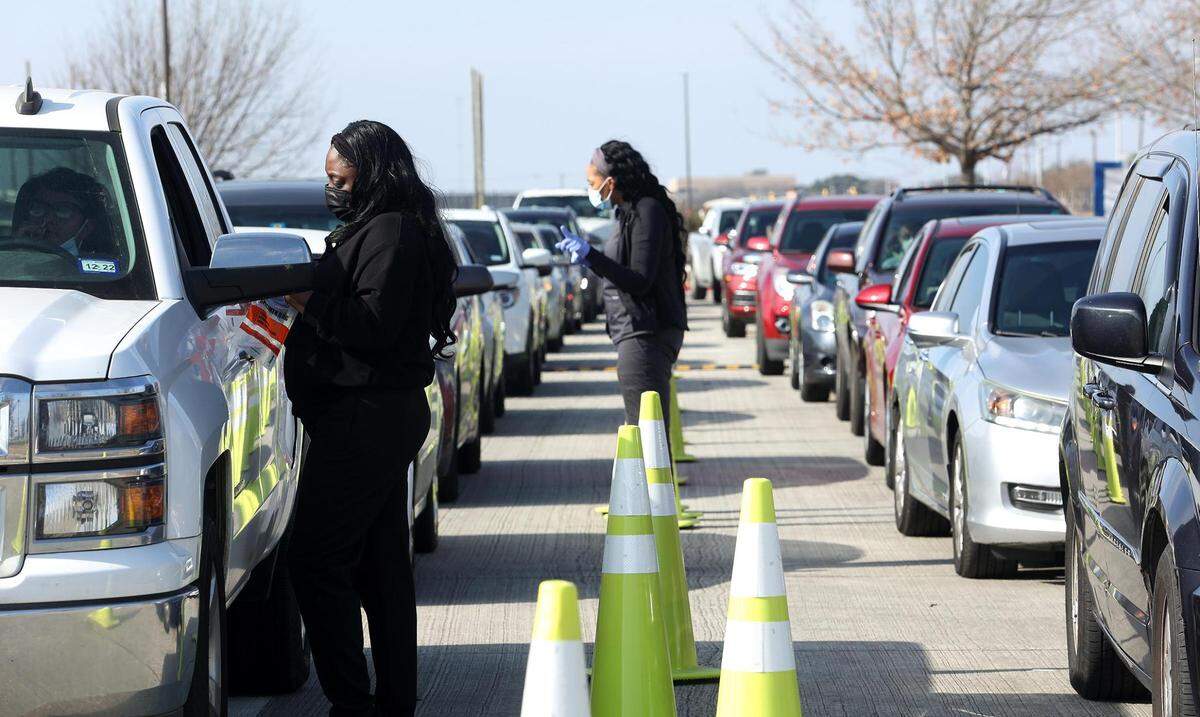
Some facilities are already reporting an increase. JPS Health Network was treating 107 hospitalized patients who tested positive for COVID-19 on Tuesday, up from 50 total COVID patients on Dec. 23.
Cook Children’s Medical Center reported 20 children being treated for COVID in the hospital Tuesday, with five of those in the ICU.
What we know about the omicron variant
Scientists are still rapidly working to understand the omicron variant of the coronavirus. The variant was first identified in November.
Since then, it’s become clear that omicron spreads more easily from person to person than the delta variant or than the original virus. Experts advised that the same steps that have been advised in previous surges — avoiding large, indoor crowds, and staying home when sick — continue to be the best steps to reduce transmission. Experts also urged people to use a higher-quality mask than a cloth mask because omicron is so much more contagious.
Although it’s clear omicron spreads easily, there are other questions scientists are working to understand.
First, experts don’t yet know whether omicron causes more severe disease. Early research from South Africa indicates that omicron might not cause people to get as sick as other versions of the virus, but experts in the U.S. advised looking at international data with caution.
“It’s hard to tell what will happen in a older population, and one with a lot of comorbid conditions, for example, in the United States,” said Catherine Troisi, an infectious disease epidemiologist with UTHealth School of Public Health in Houston.
It’s also unclear exactly how much protection the COVID-19 vaccine, and the booster dose now recommended for all adults, provide against the new variant. But the early information indicates that although being vaccinated won’t necessarily prevent you from catching or transmitting the virus, it does a better job of preventing you from getting seriously sick or dying.
“It appears that they are somewhat less effective, but still pretty good, particularly if you’re boosted,” said Dr. James McDeavitt, the executive vice president and dean of clinical affairs at Baylor College of Medicine. “The people that are getting really critically ill that we’re seeing in our hospital systems are largely the unvaccinated people.”