Demand for COVID testing surges as Fort Worth braces for omicron-driven increase
COVID-19 cases are again increasing in Fort Worth, as the omicron variant of the virus continues its pattern of rapid transmission throughout North Texas.
“I would be surprised if we didn’t see an increase in cases,” said Catherine Troisi, an infectious disease epidemiologist with UTHealth School of Public Health in Houston. “Between omicron, which is very infectious, and the holidays, and people traveling, we’re going to see an increase.”
The exact picture of omicron’s spread in Tarrant County and throughout Texas is currently muddied because of reporting delays from the Christmas holidays. The most state recent data, from before the holiday, show that the estimated active cases of COVID in Tarrant County increased by 105% in the two-week period ending Dec. 23. Neither the Texas Department of State Health Services nor Tarrant County Public Health updated their data dashboards over the holiday. The state’s dashboards for COVID vaccinations, cases, and hospitalizations were not updated with the most current data as of 4 p.m. Monday.
One indication of the increase, however, was offered by the JPS Health Network, which reported 89 hospitalized patients who had tested positive for the virus as of 10 a.m. Monday, up from 50 COVID-positive patients on Dec. 23.
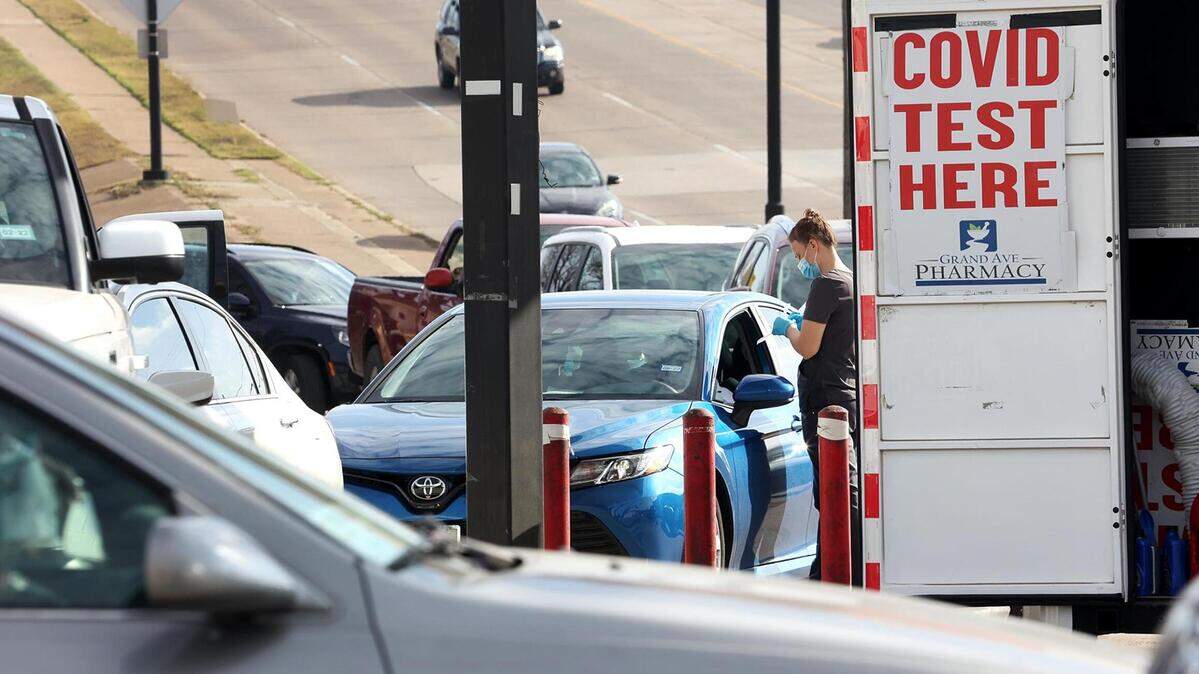
Another early indicator of omicron’s spread in Fort Worth? A surge in demand for virus tests. At a free testing site near the intersection of Berry and Hemphill streets, dozens of cars sat in the roadway’s center lane Monday waiting to inch through the drive-through testing area.
Mary Sears, the site manager of the drive-through testing site, said demand for tests began to skyrocket about 10 days ago. Before the recent surge, Sears and her colleagues were testing about 60 people in a day. By Monday afternoon, Sears and her colleagues had tested more than 100 people, with dozens more possible COVID patients still in line. Cars backed up a full city block as they waited to get into the testing site.
Texas hasn’t yet seen the same omicron-driven spikes observed in northern regions of the U.S. In Washington, D.C., cases increased 440% over two weeks, according to local data, a spike largely driven by the omicron variant. Other cities in the northeast are also seeing record highs of new COVID cases.
It’s unclear whether omicron will cause Texas to surpass the records set during previous surges of the pandemic. The temperate weather in Texas may help reduce the number of people gathering indoors in close proximity, as is likely happening in northern states, Troisi said, but the state also has a much lower vaccination rate than northern parts of the country. Of the state’s population, just 56.8% are fully vaccinated, and of Tarrant County’s entire population, just 52.9% are fully vaccinated, according to data from last week.
Dr. James McDeavitt, executive vice president and dean of clinical affairs at Baylor College of Medicine, said he saw no evidence to indicate omicron cases wouldn’t continue to climb steadily in Texas, as they have in the northern U.S.
“It’ll be another week or so before we see the tremendous spike we’re seeing in the community cases show up in the hospitals, and hospital numbers are already going up,” McDeavitt said. “So I expect they’re going to climb over the next couple of weeks, and climb pretty pretty sharply.”
Scientists are still working to learn more about the omicron variant, which was first declared a variant of concern last month. What is now clear, experts said, is that the omicron variant spreads more easily from person to person than delta or any other previous variants.
Dr. Nikhil Bhayani, Texas Health Resources infectious disease physician advisor, said he and other local physicians were expecting an increase in cases because of omicron’s transmissibility.
“We had to be prepared for is that we will see an increase in cases,” Bhayani said. “To what degree we are not aware.”
Experts are still studying whether the omicron variant can evade the protection offered by COVID-19 vaccines or from a prior infection. So far, the evidence indicates that the vaccines provide protection against hospitalization and death, particularly for people who have received a booster dose. But the vaccine can’t provide complete protection against getting infected in the first place.
“Ultimately, that’s what vaccines do,” Troisi said. “They protect you against hospitalization and death.”
This story was originally published December 27, 2021 at 4:40 PM.