Will UT Arlington’s next president be Hispanic? Here’s why some faculty members hope so
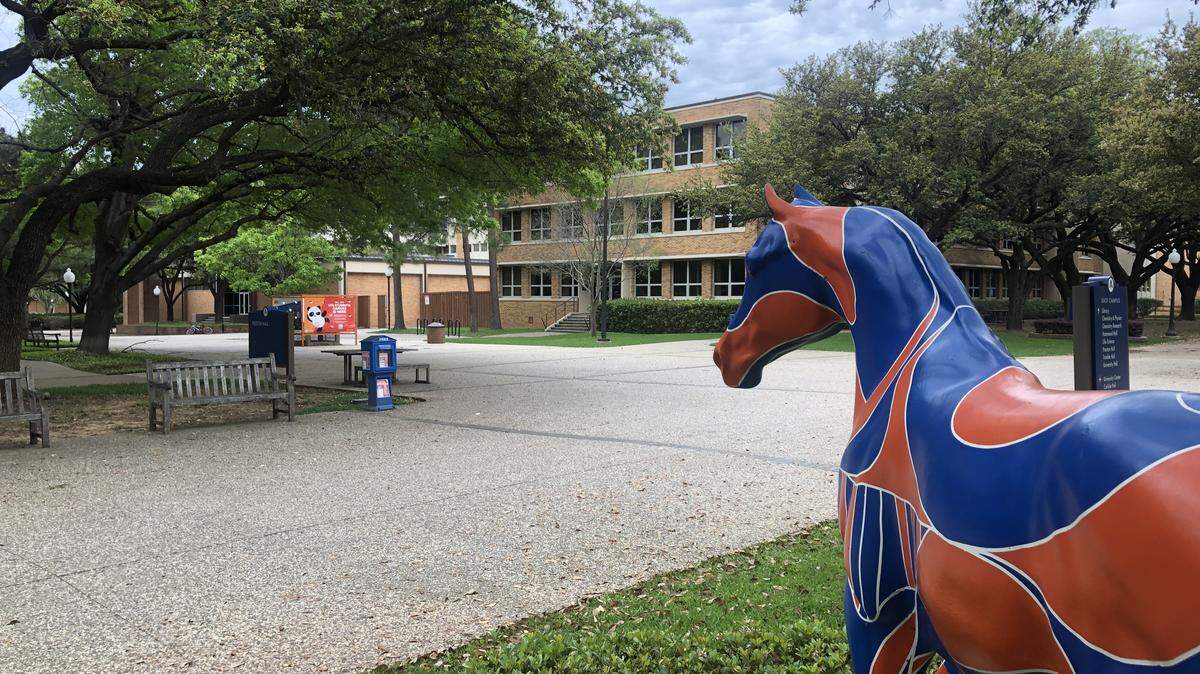
The University of Texas System has selected a group of finalists for UT Arlington’s president, and several faculty members said they hope at least one of them is Hispanic. The system’s Board of Regents is expected to interview the group on Friday, and state law requires the board name a finalist at least 21 days before their appointment.
U.S. News and World Report’s 2022 Best Colleges ranked UTA the most diverse undergraduate campus in Texas and third nationally. The university’s second-largest student population group is Hispanic or Latino, making up nearly 28% of the total student body and 31% of the undergraduate population. White students are the largest, making up nearly 33% of the student body.
The university received the Hispanic Serving Institution designation in 2014, because more than 25% of its student body is Hispanic.
Four faculty members told the Star-Telegram that they hope the final candidate will have a compassionate understanding of the specific struggles Hispanic students and faculty face at the university.
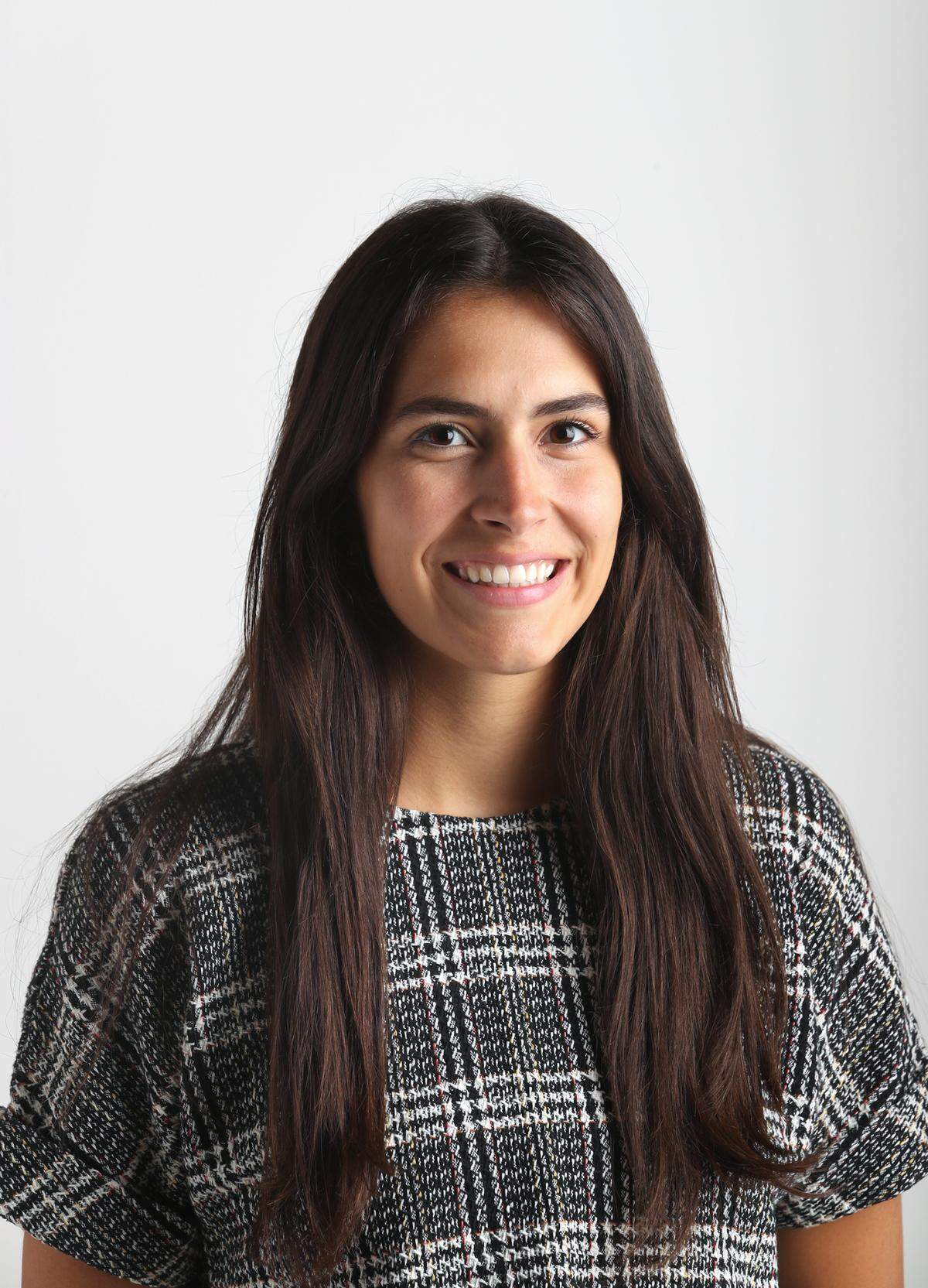
Erin Murrah-Mandril is a core faculty member for the University’s Center for Mexican American Studies and spends a lot of time with Hispanic students and faculty.
“I care about their needs and how they’re being served. And I think that UTA needs better representation across the board, but especially administratively to better serve the students that make up an enormous portion of the student body,” she said.
The presidential search began this past summer after former UTA president Vistasp Karbhari resigned in March 2020 amid a university system investigation into UTA’s enrollment and recruitment practices. Soon after Teik Lim, the university’s provost and vice president for academic affairs, stepped in as interim president. On Wednesday, he was named as the next president at the New Jersey Institute of Technology.
The search committee reviewed about 100 applications, interviewed candidates and recommended a group for the Board of Regents to interview.
“There’s an interest in candidates that will build on … that record of diversity and access and inclusion at UTA, and also build on its strong academic record and its research growth,” said James Milliken, the chancellor of the UT System.
The university system reached out to Hispanic education leadership groups to recruit candidates and the efforts resulted in a diverse candidate pool, he said. In a November email on updates about the search, Milliken said approximately one third of the candidates were female and approximately 40% were from “underrepresented” groups.
Thaiss Loaeza, a junior and president of La Sociedad Hispanica, said she she’s hoping for a Hispanic president.
“Since we are a Hispanic Serving Institution, it’s always something that many Hispanic students have advocated for,” Loaeza said.
As a first-generation student, Loaeza looked for other people like her. She joined Hispanic student organizations and connected with Hispanic faculty and staff to help guide her through the process.
She said representation at higher levels means more opportunities for mentorship.
“A lot of us are first generation. We don’t really know what we’re doing, and seeing someone that knows our culture and how we we’re raised is really helpful,” Loaeza said.
Christian Zlolniski, the director for the University’s Center for Mexican American Studies, said he’s heard frustrations with the lack of representation in the administration and faculty from his colleagues. He added that this can be detrimental to the Hispanic student population.
More representation higher up in academia can help Hispanic students as they’re working to get their degrees, Zlolniski said.
“Students can see that other people who have come from that background have succeeded,” Zlolniski said. “It’s not just about reflecting the fact that we are enrolling a lot of Latino students, but we are strategically thinking and planning and acting to support them now and in the future?”
In a statement, Pranesh Aswath, interim provost and vice president for academic affairs, cited several efforts to retain faculty from diverse backgrounds.
A diversity, equity and inclusion committee, made up of faculty, staff and students, recommends ways UTA leaders can create a more supportive environment. Members of search committees receive bias training, and there’s a two-year mentoring program for new faculty.
The number of Latino full-time faculty increased 27% from 2016 to 2020, and the number of Latino part-time faculty increased by 54%, according to a statement from the university.
Many Hispanic students at UTA are first generation college students with expectations to work and provide for their families during and after school, Zlolniski and others said. About 40% of students self-identified as first generation, according to the university.
“For them and for their families, this is all a new territory, a new experience. And often they meet pressures not just to attend college but to work to support their families,” Zlolniski said.
Cristina Salinas, a Mexican-American history professor at UTA for eight years, agreed with the other faculty members’ sentiments. She said university leaders should be willing to engage with Hispanic members of UTA in a different way than they have before.
The professors said they wish there was more programming aimed directly at Hispanic students, like aid for DACA students and community outreach and service programs in majority Hispanic communities in Arlington.
Salinas said she’s seen programs installed in recent years that show some progress.
In July 2020, UTA announced it would designate an additional $25 million in scholarships to address diversity and for first-generation college students as part of an eight-part diversity and equity initiative.
UTA students mentor students at 20 high schools and help them navigate the admissions process through a program in eight school districts. Low- and moderate-income students, 75% of whom are Hispanic, have access to SAT and ACT prep courses through University Crossroads.
On campus, students have access to peer tutoring and mentoring, coaching through academic advisers, and help with financial literacy and career planning.
Jennifer Luken Sutton, director of TRIO — Student Support Services, was a first-generation student at UTA and now helps other students navigate the process.
“Not only did my family tree change, but every student that I get to get to work with and that I get to mentor and that I get to dedicate time to, I’m helping them change their family trees, and impact not only their parents and siblings, but possibly cousins, aunts, uncles because I understand that from my own experience,” Sutton said.
Measures like these have increased full-time Hispanic undergraduates’ retention rate 6 percentage points to 74% since 2015, and the total Hispanic student population has increased by 33% since 2016, according to the university.
“If we’re letting you in the front, we’ve got to make sure that we’re providing the services that are going to allow you to persist through graduation and then into the ... workforce,” said Michele Bobadilla, assistant provost for Hispanic student success.
Murrah-Mandril, of the University’s Center for Mexican American Studies, said that ultimately having representation at the highest level at UTA would help Latino student success.
“I do think that if we have a pool of candidates that doesn’t include a single Latino or Latina, that is the problem and that says something about the search and their unwillingness to even look,” said Murrah-Mandril.
This story was originally published January 6, 2022 at 5:30 AM.