This Fort Worth ISD program offers incentives to students, parents to attend school
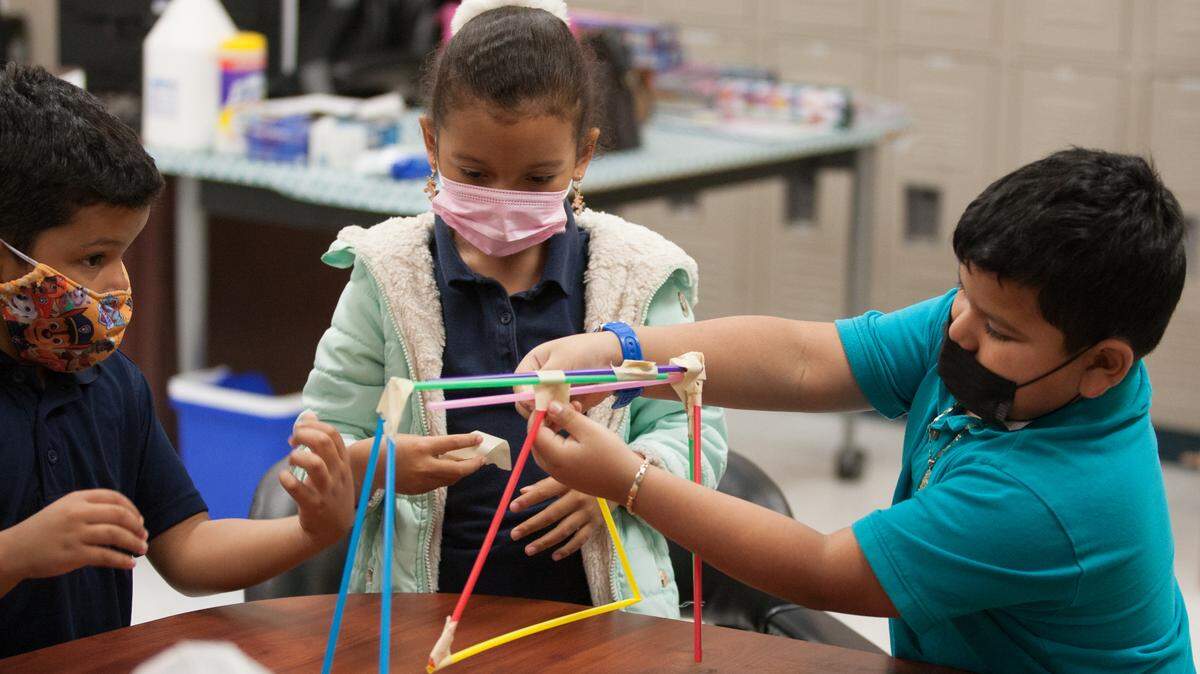
Fort Worth ISD is continuing efforts to reengage and support students who have struggled with academics over the course of the pandemic by offering incentives to attend a Saturday Learning program for students in grades 1-3, called Saturday Learning Quest.
“The premise is that we wanted to provide students and families with additional opportunities to accelerate their learning academically,” said Shannon Hernandez, Fort Worth school district K-12 math and science executive director. “We know that through COVID and everything that happened we had some learning loss there.”
District officials running the program, which has happened for five Saturdays so far this year, said they are still collecting data to gauge the progress of students, many of whom fell behind over the last year due to the COVID-19 pandemic.
“We collected beginning of the year data for the district, so midway through this we will be able to collect middle of year data to be able to look at students that attended to see if they had more growth than students that didn’t attend,” Hernandez said.
Students attending Saturday Learning Quest recently received free educational materials and ‘goody bags’, and parents who stopped by were entered into a raffle to receive gift baskets with themes like kitchen essentials, coffee station and self-care.
Students more engaged
Katy Reed, the principal of the Saturday program at George C. Clarke Elementary and assistant principal during the week, said that students are more engaged in school during the program, which provides different lessons than students get during the week.
“They’re more willing to take risk and try new things,” she said. “It improves their overall attitude.”
Instead of focusing on just a targeted subject, students are given opportunities to engage in art, P.E. and other subjects as well as STEM topics not usually taught in elementary school.
“I think it is important that it be called Saturday Learning Quest, because it is not just Saturday school,” Reed said. “They get a lot more movement, they get a STEM class, so I think just the semantics, Saturday Learning Quest means come prepared for an adventure.”
Reed said, students are reengaging in topics they struggled with throughout the year.
Mandy Huie, who teaches STEM for the program and third grade during the week said that the biggest difference since the beginning of the year that she has noticed has been the social and emotional aspects of the student’s learning.
“They are from five different schools and they come here,” she said. “So they were a little hesitant, but over the weeks they have made friends from other schools and they are all working together.”
Parents notice difference
While data is still being collected, parents say they are noticing a difference, with children excited to return week after week.
“My daughter learned a lot while we were out of school through travel and reading but there is a lot of curriculum that got missed,” Jason Amon, whose daughter attends the program, said. “She is telling me that this is more learning at a fun comfortable pace, whereas being at school Monday through Friday is a little bit faster pace and goal oriented. So it is a more relaxed and fun way to learn.”
Hernandez said that the program is intended to fill gaps in education, while also focusing on social and emotional learning.
“We are not just focusing on the academics, but the whole child,” she said. “We wanted to not only provide instruction for literacy and math, but also science, health and P.E. so students can get up and moving. It is not just another day of school.”
The program, which will run for 14 Saturdays throughout the year, is in its second round of students after reopening registration a second time.
Gloria Williams, who has two daughters in the program, as well as a newborn and an older daughter, said that virtual learning was a struggle for her and her children.
“I would have days where she would just cry and cry and cry and I’d be like well we just won’t do school today,” she said. “I’m trying to help a fifth grader, help a second grader, help a first grader, watch a baby and then two out of three are crying. It’s hard.”
Williams said she jumped at the chance to get extra support for her children when it was offered.
Her kids went from dreading math, to “playing math class,” after starting at the program Williams said.
Future opportunities
The district is analyzing data from several programs that made up the largest summer learning program in the district’s history, to see where students were able to make progress. Combined, the data points will inform future support programs for students in the district.
“It could be something that we can continue to do, knowing that our kids need it,” Hernandez said. “It could shift to fourth and fifth grade, or even to middle school.”
Both initiatives are in addition to extra tutoring and support the district is providing in line with recently passed legislation that requires districts to provide additional support for students that fail the State of Texas Assessments of Academic Readiness (STAAR) exam.
The current program is funded by the Elementary and Secondary School Emergency Relief Fund, a $13.2 billion federal investment meant to help schools recover from the COVID-19 pandemic.
Huie said that Saturday programs held at the campus prior to the pandemic were effective at helping students improve their academics, with just a few hours every couple of weeks.
“Classes are a little smaller, and you’re not so strapped with time,” she said. “We’re relaxed, we’re having a good time and everyone has an open mind.”