How can the arts help you with trauma? These Fort Worth organizations know how
Robin Ludwig, a 20-year member of the U.S. Air Force National Guard, was apprehensive about reading Shakespeare. However, a performance at Fort Worth’s Amphibian Stage made her “completely fall apart.”
She saw Stephan Wolfert, the founder of De-Cruit and a veteran, share his story by using the classic playwright’s words. Ludwig said she was able to relate to Wolfert’s story and decided to sign up for the workshop program. De-Cruit uses behavioral science and Shakespeare to help veterans find ways to heal from trauma and other difficult experiences. Veterans read Shakespeare passages relating to war and practice healing techniques in a workshop. The workshops provide them with a safe space, instead of acting in front of an audience.
“I have dealt with things that are worthy of being noted, worthy of being put in their proper place,” Ludwig said. “I was worthy of moving on from situations that were less than ideal.”
Across Fort Worth, people are turning to visual and performing arts to help them process traumatic events. By painting, making pottery or learning the lines from a play can help put people on the path to healing, therapists and community leaders say.
Seven in 10 adults have experienced some sort of traumatic event at least once in their lives, according to the National Council for Behavioral Health.
“Art provides a really powerful medium and tool to communicate, to express what’s often hard in words,” said Jashley Boatwright, an art therapist at The Art Station in Fort Worth.
Art therapy can help with mental health needs
The Art Station, a nonprofit that provides art therapy services, worked with clients of Union Gospel Mission and Community Crossroads Outreach Center before the pandemic. Art therapists worked with participants on dealing with emotions, sense of empowerment, creating hope, and building social and coping skills.
“These are things that we all need, but we know that this can be really helpful for those who are in a process of coming to stability, like finding work and stable employment, and managing symptoms of trauma,” Whitney McLean, an art therapist at The Art Station, said.
Participants painted rocks to memorialize loved ones to cope with grief, created watercolors to explore emotions and wrote in journals for self-reflections. Art therapists noticed that participants became more supportive of each other, gained empowerment to acknowledge their concerns, and made steps to help with their future financial independence.
The Art Station organized an art show to help participants find their voice and share their stories to the community in order for the public to understand they are not “outcasts.”
Shakespeare helping veterans
Wolfert founded De-Cruit in 2017. He developed the program with the help of behavioral scientists. De-Cruit uses the bond veterans have with each other and trauma-informed practices to help those who’ve experienced difficult situations. The program has helped nearly 3,000 veterans around the world with its programs. The Amphibian Stage, a theater company, hosts the program for veterans in Fort Worth.
The program teaches participants coping strategies, breathing techniques and classical actor training. Ludwig said before De-Cruit she didn’t realize she faced a traumatic experience.
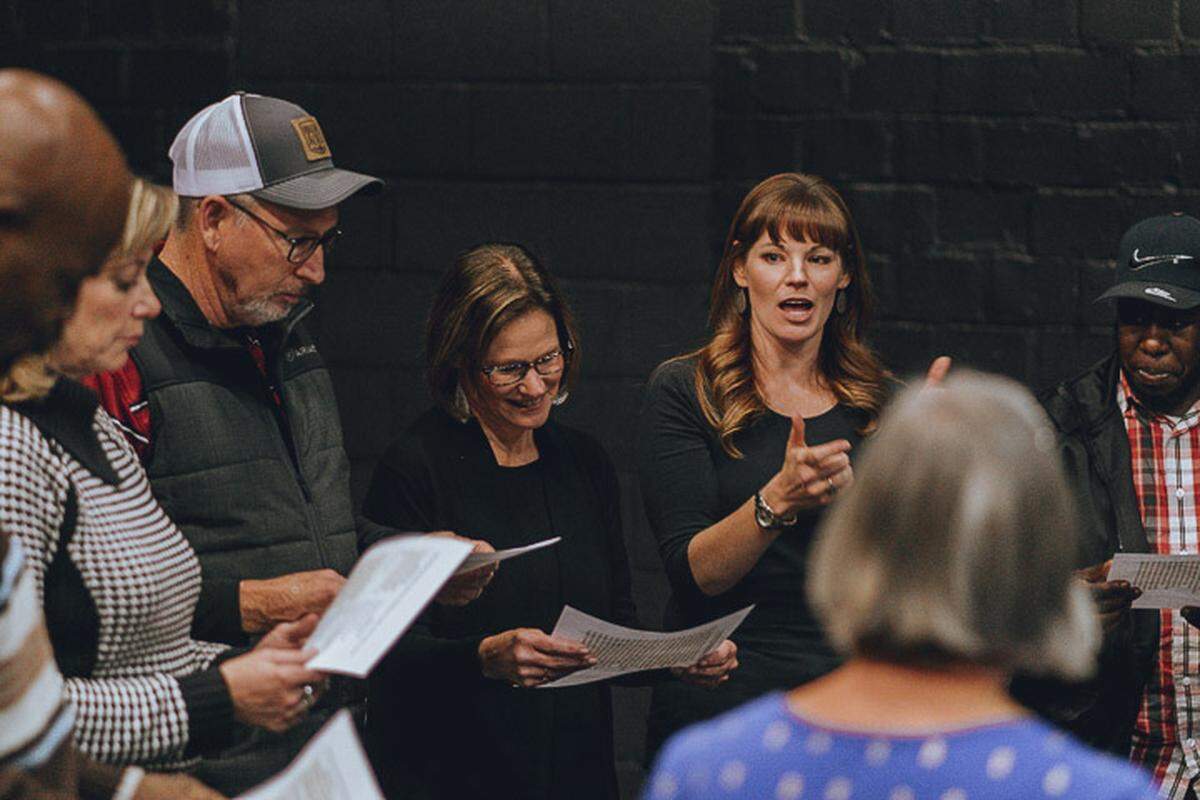
“It’s through just looking at the words that he wrote, we’re able to find peace with our own military experience in those words,” Ludwig said. “And those words allow us to share the deep traumas, the anxiety, the PTSD.”
Many veterans have experienced PTSD and other traumatic experiences before, during and after their service. The U.S. The Department of Veterans Affairs reported that 11 to 20 out of 100 veterans who served in Iraq and Afghanistan, from 2001 to 2014 have PTSD.
Ludwig said the program created transformation that has allowed her to be a better military member, spouse, mother and teacher.
Mitchell Stephens, a De-Cruit facilitator at Amphibian Stage, works with veterans at Green Bay Jail in Fort Worth. The program is on pause because of the pandemic.
He said by reading Shakespeare, participants are able to see their experiences in the words and navigate things that may be difficult for them to talk about in contemporary language.
“We have seen a lot of growth in terms of stress management, and recognizing the difference between character and circumstance,” Stephens said.
There were 181,500 veterans incarcerated across the United States from 2011-2014, according to the U.S. Department of Justice.
“We offer tools and techniques so that the ability to heal remains with the individual and therefore becomes more gratifying when that healing happens,” Stephens said.
Art giving children experiences
Several shelters and organizations serving those living in poverty line East Lancaster Avenue in Fort Worth. It’s the site of The Art of Living. Bryan Walsh created the organization in 2019 to provide a place for children staying at the Presbyterian Night Shelter.
Nearly 12% of Fort Worth residents live in poverty and 20% of them are under the age of 18, according to the U.S. Census.
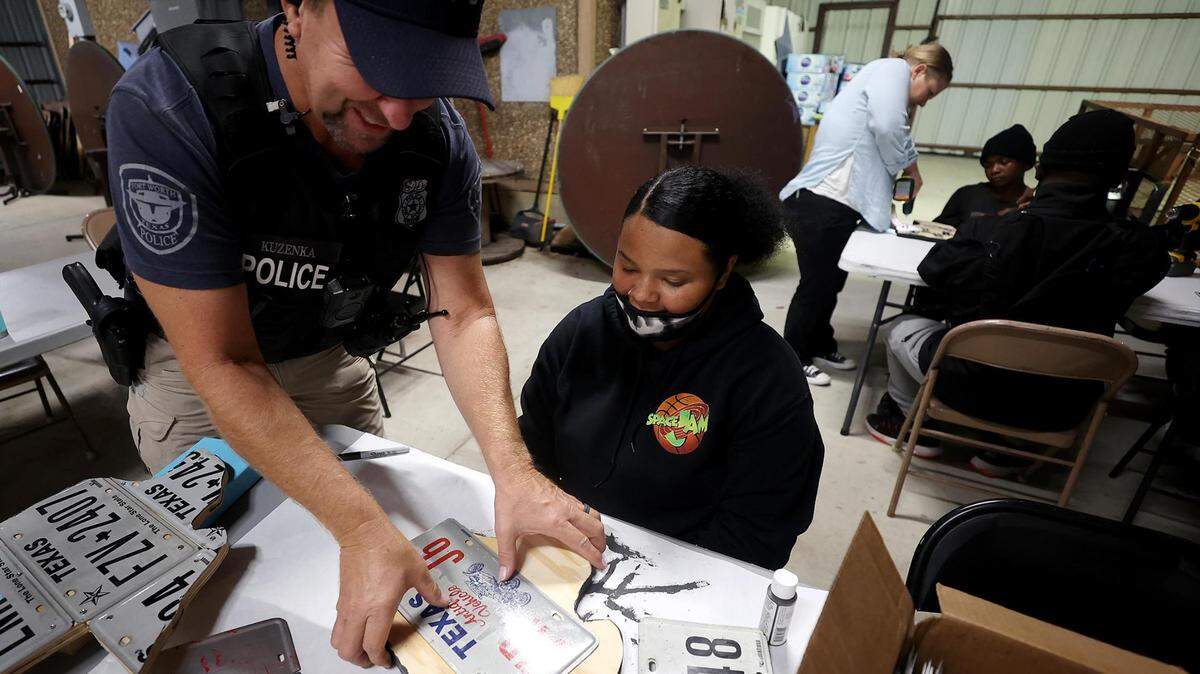
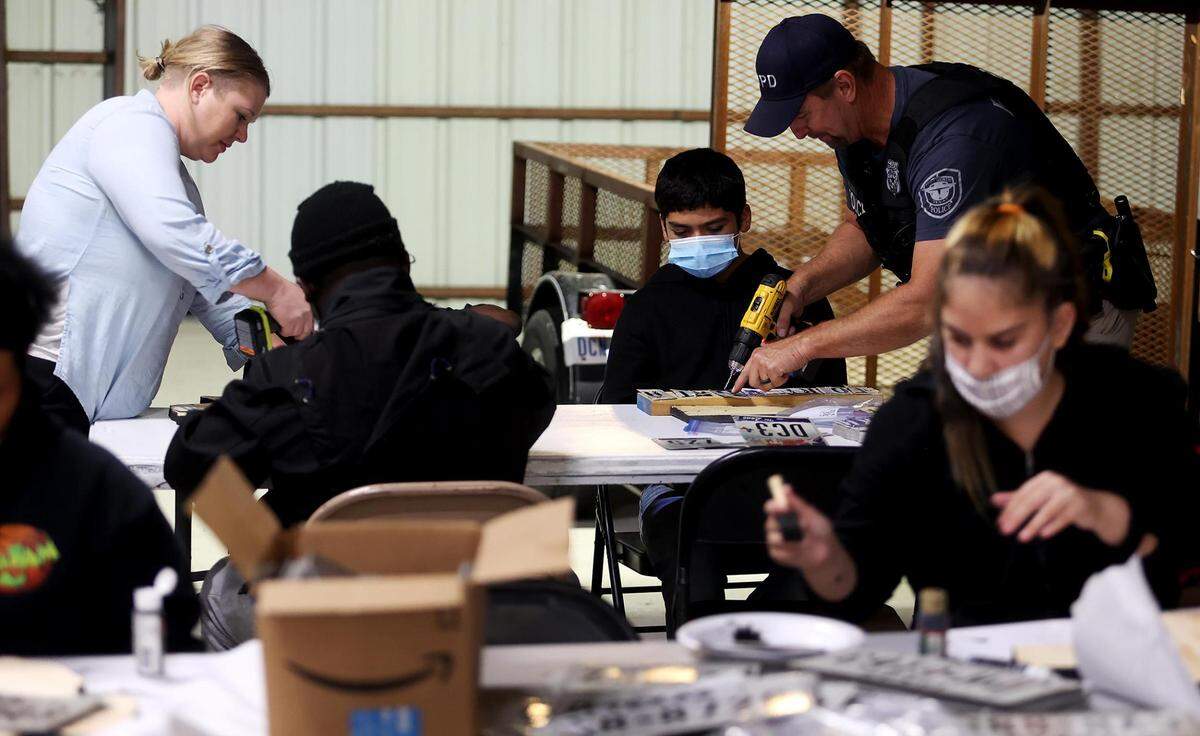
When a child comes to The Art of Living, they are able to take part in weekly art projects, from creating Texas-shaped plaques to making ceramics. The building is filled with brightly-colored ceramics, drawings, collages, tie-dye shirts and more.
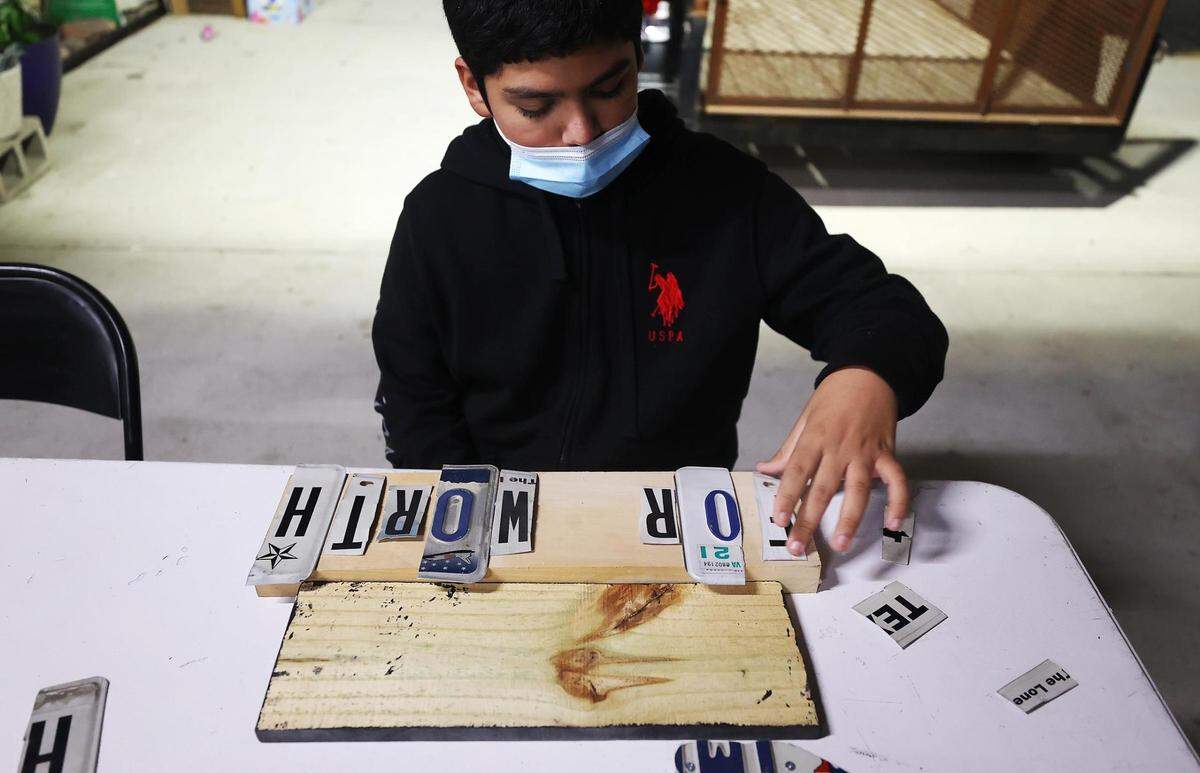
Walsh said art is a way for the children to communicate and share their feelings and creativity. Half of school-age children who are experiencing homelessness may have anxiety, depression or withdrawal, according to the National Child Traumatic Stress Network.
“It’s been the most joyful thing,” Walsh said. “The impact is just amazing for the kids.”
The organization has served over 150 children, ages 7-17. Some of the children are from Tarrant County, while others moved to the area from other states.
Art has been an avenue for the organization to understand other needs the children may have. Children experiencing homelessness are at risk for food insecurity, problems in school and health disparities.
The organization serves the children meals, and hosts outreach programs to teach them how to cook and ride a bike. Field trips and summer camps help children visit popular Fort Worth attractions, like the zoo, and learn about careers.
A child told the Fort Worth Star-Telegram about a recent field trip to the Fort Worth Zoo. He said a giraffe licked his hand — it was gross, but also cool.
“I’m constantly looking for places to take these children, so they can see what the world has to offer them,” Walsh said.
Fort Worth Police Department’s Cowtown Project Success is held at The Art of Living. Police officers complete art projects with children weekly to build mentorships. Before the pandemic, children were able to sell their artwork at markets to learn business skills and earn a commission.
Art resources in Fort Worth
The Art of Living: 817-703-8266
De-Cruit at Amphibian Stage: 817-923-3012