Fort Worth police oversight office began work in 2020. Here’s a look at its progress.
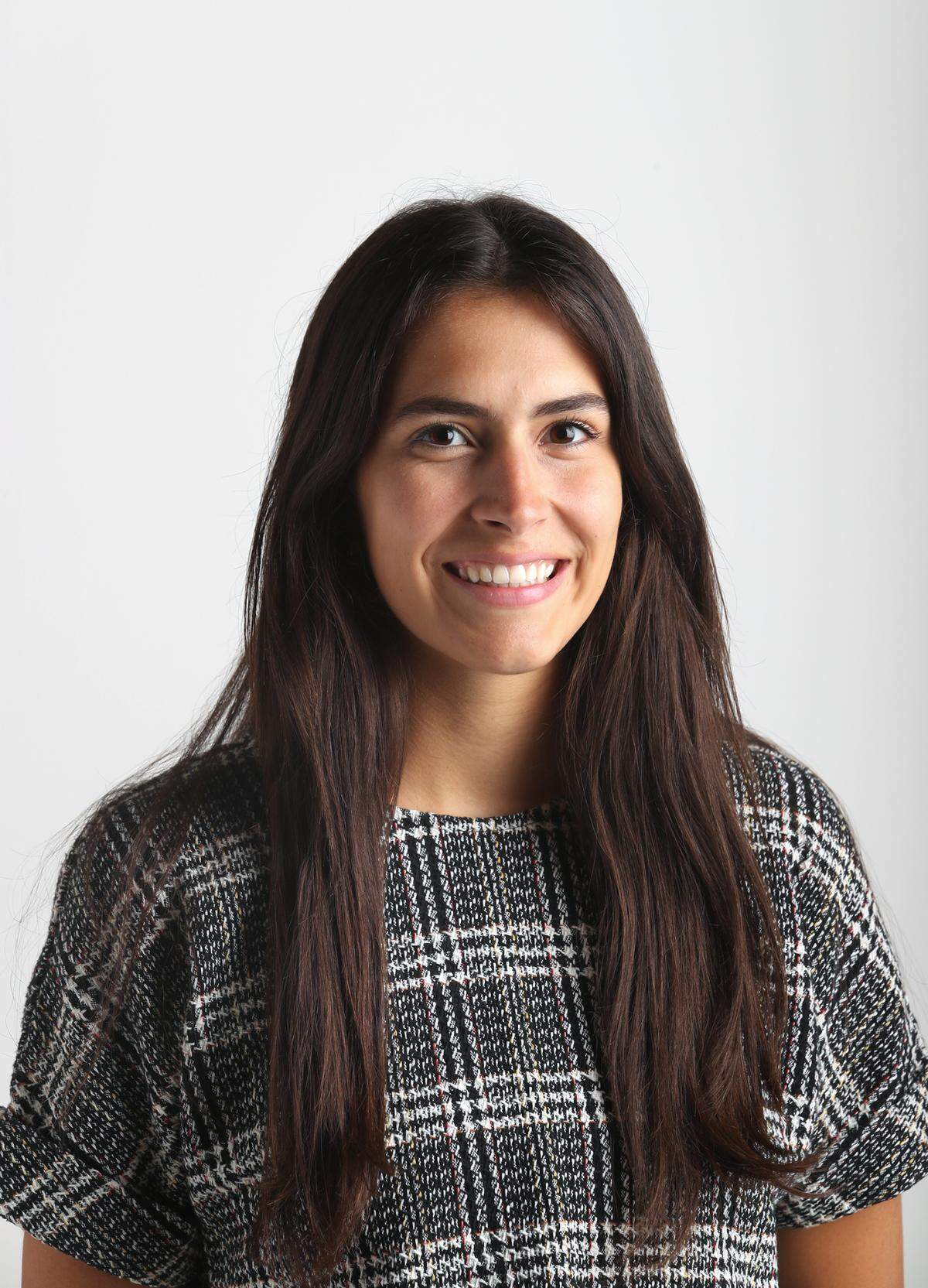
.jpg "Kim Neal rates hosting over 200 community engagements, meetings and presentations as an accomplishment she’s proud of.")
Minneapolis police officers stood and watched as officer Derek Chauvin put his knee on George Floyd’s neck, as Floyd said several times, “I can’t breathe.” After the action proved fatal in May 2020, people nationwide called for police reform, including a duty to intervene policy, which would require officers to take action when they see excessive force.
“A lot of community members here thought that Fort Worth didn’t have a duty to intervene,” said Fort Worth Police Monitor Kim Neal. “Me being new, I didn’t know one way or the other, so I had to research. And sure enough, we had a duty to intervene in our policy already.”
The Office of the Police Oversight Monitor, which Neal spearheads, recommended that the police department amend the 2017 addition to the Fort Worth police department’s use of force policy so that officers are not only required to intervene, but to report the incident. The department accepted the amendment, and recruits are now trained to intervene and report.
This is just one of the recommendations that Neal estimates were made almost monthly since last summer. Reviewing policies and procedures for inefficiencies or inequities and applying them to current events is one of the office’s most important roles, Neal said. The police department has been receptive to the office’s recommendations and hasn’t refused a recommendation yet, she said.
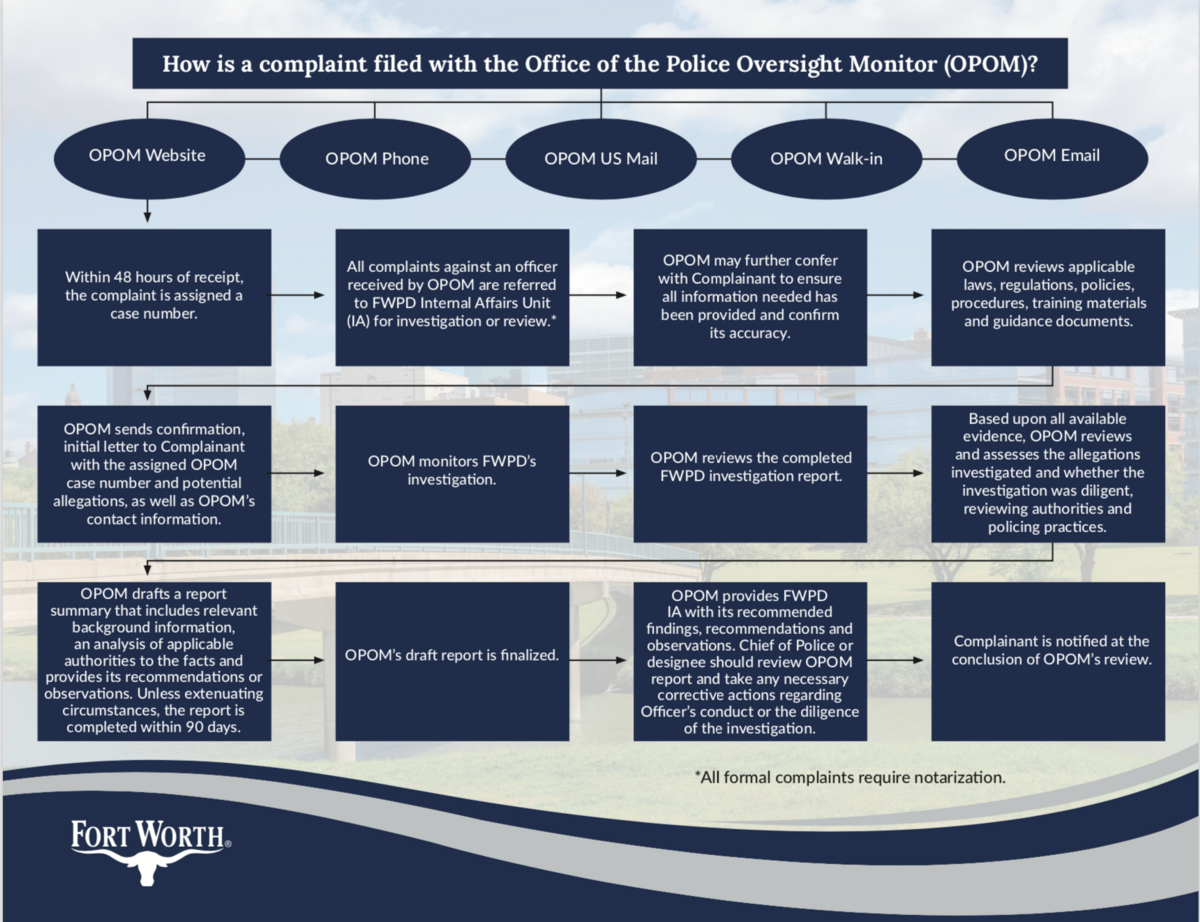
Since it was formed a year and a half ago, the police monitor office conducted both a community and police officer survey to gauge perspective on Fort Worth policing. Neal’s office established a complaint filing system that grants a different avenue for citizens who are uncomfortable taking complaints to police. Her office also formed several working groups that consist of community members that advise the monitor on where the office’s community outreach should be targeted and what an oversight board of civilians should look like.
But some, including Neal, say more work is needed to improve police and community relationships in Fort Worth.
Neal’s office has an open relationship with the police department. Although it doesn’t have subpoena power, the office has access to any of the department’s documents or information, an arrangement she’s hoping to formalize in writing in the coming months.
But the relationship between police and outside oversight is a naturally strained one at times. More than 80 percent of officers said community oversight would help policing “a little” or “not at all,” a survey conducted by the police monitor office revealed last year.
Police Officer Association President Manny Ramirez said he was initially skeptical of Neal’s work.
“For me, it was financial,” Ramirez said. “I thought, ‘Man, that’s another half a million dollars out of the budget. ... That could give us 10 more cops.’”
The office’s budget was just less than $700,000 for fiscal year 2021.
Ramirez said he questioned whether Neal’s office would actually make Fort Worth safer, but changed his mind after learning about her previous experience as a monitor in Cincinnati.
“But I’ve seen that Ms. Neal’s done a great job,” he said. “I think the reason why my viewpoint on her has changed is that she’s a subject matter expert and she’s a trusted resource.”
Neal said it’s common for police officers to be apprehensive of her office because they aren’t sure how oversight will affect their work. They come to find that her office “doesn’t even resemble anti-police,” she said.
“It’s important for me to build relationships up so that folks can understand that all of this that we’re doing is for the betterment of the police department and to enhance community and police relationships,” Neal said.
The Star-Telegram reached out to Police Chief Neil Noakes for comment through the department’s public information officers, but he didn’t respond.
An impartial check
The police monitor office was established in February 2020 in response to a recommendation from the city’s Race and Culture Task Force report and is designed to serve as an impartial check on Fort Worth police. Neal’s office is independent from the police department and instead works under city manager David Cooke.
It is responsible for a list of duties that range widely but include monitoring internal police investigations and auditing body cam footage and use of force reports.
COVID social distancing guidelines prevented a lot of in-person meetings, which Neal said halted some of her progress developing relationships with city leaders, neighborhood organizations and police. But the office adapted, hosting virtual sessions when possible. Neal said she’s particularly proud that her office hosted more than 200 of these community engagements, meetings and presentations. There, she introduced the office, updated leaders of its progress and learned about community members’ policing concerns.
Cooke rates the office’s progress as “very positive” despite facing difficult circumstances.
Neal’s office was able to do more than other police monitor offices in cities across the country during the pandemic, Neal said.
“They’re often surprised at the number of things that I say that we’re doing,” she said.
Several city leaders have shared general approval of the police monitor office’s work.
Former Mayor Betsy Price said, “I think this is really good work. I love your suggestions, the direction you’re going” at a Dec. 1 council meeting on Neal’s recommendation to form a working group for a community oversight board.
District 4 city council representative Cary Moon said the office has filled a void.
“There are absolutely times where a Fort Worth resident unequivocally does not want to talk to police,” Moon said in an interview with the Star-Telegram. Neal’s office allows citizens to share their complaints with someone who they may feel more comfortable with, he said.
Chris Nettles, District 8 representative who joined the city council in May, said it’s too soon in his term for him to make an assessment of the monitor’s work. Nettles confessed that before speaking with Neal, he was unaware of the extent of her work as a community liaison, just as he expects his District 8 constituents are too.
“I’m going to be asking her to come out to my community and give us a better idea of what it is that she does, so the people can understand,” Nettles said.
“I am the government”
Mindia Whittier, a university professor and volunteer with United Fort Worth, commends the office’s effort to form a working group for community oversight. The group was tasked with defining criteria for what an oversight board of civilians would look like.
Whittier was one of the volunteers who helped form the Tarrant County Coalition for Community Oversight, an organization that advocated for oversight in Fort Worth and was an advocate for a working group to get an oversight board started. She said she hopes to see community members involved in the office’s work in the future.
“What I would be hoping and seeking to still continue is that the community continue to be given a seat at the table ... and that they continue to center those impacted voices,” Whittier said.
Whittier said she “absolutely believe[s]” that an oversight board of civilians is necessary.
“I certainly am not questioning Ms. Neal’s credentials,” she said. But “having a police monitor is not the same thing as having a community oversight board.”
The office’s survey revealed Fort Worth citizens in general tend to distrust the government.
“I am the government whether I’m new or not,” Neal said.
A recommendation to the city council on an oversight board is expected in mid-September. The recommendation will list characteristics of what the board would look like. It’ll include factors that the working group was able to reach a consensus on and those that it wasn’t.
Neal said she believes in some form of a oversight board, but the final decision will be made by members of the city council.
The police monitor job is a balancing act, Neal said. She juggles the ranging opinions and interests of community members, city leaders and police.
“You want everybody to know that their voice can be heard, and we’re listening,” she said. “But sometimes the way a person feels subjectively may not be the objective outlook for that entire community.”
What to expect
In the coming months, Neal hopes to improve the community’s awareness of her office by hosting more events where officers and community members meet to talk about policing and safety in their neighborhoods.
She said she’s also hoping to start a long-term initiative: a restorative justice mediation program. The program would place a citizen with a complaint and the officer the person complained about in a room with an independent mediator.
“A person can really just kind of talk and validate their feelings to the police officer that they felt wronged them,” she said. “Hopefully, if both parties are listening then you can get the other side’s perspective and raise the sensitivity of both parties.”
Other monitors who have implemented such plans have seen success, Neal said. She hopes to start a mediation program by the end of the year.
Neal doesn’t have a date finalized for her office’s next community engagement session but is working to release a schedule of smaller neighborhood sessions in the coming weeks.
To file a complaint with the police monitor’s office, submit it here, at https://www.fortworthtexas.gov/files/assets/public/opom/documents/citizen-complaint-form.pdf or call 817-392-6535.