Tanner Horner’s defense requests new trial after death penalty sentence
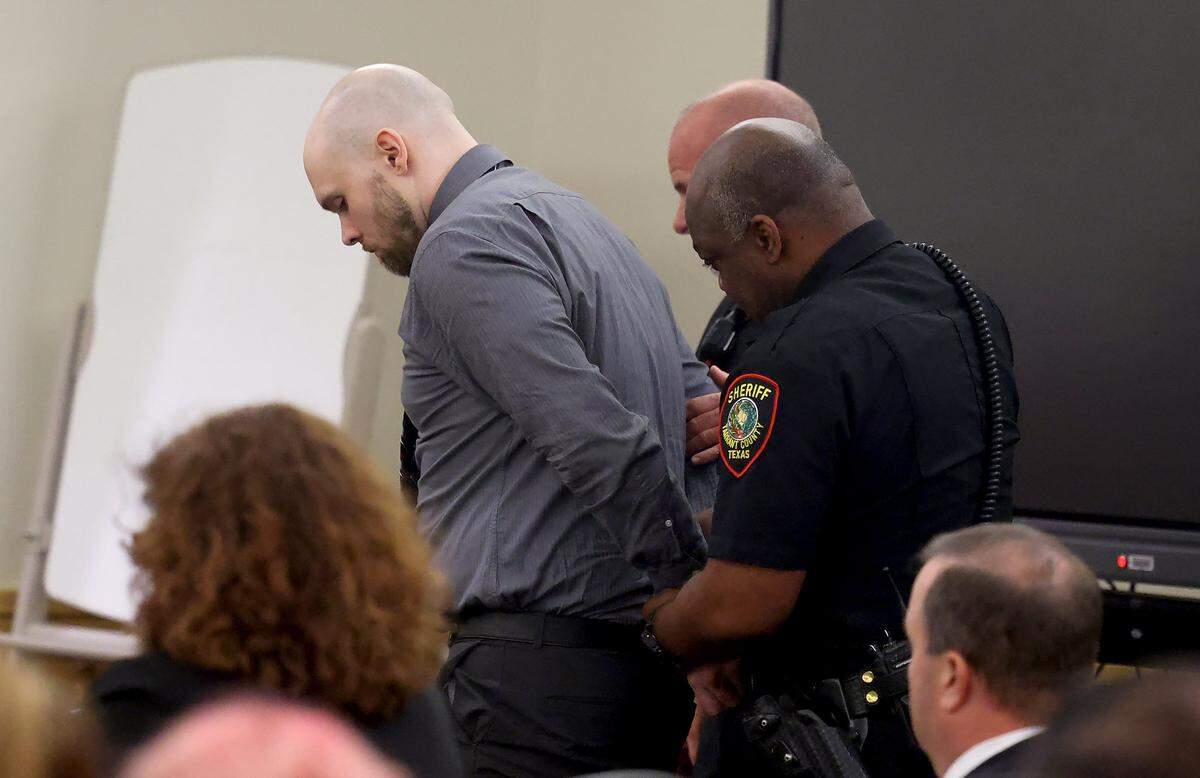
Defense attorneys have requested a new trial for Tanner Horner, the former FedEx driver who was sentenced to death in May for the capital murder of 7-year-old Wise County girl Athena Strand.
The motion was filed in Tarrant County on June 4, according to court records. Attorney Thea Posel argues in the document that the widespread media coverage surrounding the case intimidated some key witnesses who later refused to testify and made it impossible for the 34-year-old defendant to get a fair trial.
“The precautions of the trial court were insufficient to guard against the prevailing hostility and intense scrutiny surrounding the trial and defense presentation,” the motion states.
Wise County District Attorney James Stainton and state prosecutor Jeffrey Shell filed a 12-page response on June 23 and requested that the motion be denied. The prosecutors pointed out that there is no rule barring media coverage of court cases and it was not the trial court’s duty to “to inquire into the effects of the intensive media coverage and public attention on the jury.”
Judge George Gallagher is expected to rule on the request for a new trial in the next few days, according to a court spokesperson.
Derek Adame, a criminal defense attorney in Denton County and a certified death penalty lawyer who is not involved in the Horner case, said filing a motion for a new trial is a common strategy, especially in death penalty cases.
“Every time you’re going to make a motion for new trial, absolutely, because it is a tool in the tool bag,” Adame told the Star-Telegram during a phone interview Wednesday. “And if it works, if you’re granted a new trial, well, that’s better than an appeal because you get to start the whole thing over.”
According to Adame, attorneys will ask for a new trial even when they don’t have much ground to stand on and don’t expect the request to be granted.
“In my experience, it’s pretty rare that a motion for new trial gets granted,” he said. “The bar is pretty high. You basically have to show, you have to prove that there now exists evidence, or evidence that you did not have before during the trial. So something new has come to light.”
In Horner’s case, the argument of too much media coverage by itself likely wouldn’t be sufficient grounds for a new trial, Adame said, because every major case gets a lot of media attention. If the defense can persuade the judge that some witnesses didn’t testify because they felt threatened and had evidence that could have changed the outcome of the trial, the odds of success are more likely, he said.
According to Adame, building a case for the future is another reason attorneys ask for a new trial. Even if the motion isn’t successful, it still gets the information into the court record and gives the defense something to build on during the appeals process.
“You want to build a good enough record so that maybe some appellate court years from now says, ‘Hey, you know what? You guys were right’ and ... rules in your favor,” Adame said. “So that’s what you want to do. You want to leave as many doors open as you possibly can.”
Timeline of the killing and trial
In September 2024, a Wise County Judge approved Horner’s change of venue motion and ordered his trial moved to Tarrant County. The defendant’s attorneys cited the publicity surrounding the case and the concern Horner wouldn’t receive a fair trial in the county where the crime occurred.
The capital murder trial ran from April 7 through May 5 in Tarrant County’s 297th District Court. On the first day, Horner pleaded guilty to kidnapping and killing Athena after delivering a package to her family’s home near Paradise on Nov. 30, 2022. The former FedEx driver was arrested on Dec. 2, 2022, after investigators traced the package and saw a video clip of him placing Athena in the truck.
Following Horner’s guilty plea, the jury heard evidence from both sides to help them decide on a punishment verdict.
Prosecutors introduced video and audio evidence showing that Horner sexually assaulted the child before brutally murdering her and dumping her body in the water along the Trinity River.
Stainton has said the Wise County District Attorney’s Office decided to seek the death penalty immediately after Athena’s death and never considered dropping it as a punishment option.
During the course of the trial, Horner’s attorneys brought in expert witnesses to talk about the defendant’s autism spectrum disorder diagnosis, lead exposure and troubled home life. They tried to convince the jury that he should receive life in prison without the possibility of parole.
Before the jury filed in for closing arguments on May 5, defense attorney Susan Anderson made another motion to take the death penalty off the table as a sentencing option due to the “pervasive media attention” the case has received.
“It’s impossible for Tanner to get a fair trial,” she argued.
Gallagher denied the motion and said he was satisfied the jury had followed his instructions not to read or watch coverage of the trial.
After less than three hours of deliberation, the jury handed down the death penalty. They voted unanimously that Horner is a future danger to society and that there were not sufficient mitigating circumstances to justify a life sentence.
All death penalty sentences in Texas are automatically appealed, and Horner’s attorneys filed notice of his appeal in May, according to court records.