
UTA students helped solve 34-year-old Arlington cold case murder, police say
Arlington police, the University of Texas at Arlington and the victim’s family announced on Monday that a suspect has been arrested in the 1991 cold case murder of Cynthia Gonzalez.
On Sept. 17, 1991, 25-year-old Cynthia Gonzalez was reported missing in Arlington. Her body was found several days later in a rural area of Johnson County, police said. She had been shot to death.
Homicide detectives pursued numerous leads over the years, but no arrests were made. At the beginning of the fall semester this year, UT Arlington’s Department of Criminology and Criminal Justice started a new course in partnership with Arlington police to give students the opportunity to review APD cold cases and try to develop new leads. The students were asked to provide detectives with feedback on potential paths forward in three investigations, including the Cynthia Gonzalez case.
On Nov. 6, 63-year-old Janie Perkins, of Azle, was arrested in connection with the case, officials announced Monday. She faces a charge of capital murder. Perkins was booked in the Tarrant County Jail and released on $150,000 bond, according to jail records.
Investigators said the two women shared a love interest, who broke up with Perkins to be with Gonzalez. When Perkins was initially interviewed by detectives, she denied killing Gonzalez, but she failed two polygraph tests and made statements about being glad that Gonzalez was dead and thinking about killing her, police said. The polygraph results were not admissible in court, so Perkins was not arrested at the time.
Evidence reviewed by the students included statements Perkins made to witnesses who said she admitted being involved. Those statements included details that only someone involved in the killing would know, officials said.
Police believe that Perkins either participated in or facilitated Gonzalez’s kidnapping and murder. Her appointed defense attorney could not immediately be reached for comment.
Police Chief Al Jones, UTA faculty members, and members of Gonzalez’s family spoke to the media at a news conference Monday afternoon at the APD West District Station.
“Partnerships are very important to the Arlington Police Department. And the partnership that we have with UTA has been great. We lean on them for everything,” Jones said. “When you’re trying to make a community safe, you need those partnerships, because we can’t do this great job by ourselves.”
The Police Department doesn’t have a cold case unit. Homicide detectives work on unsolved murders in between active cases, so one advantage of having the students look at cold cases is that they “can devote significant time and energy into these cases,” the chief said.
“The relationship that we have and putting the trust into these young men and women that’s going to be future leaders is a testament that the Arlington Police Department is willing to work with anyone to actually make Arlington safe,” Jones said.
UTA professor proud of students’ work
“I could not be more proud of these students. They have done the hard work, and it is ... my pleasure to be here and let you know,” said Patricia Eddings, senior lecturer in UTA’s Department of Criminology and Criminal Justice.
Eddings said she got the idea for the cold case course during a presentation by Homicide Sgt. Blake Ritchie. During his talk about an old case, Ritchie repeatedly said, “I just don’t have enough time.”
“I’ve got these brilliant students that have time,” Eddings thought. “They’re coming to school. They have to be here. They love good classes. I wonder if this would work into a course?”
More than 20 people applied for the course, and 15 students were selected based on their previous coursework and essays expressing their interest in helping law enforcement.
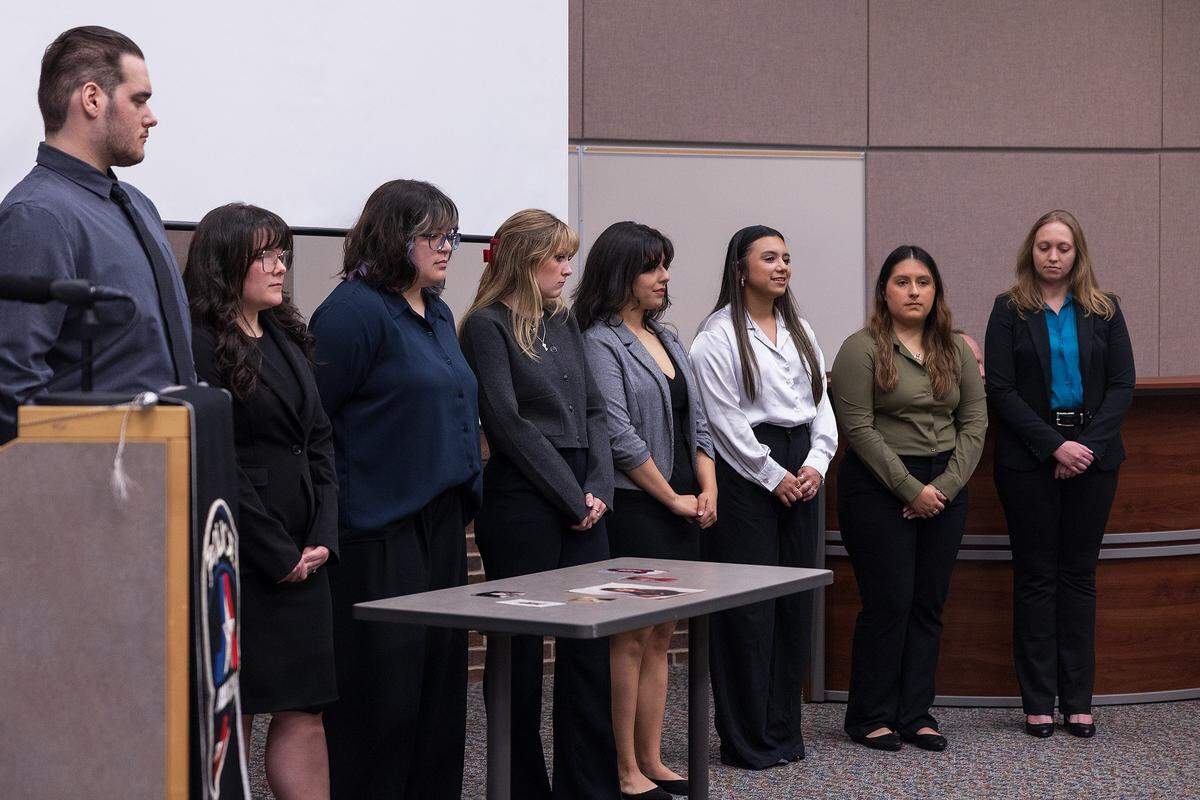
The Police Department provided students with flash drives with “massive amounts of paperwork that these students have diligently gone through class period by class period,” Eddings said.
Eddings said their classes were normally 90 minutes, but students would arrive early during this course, and they often stayed for hours afterward working on the cases.
“These are some of our outstanding students at the university who make these classes that I teach so enjoyable for me and in this particular case, productive,” Eddings said.
Victim’s daughter grateful for break in case
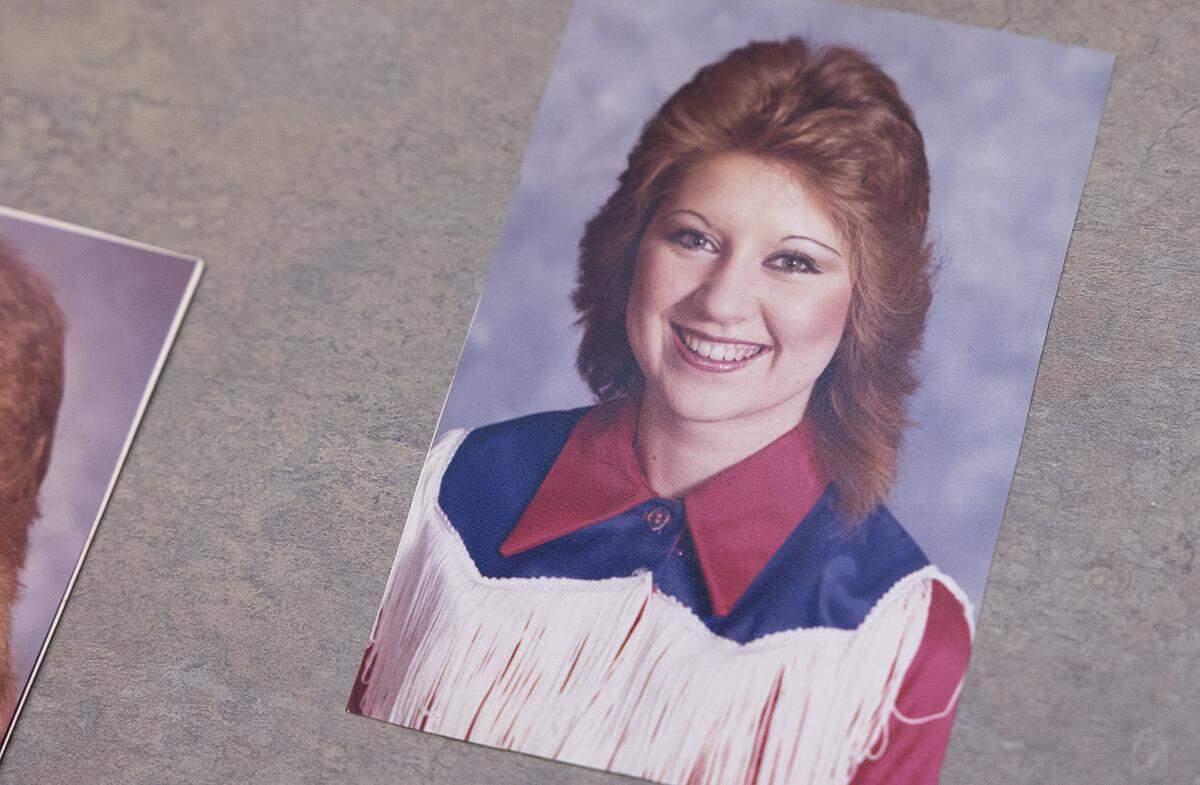
As Jessica Roberts, the daughter of Cynthia Gonzalez, showed pictures of her late mother, she recalled the last time she saw her mom leaving for work. The family believes the killing happened that evening.
“This has been a working case for 34 years, and so many people have been involved in this case, not just these students, but other friends and family members have been working on this case very often,” Roberts said.
“I am so grateful for this program, and I’m so proud of these students at UTA, and I’m so thankful for what they have done in the time they’ve spent and the effort they’ve put into this case,” Roberts said in a shaky voice.
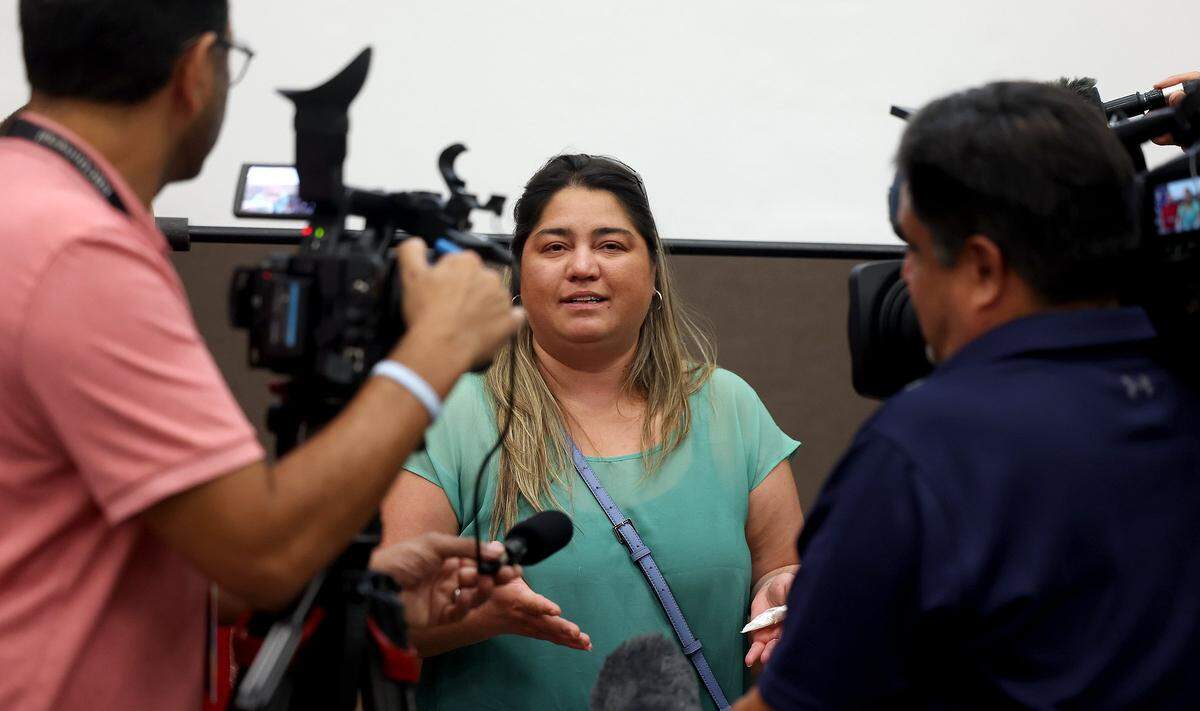
Roberts said she learned about this program a couple of weeks ago and was shocked to get the phone call that not only “was my mom’s case already presented in this program, but it had been solved.”
“What shocked me the most is, first of all, that it had been solved and an arrest had been made. But who the person was, who was responsible for this — she was apparently a good friend of our mom’s, and I was shocked that somebody so close could do something like this,” Roberts said.
Emotional achievement for UTA students
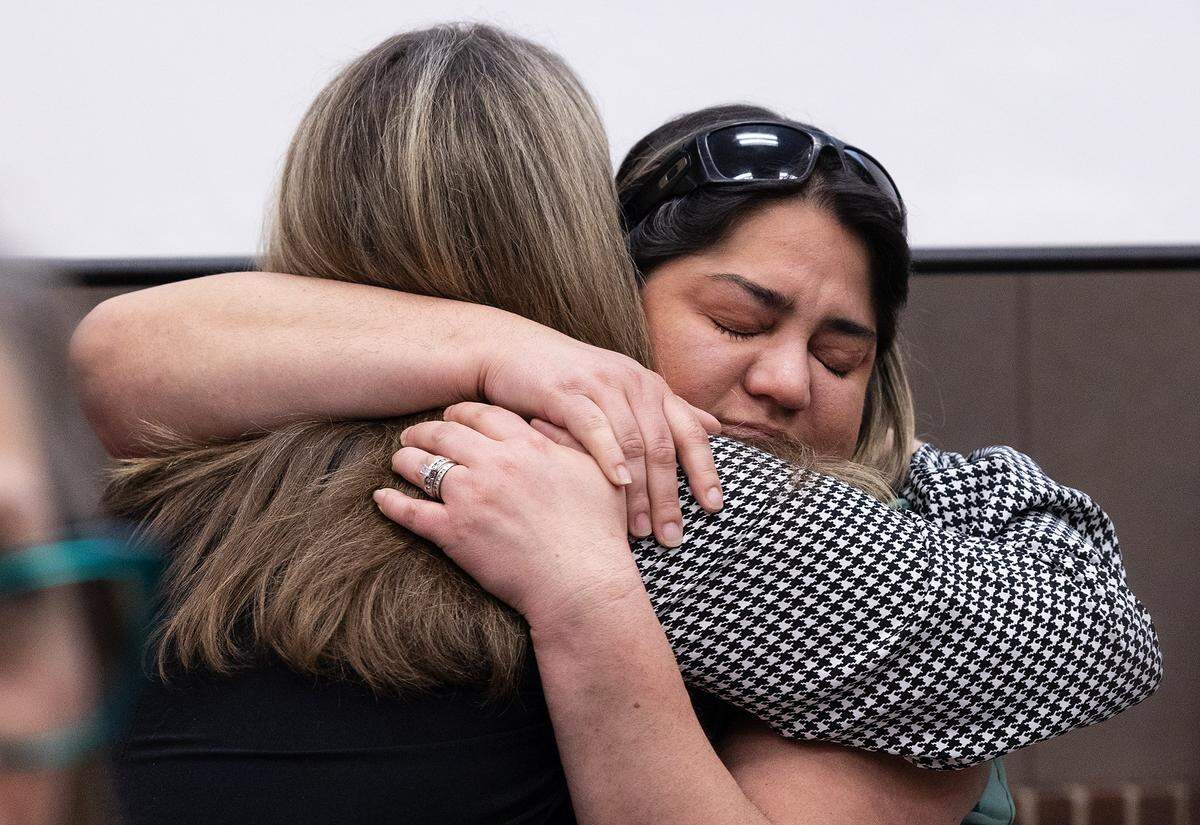
The class of 15 learned about the arrest during one of their sessions, and some students were seen wiping tears from their eyes, while others reacted with surprise and excitement. Jacey Concannon, a senior biology major with a forensic science minor, was among those who grew emotional, as seen in the video played during Monday’s press conference.
“When we heard the news (of the arrest), I was just emotional and happy that the victim’s daughter would finally get some answers,” Concannon said. “We had put so much work and time into the case to finally get an answer, it was just really great.”
The case gave them the opportunity to take everything that Professor Eddings taught throughout all of the forensics classes and put it together, and also see how “you lay everything out in an actual case and how you work with the police department,” Concannon said.
Talking about the challenges, Concannon said, “Not all of the documents were printed or typed. We had a lot of typewriters and a lot of handwritten documents, so trying to decipher that handwriting made it a little difficult, but once we got through that, it was straight sailing from there.”

Alyssa Ramirez, a senior criminal justice major graduating in December who plans to go into law enforcement and dreams of becoming a detective, was another of the students selected for the course.
“When the announcement was made, I couldn’t believe it at first. When he said that it was solved, it was like I heard it but hadn’t felt it yet,” Ramirez said. “It was a shock, almost. And then I was like, oh my goodness, wait — this is exactly what everyone’s been working for.”
“I’m very happy that she’s (Roberts) not only getting answers but getting closer to closure as well. And I think that’s exactly why I chose this field — to be able to do that for people who haven’t been able to,” Ramirez said. “When I saw her talking up there, it was really emotional. I’m so thankful we were able to do this for her.”
This story was originally published November 17, 2025 at 12:21 PM.