
Police solve 1985 murder of UT Arlington student Terri McAdams. Killer died by suicide

After nearly 40 years, the family of a UT Arlington student who was beaten, sexually assaulted and killed seemingly at random has answers.
Terri McAdams, a 22-year-old UT Arlington student, was found beaten to death inside her apartment on Valentine’s Day 1985. Despite a thorough investigation of her murder, no arrests were made and the case went cold until now.
On Wednesday, Arlington police and the FBI announced that DNA testing of a relative confirmed the killer’s identity. The killer, Bernard Sharp, took his own life months after Terri’s death, police said. He shot himself after killing his wife and her friend and critically wounding her cousin in Arlington on Nov. 3, 1985.
Sharp had a history of sexual assaults of two other victims and lived near McAdams. Police said Wednesday that investigators at the time questioned him because of his history and proximity. They didn’t find anything to indicate he and McAdams knew each other, and their investigation was ongoing when he died.
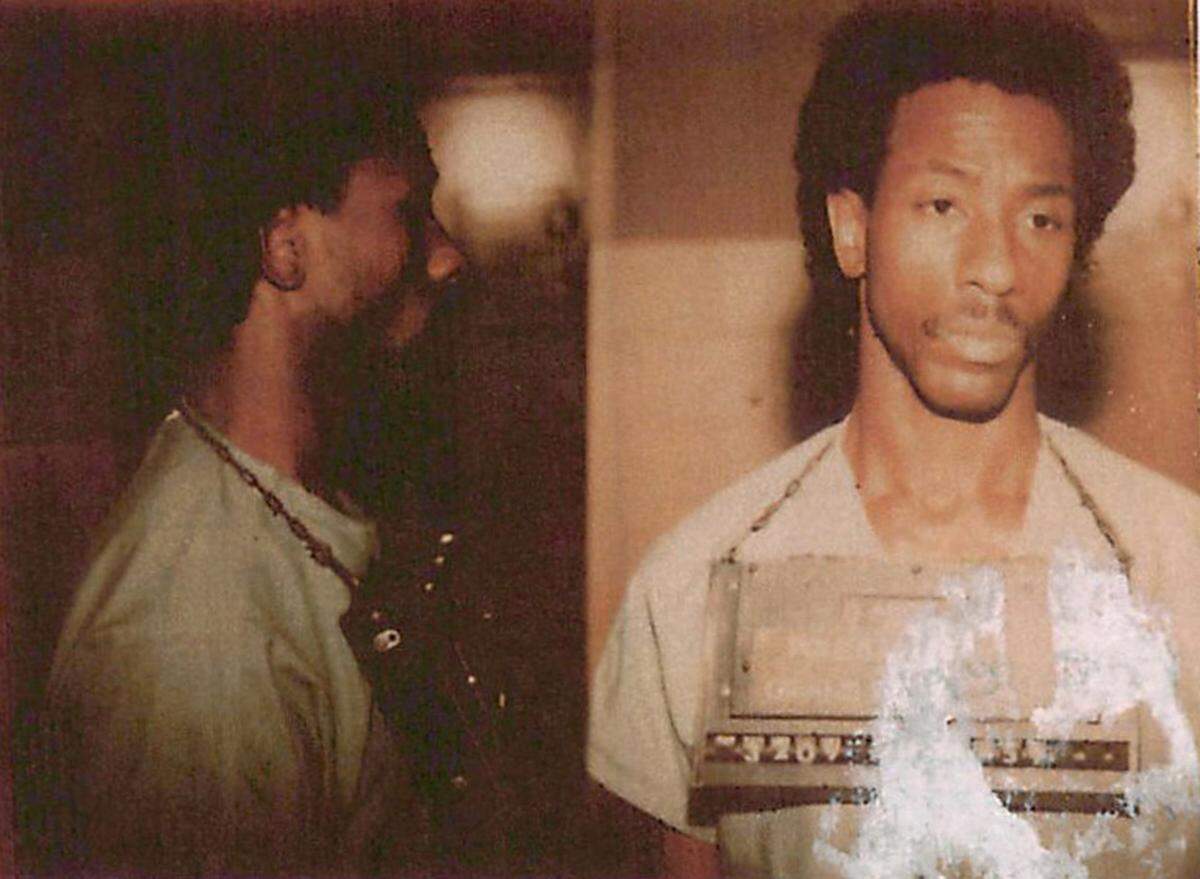
Arlington police, the FBI Dallas Field Office and McAdams’ family held a joint news conference Wednesday afternoon. Police Chief Al Jones, FBI Special Agent in Charge Chad Yarbrough and members of the investigative team discussed the major developments in the case.
Jones said that he was “proud to stand here today as we finally get to provide answers we’ve wanted to provide for almost 40 years. ... Sometimes it takes months, years and even decades to crack a case.”
Police did not have a DNA sample from Sharp so they traveled out of state to meet with one of his relatives, who agreed to give a DNA sample, which investigators were able to link with the evidence from the crime through forensic genealogy.
Who was Terri?
Terri’s younger sister Karen Hopper also spoke at the news conference. “Yesterday marked for us a day we had all given up hope would ever come,” she said. “... After so many long years, we had come to accept we would probably never know who murdered our sister.”
Over the years, Hopper has thought about what it would be like to know who killed her sister, she told the Star-Telegram after the news conference. She always thought it would be better to find out that her killer was alive and could be arrested and to watch justice be served.
Now, though, she said there may be a blessing in not having to go to a trial after all these years. Knowing who killed Terri gives the family answers they need for peace. “Closure” isn’t the word she’d use to describe it — there will always be a wound from losing her big sister — but she does finally feel at peace.
“Terri was an amazing girl, beautiful and full of life,” Hopper said. “She was the best big sister to me and Pamela.”
Terri was enrolled at UT Arlington because her fiance got a job in the city, Hopper told the Star-Telegram. She started at the University of Arkansas, where she met her fiance, and then moved to Arlington with him. She wanted to finish her education, so she started at UTA.
Growing up, Terri was always popular. As a teenager she drove a convertible with an 8 track player. That made her the most popular person to drive when she went out with friends and her sisters. Hopper said they would ride around in her car for hours, listening to music and belting out the lyrics together.
Terri was part of the Phi Mu sorority at the University of Arkansas and was a cheerleader, always popular and never without a friend.
She liked dance and took classes for it for years, but when she reached Arlington she was more focused on planning her December 1985 wedding and finishing her degree. She changed her major a few times, always finding something else that interested her, and her family can’t remember exactly what she wanted to do after college.

Hopper recalled stories from when Terri went to Europe with her best friend. Terri told everyone stories about her travels, but one that pops back to Hopper’s head regularly is how she met Princess Diana while going out dancing at one point. It was a brief encounter — Terri and her friend saw the princess and Terri asked if she would dance with them. Diana said she couldn’t just then, but they got an opportunity to talk with her.
To her younger sisters, Hopper and Pamela McKinnis, Terri was the big sister who was always there for them. She’d keep them entertained and taught them how to drive.
Hopper described her sister as “feisty and fun” and said she truly loved life. “To know her was to love her,” she said, adding that their “mom and dad are smiling down on this miraculous moment.” With her voice breaking, she thanked detectives who worked tirelessly to solve the case.
History of the murder
On Feb. 14, 1985, McAdams’ body was found in the apartment that the Arkansas native shared with her fiance in the 2500 block of Walnut Hill Circle in Arlington. She had been brutally beaten and sexually assaulted.
McAdams’ fiance was out of town on a business trip, and she had planned to pick him up at the airport later that day, according to the Star-Telegram’s archives.
The couple had planned to marry within months, according to previous Star-Telegram reporting. McAdams’ $5,000 engagement ring was missing when her body was discovered.
Police did not find a murder weapon but believed that the killer used a hammer or some other type of blunt instrument. At the time, a filtered cigarette found at the scene was tested for DNA.
Homicide detectives worked around the clock for months, the Star-Telegram reported at the time. McAdams’ parents offered a reward, pleading for help to apprehend the person who killed their daughter.
How the case was solved
Police have revisited the case several times over the years, investigators said Wednesday.
In 2021, physical evidence was sent to a lab for DNA testing, and a DNA profile for an unknown male suspect was developed, the police department said in a news release. The profile was entered into CODIS, “a national database of DNA profiles from convicted offenders, missing persons, and unsolved crimes – but unfortunately, it never produced a match,” police said in the release.
In August 2023, the department asked the FBI Dallas Field Office if the McAdams case would be a good candidate for investigative genetic genealogy, or IGG, “a process that combines unidentified crime scene DNA with meticulous genealogy research and the use of historical public records to identify new leads for law enforcement agencies,” the release said. The FBI’s IGG team agreed to help.

After several months of work, the IGG techniques led to the discovery of a Sharp as a potential suspect.
Earlier this year, Arlington and FBI investigators traveled to meet with Sharp’s relative. The DNA sample from that family member was sent to the Center for Human Identification at the University of North Texas Health Science Center in Fort Worth. Lab results completed this month confirmed Sharp was a genetic match to the suspect DNA sample from the crime scene.
“Over the years, it would be easy to lose faith and accept that this case might never be solved,” Chief Jones said. “But Terri’s family never gave up hope and our detectives never wavered.”
Yarbrough, the FBI Dallas special agent in charge, said he and others who investigate cold cases try to solve them for the victims and their families, not for the suspects.
“Investigative genetic genealogy is one of the most valuable tools that law enforcement has access to today,” he said. “It is inspirational to see it work to provide answers to families.”
He told the Star-Telegram after the news conference that on top of knowing what happened to Terri and getting justice for other cold case victims, the ability to use DNA to identify killers and rapists even decades after a crime will hopefully make would-be offenders think twice.
“You can’t count on time to hide you from accountability anymore,” he said. “We keep improving and we don’t know what tools we’ll have in the future.”
Victim scared by string of killings
McAdams had been scared by a series of killings and disappearances of young women in the Fort Worth area that made headlines beginning in 1984, her late mother, Anne McAdams, told the Star-Telegram in 1985. Fort Worth police and other law enforcement in North Texas started a task force to investigate the possibility of one or more serial killers committing the murders.
The college student took extraordinary precautions to try to protect herself, such as quitting her job in Irving so she wouldn’t have to drive home after dark, her mother said. At night, especially when her fiance was out of town, Terri McAdams became reclusive and rarely went out, even for groceries. She often called her mom in Little Rock to discuss her fears.
“She was terrified,” Anne McAdams said in March 1985. “All the girls (who disappeared or were killed) were about her age, and they were young, pretty girls. So naturally, being that far from home in a strange town, and something like that going on, you would be afraid. She was really careful about not going out at night, and she took every precaution she thought necessary.”
Her killer found her at home, according to police. Investigators found evidence that suggested the murderer broke in through a sliding glass door. Police also found a distinctive footprint outside.
Police believed McAdams was killed on the night of Feb. 13 or early on the morning of Feb. 14. She had gone to a store on Feb. 13 and was planning to bake a cake for her fiance for Valentine’s Day.
Her body was found by a maintenance worker the next day.
For families who have waited years or decades for answers to what happened to one of their loved ones, Hopper said it’s important to keep faith. They should stay in contact with police departments and see if there’s anything they can do to help the investigation along.

Hopper and her sister found renewed hope when they started hearing about more and more cold cases being solved with DNA which at the time of a murder wasn’t as useful as today.
“Don’t give up and pay attention to stories like this one,” Hopper said. “They give hope.”
This story was originally published August 14, 2024 at 11:55 AM.