Man on trial in North Texas killings of wife, stepson struggles to represent himself
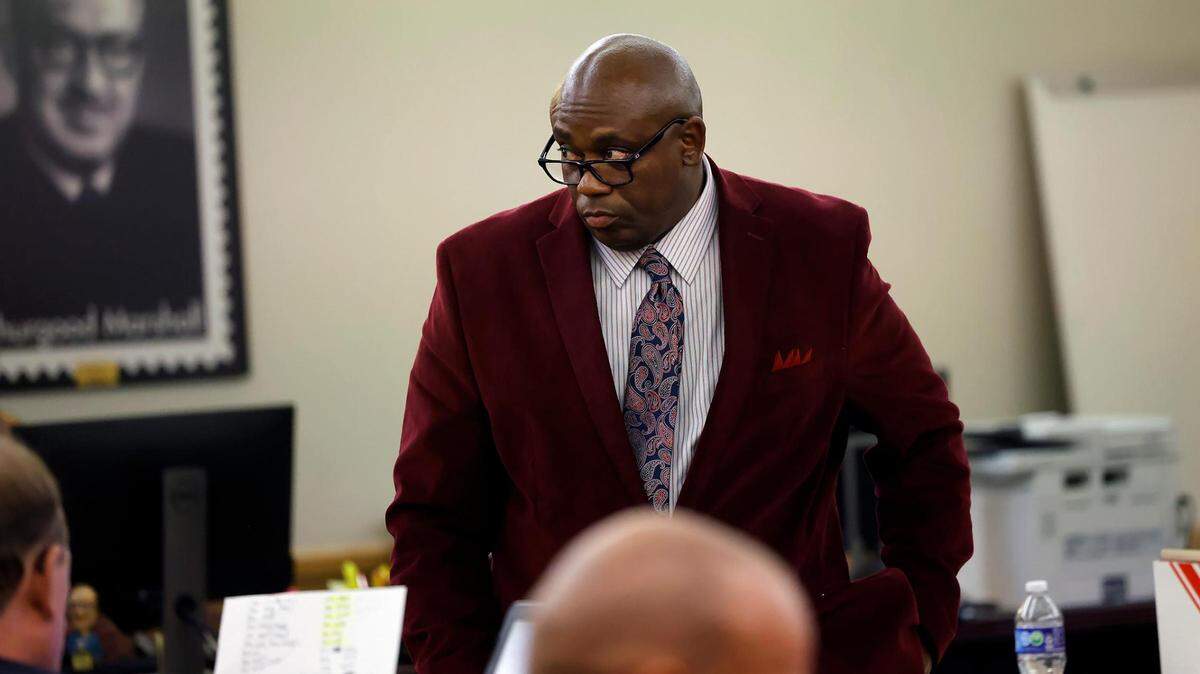
Rickey Edwards’ first case was a doozy. Edwards launched his legal career by representing a defendant accused of capital murder in a double homicide with a fairly damning set of facts.
Wholly inexperienced in the law, Edwards was to craft the defense argument and parry prosecutors in a case in which the defendant handed his driver’s license to the first police officer who arrived at the scene, then said his wife and her son were inside, dead.
How did he know, the officer asked the man outside the just-built house in Grand Prairie.
“I did it,” he said. The man wore a tank top stained with what appeared to be blood.
In Criminal District Court No. 2 in Tarrant County, the person faced with presenting to a jury those and other less-than-favorable-to-the-defense circumstances is the defendant himself.
Edwards is this week clumsily representing himself at his trial on capital murder.
Prosecutors allege that earlier on the day he killed Portia Williams-Edwards, 46, Edwards struck his wife on the forehead and threatened her during an argument. She telephoned her father and son to tell them of the assault. Her son drove to the 7000 block of Monet Lane and a house into which Williams-Edwards and her husband had just moved.
Inside, Edwards fired 10 rounds from a Glock pistol into the body of his stepson, 28-year-old Kameion Kitchen, prosecutors allege, and he shot Williams-Edwards twice in the head.
The mother and son fell beside each other. Their blood specked a wall and soaked into the laminate wood floor.
Like most pro se defendants, Edwards often flounders in his evidence presentation and seems unfamiliar with the requirements of criminal procedure. At times his lines of questions of witnesses do not reach an evidentiary point. Judge Wayne Salvant has given the defendant wide latitude, though the judge has occasionally become irritated, particularly at bench conferences, on the relevance of the defendant’s questions. At one point, Edwards questioned a witness on an exhibit that he had not offered for any purpose. At another, a district attorney’s office employee was pressed into service to act as Edwards’ technology aide.
Behind Edwards in the front row of the court gallery sit standby counsel Gary Smart and Brian Eppes. The defendant has declined assistance from the veteran attorneys.
When Edwards, who is 54, seems to believe he has led a witness to notch a substantive idea in support of the defense case, he emphasizes it by saying, “for the record,” and repeating the underwhelming revelation.
When handed a state exhibit to review before it is admitted, Edwards often simply says, “OK,” rather than stating he has no legal objection. Salvant then confirms Edwards does not intend to object.
During a confounding moment on Thursday, Salvant, Edwards and prosecutor Robert Huseman discussed the existence and relevance of metadata within crime scene photos.
“Everyone in this courtroom is confused about what the hell is going on right now,” Huseman said outside the presence of the jury as the trial was on the record.
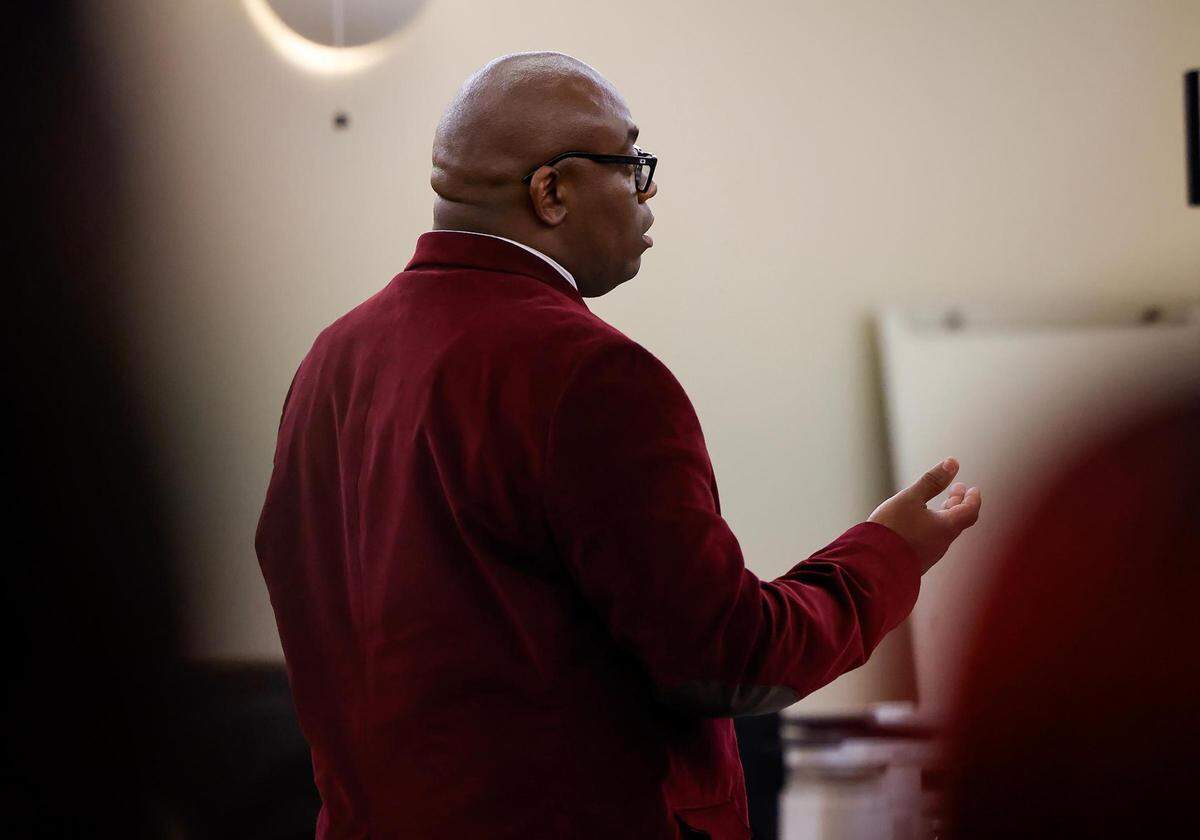
Edwards verbally sparred with his former father-in-law Billy Williams, who seemed perturbed on the witness stand.
On direct examination, Williams was asked whether Edwards met Portia Williams when they were working at Dallas Fort Worth International Airport .
“Unfortunately, yes,” he said.
In a meandering opening statement, Edwards told the jury he loved his family and listed a series of circumstances and emotions but did not connect them or explain how they might legally justify a killing.
“COVID, isolation, anxiety, depression, stress,” he said.
He noted a mental illness stigma among Black people without making clear how that phenomenon was at play in his case.
“This is a case of domestic violence, rage and control,” Huseman told the jury in his opening statement of the May 3, 2020, killings. Huseman, a deputy chief in the district attorney’s office criminal division, is prosecuting the case with Assistant Criminal District Attorney Melinda Hogan.
Two Tarrant County deputy medical examiners testified about their autopsies and described for jurors the recovery of bullet fragments from Williams-Edwards’ brain and skull and tracking the path bullets tore through Kitchen’s body.
Dr. Richard Fries plunged a rod into a styrofoam head to demonstrate a projectile’s trajectory in the visual aid.
The case will continue Friday.
This story was originally published October 5, 2023 at 5:21 PM.