‘I’d rather take a bite,’ Arlington detective says at trial of cop who shot dog, killed woman
In the courtroom well, a square of space between the jury, defendant and attorney tables and judge, a Tarrant County prosecutor on Wednesday handed a plastic pistol to a homicide detective.
Assistant District Attorney Tim Rodgers placed a container of hot tea, which he said represented a dog, on the floor.
Rodgers took a position opposite Mac Simmons and asked the detective how he would respond if he found himself standing before a charging dog with a human being in the background.
“I’d probably kick it,” Simmons testified.
The Arlington police detective said another person might have a different perception of the threat or other circumstances. Simmons said he would not take a shot at the dog in a scenario in which a civilian, a dog and an officer are aligned.
“I’d rather take a bite than be in that situation,” Simmons testified.
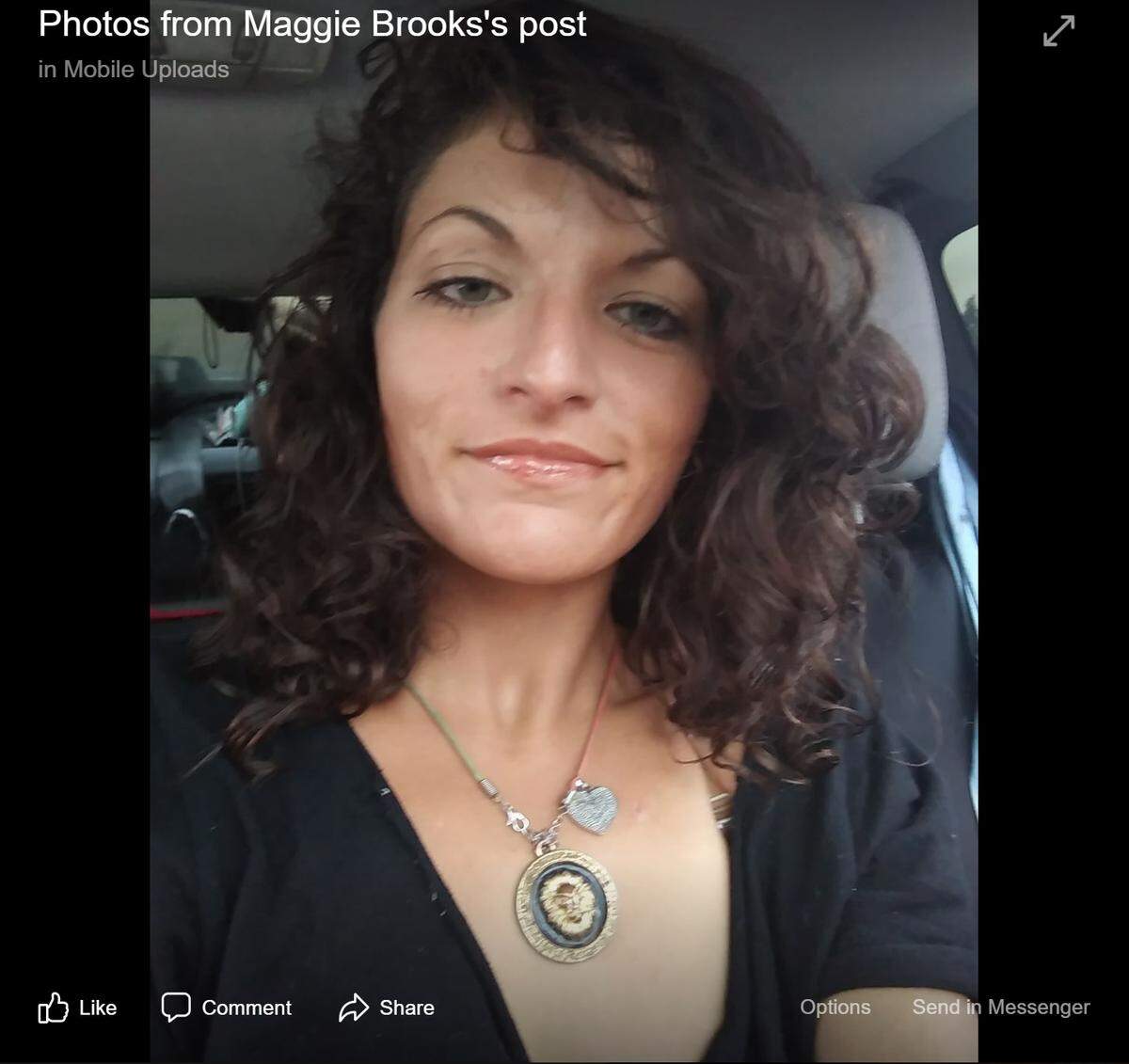
The demonstration was an attempt to recreate the positions of the people involved in an August 2019 encounter between an Arlington police officer, Ravinder Singh, and Margarita Brooks, a woman who was lying on a blanket outdoors. Singh fired three rounds from a handgun in an effort to stop a running dog. At least one of the bullets Singh fired penetrated the chest of the dog’s owner, Brooks, killing her. As Singh faced her, Brooks was on the ground behind her dog.
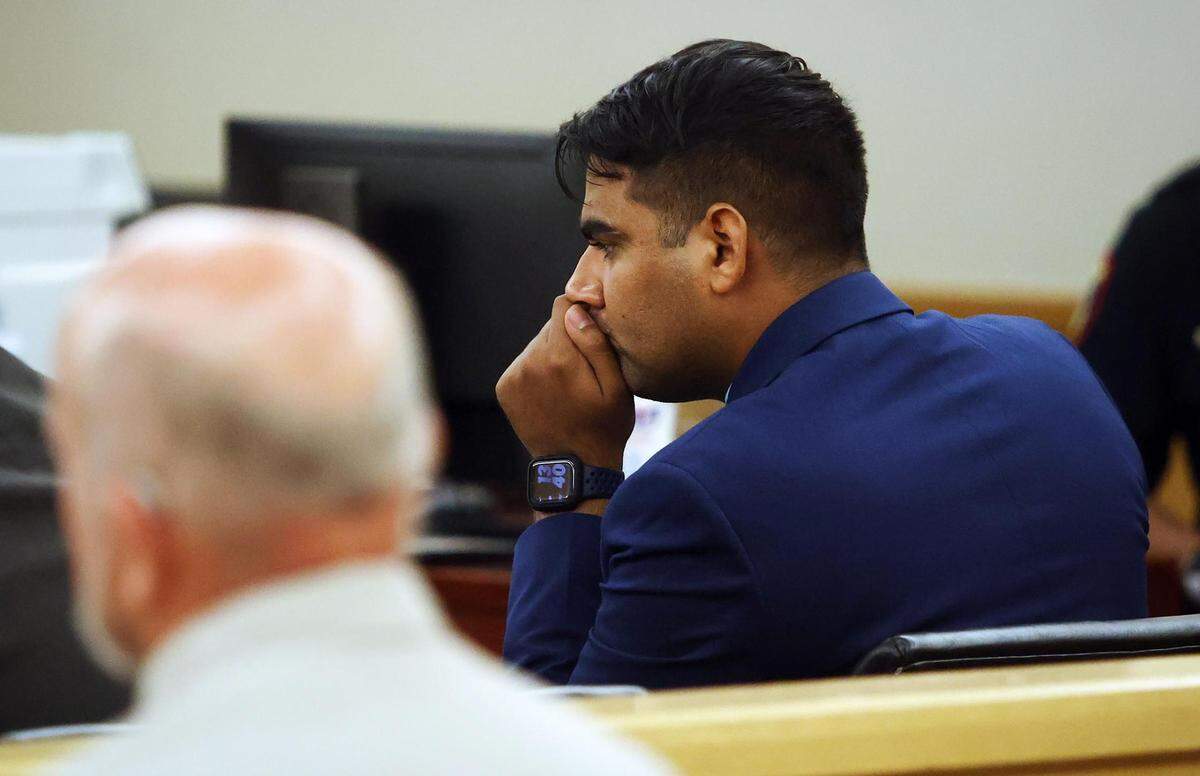
A grand jury indicted Singh on criminally negligent homicide, and a jury has this week been hearing evidence in his trial in 371st District Court in Tarrant County.
The dog weighed about 40 pounds. Singh was summoned to check on Brooks when a man called 911 to report she was unconscious.
Singh graduated from the police academy in February 2019 and completed field training July 1, a month before the shooting.
On cross examination from defense attorney Kathy Lowthorp, Simmons testified that a reasonable person may have perceived a dog as a deadly threat.
Simmons, the lead homicide investigator in the criminal case, also testified about a 10-paragraph statement that Singh prepared for the criminal investigation that described his account of the shooting. Singh submitted the statement after viewing his body-worn camera video.
In the Aug. 7, 2019, statement, Singh wrote that the dog was barking and “charging right at me.”
Using OC spray (oleoresin capsicum, also known as pepper spray,) a Taser or a baton were not “feasible,” the officer wrote, and his option was to use deadly force.
“I was in fear for my life,” Singh wrote.
Brooks was in grass to his right. “I fired to the left,” Singh wrote.
Prosecutors acknowledge that the bullet removed from Brooks’ body at her autopsy has a mark that indicates it ricocheted and likely first struck the concrete sidewalk beside her. The projectile’s bounce should not be a factor in determining whether Singh was criminally negligent, prosecutors have said.
Throughout the trial, defense attorneys Lowthorp and Rafael Sierra have suggested to jurors that when he fired upon the dog, Singh experienced tunnel vision, a phenomenon in which a person’s brain is, under stress, exclusively focused on an immediate, grave threat.
They have also suggested that the officer’s other options, a baton, Taser and OC spray have a range that would have required the dog to be close to him.
An expert on policing who analyzed the shooting testified for the state earlier in the trial that Singh took a substantial and unjustified risk that someone would be killed when he fired at the dog.
Based on images recorded by the body-worn camera, Singh’s focus appeared to be the dog, not Brooks, the expert, Jonathyn Priest, said on Tuesday.
“She’s forgotten here?” Rodgers asked of Brooks.
“Very much so,” Priest answered.
Priest worked as a Denver Police Department officer for 32 years. Now retired, Priest is a consultant on police use of force and an instructor on law enforcement matters.
Law enforcement officers using firearms are trained to be certain of their target and what lies beyond, Priest testified.
Singh’s primary failure was firing knowing Brooks was in the background, Priest said. The shooting was neither reasonable nor necessary under the circumstances, he testified. Brooks, 30, suffered gunshot wounds to her forearm and chest.
The shooting was a gross deviation from the standard of care and presented a substantial and unjustified risk to Brooks, the expert testified.
Under Texas law, “a person is criminally negligent with respect to the result of his or her conduct when he or she ought to be aware of a substantial and unjustifiable risk that a particular result will occur.”
Singh had other options to attempt to deal with the dog that would not have put a human at risk, the expert said.
Singh may have instead used pepper spray, a baton, a stun gun, his hands or feet, or a loud voice, Priest said.
“Once that bullet leaves the muzzle of the firearm, there’s no calling it back,” he said.
The dog was grazed by gunfire but survived, according to testimony.
Priest testified the ricochet and the fact that it is not clear whether one or two bullets struck Brooks were not considerations in his analysis.
Singh’s body-worn camera recording of the shooting was played for jurors. The video shows Singh spotting Brooks in the distance and yelling questions when her dog began to bark and run in Singh’s direction.
If he is found guilty, Singh, who resigned from the police department on Nov. 1, 2019, faces a maximum of two years in jail and a $10,000 fine.
The state rested its case about 2:45 p.m. Thursday, and the defense called to the witness stand a professional dog trainer and a retired Arlington police firearms instructor. The trial, over which Judge Ryan Hill is presiding, will continue Friday.
This story was originally published August 25, 2022 at 3:48 PM.