An Arlington mother fatally stabbed. A baby burned alive. Was the real killer caught?
The billowing black smoke looked like a “living hell” when frantic neighbors kicked in the door of the burning apartment. But what the authorities would soon find inside was much worse.
The body of a young woman with stab wounds lay just inside the Arlington apartment’s front door. A few hours later, as investigators sifted through the ashes, they discovered the remains of a baby on the metal coils of what was once his mattress. Someone had poured gasoline in the baby’s room and lit it on fire.
The 2011 murders of 26-year-old Mechelle Gandy and her 1-year-old son, Asher, were shocking in their brutality. It would take more than a year, but police would solve the case with the arrest of Thomas Olivas — the baby’s father. Olivas, who cheated on his girlfriend with Gandy, was angry at her for having the child and for giving Asher his last name, prosecutors said.
A jury sent Olivas to prison for life.
Now more than a decade later, Olivas is trying one last time to prove that police arrested the wrong person.
His attorney says the evidence presented during his 2014 trial was circumstantial at best. Olivas’ DNA was not found on either body nor at the crime scene, but another man’s DNA was. No DNA from Gandy and the baby was found on Olivas or his belongings, and there were no traces of gasoline in the SUV Olivas drove that night or on his clothing.
Arlington police detectives wrongly zeroed in on Olivas, his lawyer claims, and no one else.
During Olivas’ first appeal, one of the three appellate judges agreed with his defense team and said there wasn’t enough evidence to uphold his conviction. The other judges disagreed, and Olivas remained in prison.
But Olivas has a new defense attorney, Aaron Diaz of San Antonio, who has filed a petition in federal court asking a judge to hear evidence and decide whether the 39-year-old should be tried again. Judge Reed C. O’Connor has not yet ruled.
Olivas spoke with the Star-Telegram in June from behind thick glass in the visitor’s room at Texas Allred Unit prison in Wichita Falls. He said he wants the person responsible for the murders to be arrested.
“I’m not the man that did this,” Olivas said. “I think about it every day that I lost a son. And I lost his mom, even though our relationship wasn’t by any means a true real, honest to God relationship, but she’s still his mom. And I didn’t get to enjoy them in any sense of the way, and I’m here for that.”
The family of the victims disagrees.
Gandy’s stepfather, Lester Hicks of Arlington, said he’s confident police got the right man and that the jury made the right decision.
“I’m not worried about the appeal,” Hicks said. “He did it by himself, he had a motive, and his actions leading up to it prove he’s the one who did it. This person just can’t take responsibility for his actions.”
A protective mother
When Hicks talks about his step-daughter, the pain of losing her 11 years ago hangs in his voice.
“There’s days I still cry over it,” he said.
Hicks always took pride in calling Gandy his daughter. She was the kind of person who never had trouble making friends — a quality that made her a good bartender. Her job at a Pluckers Wing Bar allowed her to meet all kinds of people, which she enjoyed.
Her funeral reflected that.
“It was kind of overwhelming, there was standing room only,” Hicks said.
When Gandy became pregnant, Asher became her entire world. She texted Olivas about four months into the pregnancy to tell him about it. Olivas asked what her plan was, because he was already a father with another woman and didn’t want another child. In an interview with police, he said he saw Gandy two or three times during her pregnancy. They didn’t have a relationship, he said, and she “disappeared.”
.JPG "PHi_j0115(19).JPG")
Olivas told her that he wanted her to get an abortion, but that he would support her financially if she didn’t. She said no to the abortion, according to him. And because she didn’t immediately go after Olivas for child support, Lester said, she worked two jobs to make it.
“She was a typical 20-year-old who partied, and when she had Asher, she completely changed her life,” Hicks said. “That boy was everything.”
After Gandy had Asher and moved into her own apartment, Hicks bought her a gun for protection. He believes Gandy was trying to reach for it when she was stabbed 11 times before her apartment was set on fire.
“The gun was in the pantry and close to the front door where they found her,” Hicks said. “She would’ve done anything to protect Asher.”
A gruesome scene
On Sunday, March 20, 2011, Gandy’s neighbor was outside grilling between 9 and 10 p.m.
He saw a “beefy” person in a hoodie walk through the breezeway near Gandy’s unit at President’s Corner Apartments, off Lincoln Drive north of Interstate 30.
At 10:11 p.m., the neighbor noticed flames and smoke shooting out of Gandy’s ground-floor apartment and yelled for his girlfriend to call 911.
.JPG "PHi_j0040(27).JPG")
When Arlington firefighters arrived four minutes later, the neighbors frantically asked where the baby was. The bystanders had already kicked in the door but couldn’t get inside because of smoke, which prosecutors described as a “living hell” during opening statements in Olivas’ murder trial.
Firefighters found Gandy in the entryway with wounds to her chest and back. They carried her to the parking lot where they tried to resuscitate her. Asher’s body was found four hours later in his crib under a layer of ashes.
Gandy’s kitchen was reduced to rubble. Her bathroom was charred. In the living room, singed fabric hung to the pieces of her couch. Burned and melted children’s toys littered the room. The only recognizable items in Asher’s room were the springs from his mattress and a water heater. The walls were burned down to the wood beams.
Investigators called Olivas that night, but he didn’t answer. They found him the next day before he left for his shift at Best Buy and interviewed him for five hours.
Olivas told them he was at Volcanos Sports Bar and Grill in Hurst that night when he and Gandy began to talk about child support. Olivas was supposed to help her sort through paperwork, he said, but he wasn’t sure where she lived (which was confirmed through texts between Olivas and his mother, according to the appeals court). Gandy had lived at her apartment for about three months. She told him she needed to run errands and would give him her address when she returned.
Olivas told police he decided to start driving in that direction.
Cell phone records show that Olivas was in the area of Volcanos – about 15 minutes from Gandy’s apartment – between 3:51 and 5:53 p.m. that day. At 5:58, his phone was moving east, and he called Gandy. By 6, Olivas’ phone was in Arlington.
Olivas told investigators that he still didn’t have Gandy’s address and knew only that she lived in the Lamar Street area. He drove around, he said, and eventually ended up at the now closed Rack Daddy’s bar on North Collins Street. (Olivas didn’t remember the name of the bar on the day he was interviewed and he described it as a pool hall; by the time investigators checked his alibi, a year had passed.)
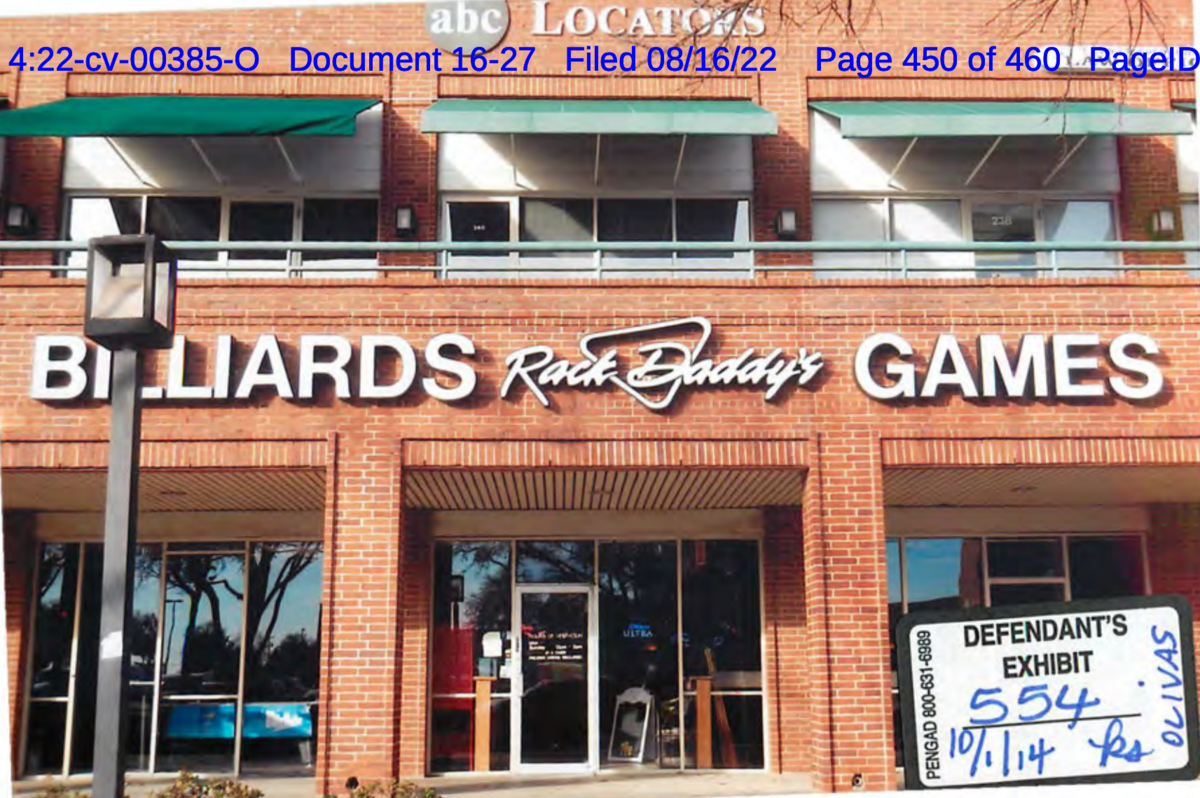
At 6:17 p.m., Olivas’ phone was within three-quarters of a mile of Gandy’s apartment, which investigators said put him at the scene of the murders. But the cell tower that pinged Olivas’ phone is in the Rack Daddy’s parking lot, where Olivas said he was at the time. Diaz questioned the reliability of this evidence because of the tower’s location, which is close to the apartment.
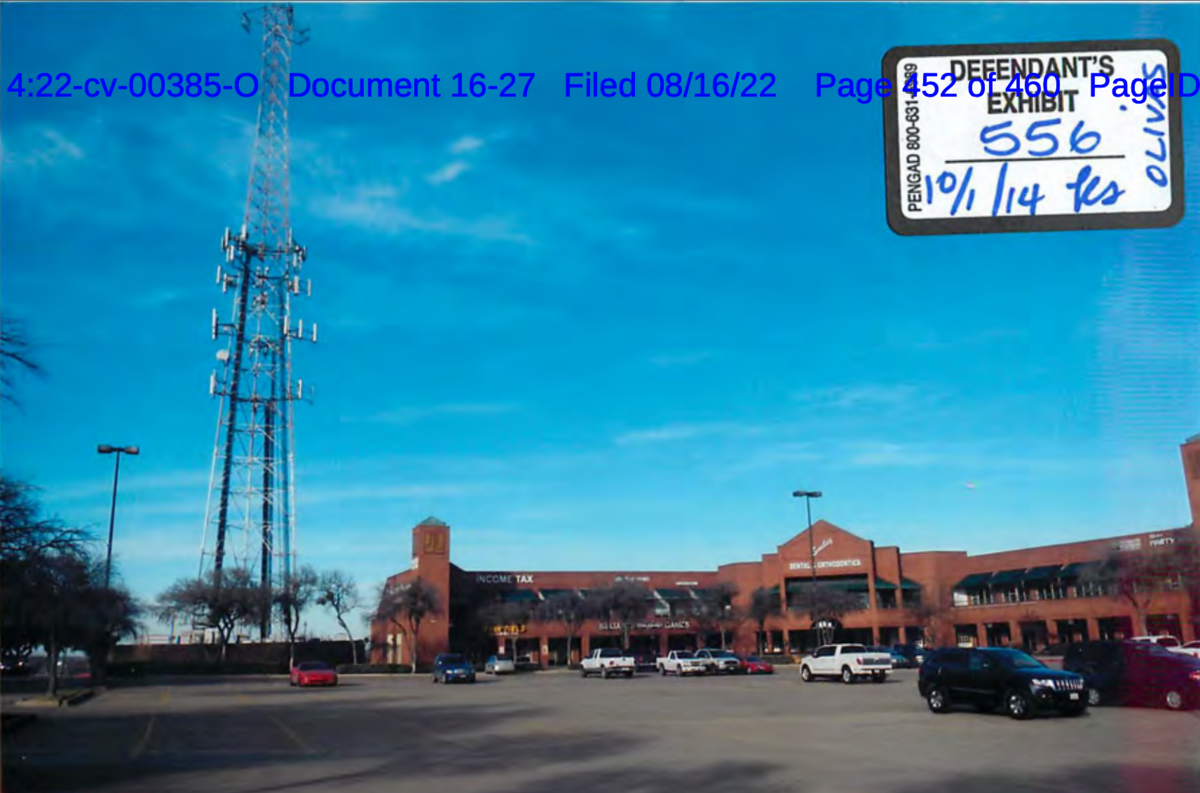
For the next 30 minutes, investigators said, Olivas’ phone was “involved in a series of texts and calls with Gandy’s phone.” The final call between them was 7:10 p.m. and lasted two minutes. The state argued that although the contents of the call are unknown, it is “patently unreasonable to entertain any other explanation for her call” other than to give Olivas directions to her apartment.
But Olivas told police that Gandy didn’t answer the phone. He continued to call and text her phone until 9:22 p.m.
Asher’s babysitter testified that she was talking on the phone with Gandy from about 9:02 to 9:06 p.m. and planned to go over to do laundry. During their conversation, Gandy never told her that Olivas was at her apartment or planning to come. Gandy would have told her if that was the case, the babysitter said.
The last communication was a text message Olivas sent Gandy at 10:07 p.m.: “Sorry. Since I don’t have a car, I can’t go.” Olivas was driving his friend’s Ford Explorer that day.
Seven minutes later, Gandy’s neighbor called 911 about the fire.
By 11:30 p.m., Olivas’ phone was near his Grapevine apartment.
‘I have nothing to hide’
Police initially identified two persons of interest, but investigators focused on Olivas.
Olivas had told his friend whose Ford Explorer he borrowed that it smelled like gas. During the trial, the friend testified that Olivas said he spilled gas in the SUV, though none of the samples taken from the upholstery tested positive for gasoline. Law enforcement did not find gas cans or accelerants in Olivas’ apartment or clothing. They spent hours watching surveillance footage from nearby gas stations but didn’t find Olivas at any of them.
He told police during an interview that the vehicle must have been leaking gas, because it smelled the entire weekend he drove it and had to keep the windows down.
“It smells disgusting, it almost mde me barf,” he warned police before signing a consent form for them to search the SUV. “Like I said, I have nothing to hide in there.”
The Star-Telegram requested the full investigation file from Arlington police. The request was denied based on a rule that allows departments to withhold information about cases when minors are involved. However, the state submitted the entire file in response to Diaz’s petition, making the information, including police interviews, trial transcripts and photos, public.
At trial, defense attorney Joetta Keene introduced the possibility of two other suspects. One was a man who previously had relations with Gandy and had begun to stalk her. The other was Olivas’ ex-girlfriend, who also had a child with him. They were dating when Olivas fathered Asher.
“Police zeroed in on the stalker and did what they did to say, ‘We eliminate him,’” Keene told the jurors. “And once they did that, they said, ‘We’re not turning over any more stones. We’re not looking any deeper. We’re happy with what we got on Thomas. We’re happy with the inferences. No confession. No direct evidence. No eyewitnesses. Just inferences.’”
.JPG "PHi_j0041(24).JPG")
The neighbor grilling who spotted a “beefy” person in Gandy’s breezeway was unable to provide additional identifying details. When police showed him a photo lineup that included Olivas, who was 5 feet, 10 inches tall and about 195 pounds, the neighbor could not identify him, according to Diaz.
As for Olivas’ current girlfriend, she had a motive, his lawyer told jurors: Olivas had cheated on her with Gandy, which resulted in the birth of Asher. The infidelity is what ended their relationship four days before the fire.
“Love hath no fury like a woman scorned,” Keene told jurors, reminding them that Olivas had kicked his girlfriend out of their house during a fight about Gandy and Asher.
On the night of the murders, the girlfriend was messaging Gandy on Facebook until at least 9 p.m. The girlfriend knew that Olivas was supposed to meet with Gandy that night, and that might have infuriated her, Olivas’ lawyers have argued.
An officer testified that when he called the girlfriend about the murders, she was already hysterical before knowing that Gandy and Asher had died.
“It raised so many red flags for Officer Mathews that he put it in his police report that he called Grapevine (police) and that he sent the police over to Grapevine to see her,” Keene told jurors. “Did they take pictures of her body? Did they take DNA from her? No. Did they pull her hair so that we could compare it to that colored piece of hair that was partial hair wrapped up in Mechelle’s hair? No.”
‘Your son is dead’
When police told Olivas that his son was dead, he was in disbelief and immediately told the investigators he was supposed to be at the apartment that night. He gave them his phone and the lock code, a sample of his DNA, the keys to his apartment and the shoes he wore that night, and he told them how to get the vehicle he had been driving.
Over the course of three interviews, Olivas told investigators at least 25 times that he wasn’t the killer either by answering “no” when asked if he killed them or by saying he didn’t know what happened to her that night.
Olivas went through the timeline of that night and told detectives about the child support. He was willing to pay it, he said.
Olivas told police that he felt numb the first time he met Asher. He said he couldn’t believe he had a son. And he couldn’t believe how it impacted his life.
During his interview, Olivas said multiple times he needed to get back to work.
“I can’t even believe you can work under this condition, you know?” detective Byron Stewart told him.
“I gotta pay bills somehow,” Olivas said.
“But do you even understand what I’m saying? Your son is dead. Your son is dead,” Stewart responded.
Olivas said he hadn’t processed the information yet.
Records show he was willing to give police everything they wanted, but he became stiff when they asked him to take off his shirt for photos of his body. He said he didn’t want to consent to that because the second he takes off his clothes, he starts to get itchy because of eczema.
The officers spent several minutes explaining why it was in his benefit, if he was innocent, to allow them to take the photos. Eventually, he agreed.
Prosecutors would later say that scratches on Olivas’ side and back were defensive wounds from when he stabbed Gandy. He maintained he had eczema, and the photographs show that Olivas could reach those areas to scratch them himself.
A motive to kill?
The fight over child support became central to why prosecutors believe Olivas had a motive.
In the arrest warrant, police wrote that Olivas was scheduled to take a paternity test the day after the fire, though his defense team refuted that claim during trial and said no date had been set, since Gandy had just gotten the paperwork.
Gandy had filled a petition to establish the parent-child relationship on March 8, according to a court document.
It wasn’t confirmed until after the fire that Olivas was Asher’s biological father.
The Star-Telegram asked Olivas during the prison interview about his attitude toward Gandy and the baby. Olivas said he was a different person then. He was more concerned with maintaining the relationship with his new girlfriend.
“I realized that I used to be very selfish, that I used to be, you know, self-centered and arrogant,” Olivas told the Star-Telegram. “Looking back, I’m not happy with who I used to be. I don’t regret anything that I’ve ever done, you know, I can’t, I just got to learn and move forward.”
When Gandy filed the child support paperwork, Olivas told police that he felt sad, not angry. He knew he could no longer hide his transgressions from his girlfriend.
He repeatedly told police that while he didn’t want to pay child support, he was willing to pay it. Killing Gandy and his son was never a thought that crossed his mind.
“That’s absolutely no freaking reason why anything like that should ever happen,” he said during a second police interview about child support. “I didn’t kill either of ‘em ... I’d rather be paying a thousand dollars a month just to be able to see him.”
Flaws in the evidence
To win a new trial, Olivas’ lawyer will need to convince the federal judge that his 2014 trial was flawed.
The dissent in Olivas’ 2016 appeal touched on some of those alleged flaws.
Former Texas Court of Criminal Appeals Justice Lee Ann Dauphinot wrote that she didn’t believe the evidence presented at trial was strong enough to uphold his conviction.
Dauphinot admonished Arlington police for focusing their investigation on one person. She relayed a list of similar cases where someone was later found to have been wrongly convicted.
“In many of these cases, the investigation focused on a single individual from the beginning, and the junk science was the ‘objective evidence’ that supported the other evidence that often amounted to little or no more than suspicion,” she wrote.
Dauphinot noted the lack of DNA evidence tying Olivas to the crime.
Gandy “was alive when she was stabbed,” Dauphinot wrote. “It is logical that 11 stab wounds to a living adult would produce blood spatter that would reasonably spatter onto the assailant.”
No murder weapon was found.
Investigators removed blood from underneath Gandy’s fingernails and a bundle of hair that was found on her body.
Forensic scientists traced one set of DNA from the blood to Gandy but said the other was untraceable. The hair wasn’t traced back to Olivas or their child, but it belonged to an unknown man.
Detectives knew that Gandy was seeing other men at the time of her death, but police took only a sample of another man’s saliva and not his hair. During trial, that man testified that he saw a different unidentified male go into Gandy’s apartment once.
Olivas’ lawyer has sought to have the hair found on Gandy tested again. Judge Scott Wisch denied the petition in February.
Gandy’s step-father said he doesn’t believe the DNA issue proves Olivas is innocent.
“The firefighters and paramedics tried to revive her and that hair could have come from them,” Hicks said.
Questions over autopsies
A key element in Olivas’ new defense is the credibility of Tarrant County’s medical examiners.
Dr. Shiping Bao was the medical examiner who performed the autopsies. Bao ruled that Gandy died of multiple stab wounds, and Asher died of thermal burns.
Shortly after the murders, Bao left Tarrant County and was a medical examiner in Florida, where he performed the autopsy of Trayvon Martin. The teenager was shot to death by George Zimmerman, a neighborhood watch coordinator.
Bao testified during Zimmerman’s high-profile trial in 2013 and offered conflicting information about how long the teenager lived after he was shot and whether marijuana was in his system. Zimmerman was acquitted.
Bao was fired from his Florida job a month later.
When Olivas’ trial came up in 2014, prosecutors never called Bao to testify about his autopsies on Gandy and Asher. Instead, they called Dr. Nizam Peerwani, the former head medical examiner.
“Dr. Peerwani ended up testifying one way, and we now know after speaking with Dr. Bao that he wouldn’t have testified the way Dr. Peerwani did,” Diaz said. “It was important that the state didn’t call Dr. Boa to testify.”
According to Diaz, Peerwani alluded during his testimony that the baby had been strangled before the fire started, but there was no evidence of that claim. The autopsy report listed no evidence of other trauma.
“Because of the fire and the burns on the body, Dr. Bao said you couldn’t determine any other cause of death other than the baby being burned,” Diaz said. “And because these cases are so sensitive, that image (of Asher) for jurors makes Thomas look like this monster.”
A few years after Olivas’ conviction, Peerwani was accused of making 10 “false, inaccurate or misleading” statements during a capital murder trial back in 2006. Peerwani retired in 2021.
‘Guilty’
Olivas’ father was shocked when the jury came back after five hours with a guilty verdict.
Bernardo Olivas said his son, a former Air Force Reserves medic, couldn’t possibly be guilty when there was no physical evidence to back it up.
It was soon after the verdict that Bernardo Olivas last touched his son. He and his wife live in El Paso and haven’t been healthy enough to travel to the prison in Wichita Falls.
Bernardo Olivas wrote in an email to the Star-Telegram that their last time together was at a holding cell behind the Tarrant County courtroom.
“The cell had one-half inch security mesh and served as the only means of contact,” he wrote. “I attempted to touch him and was only to get the tips of my fingers through the minute mesh openings. When our fingers touched my son looked straight into my eyes and said ‘Dad, I did not do this.’ I responded by saying, ‘I know son.’ That look in his eyes said it all.”
For them, it’s not a matter of if Olivas will be released, but when.
“We pray and hope that his future will take place outside of confinement,” he wrote. “We know this has been a humbling experience for him as well as all of us. He will take full advantage of this experience when released for his benefit and that of others.”
It is unclear when the federal judge will decide whether to grant Olivas a new trial. If he does, it will give Olivas and his family hope. But it will also mean Gandy’s family will relive the nightmare of the murders more than 11 years ago.
Hicks still thinks about his grandson Asher’s laugh. He was such a happy baby, he said. Their family visits memorials for Gandy and Asher when they can, but it’s a painful reminder of what was stolen from them.
The mother and child are buried side-by-side in Arlington. There’s a picture of them affixed to the gravestone. Grandy is holding Asher, who wears a red button-up shirt and a huge smile.
Olivas’ last name isn’t included on the stone.
This story was originally published September 17, 2022 at 5:30 AM.