‘I don’t feel safe in this world,’ Fort Worth officer’s widow says before killer sentenced
The wife and stepdaughter of a Fort Worth police officer who was killed in the line of duty gave emotional testimony Tuesday about how Garrett Hull’s murder changed their lives.
Hull was shot and killed while tracking down three men who robbed a bar in Fort Worth in September 2018. His shooter, Dacion Steptoe, was killed by another officer seconds after Steptoe shot Hull.
On Monday, Timothy Huff was found guilty of capital murder in Hull’s death. While Huff did not pull the trigger, a jury found that the defendant was responsible because Huff was part of the robbery and foot chase that led to Hull’s death.
The jury determined Huff should have reasonably known that someone could die during the commission of the crime. The trial continued throughout the day Tuesday and will resume Wednesday morning, when the court is expected to determine the sentence. The maximum sentence for capital murder in Texas is the death penalty.
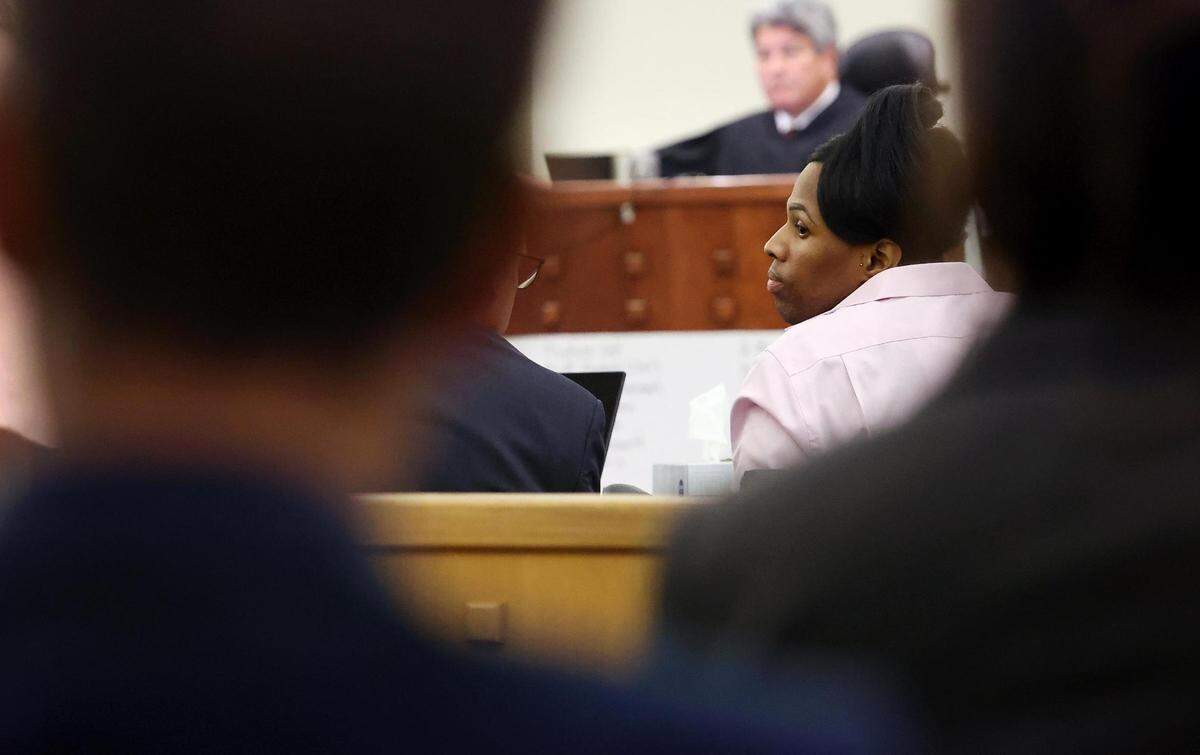
On Monday afternoon, the punishment phase of the trial began in Judge George Gallagher’s courtroom with testimony from one of Hull’s colleagues who helped take him to the hospital the night of Sept. 13, 2018.
On Tuesday morning, testimony continued, and Hull’s stepdaughter and wife took the stand in Tarrant County’s 396th District Court.
Jordan Haenszel, Hull’s stepdaughter, first met Hull in 2002 when she was about 3 or 4 years old, she testified Tuesday. Haenszel and her mother, Sabrina, moved into the same apartment complex as Garrett Hull, and they became friends, Sabrina Hull testified at the beginning at the trial.
Haenszel, 22, said Garrett Hull bought her her first hula hoop “so I liked him a lot.”
Haenszel described herself and Hull as “best friends” and said she always felt safe with him, and she thought Hull being a police officer “was the coolest thing when I was little.”
“He made the choice every day to love me,” Haenszel said.
The night of the shooting, Haenszel was in England, where she was enrolled at Oxford University. She was celebrating her 19th birthday and planning a trip to London when he mother called her. Sabrina Hull told Haenszel there had been an accident, and Garrett Hull had been shot.
Haenszel got on a plane that day and described the 11-hour flight as “terrifying.” She tried to tell herself that Hull was going to be OK and probably had been shot somewhere nonfatal. But when Fort Worth police picked Haenszel up at the airport to escort her to the hospital, she learned her stepfather had been shot in the head.
She visited Hull in his hospital bed. He was unconscious, but when Haenszel held his hand, he squeezed her hand back.
Since Hull died, Haenszel said, her younger sister has been more quiet and reserved. She has changed, too.
“I don’t think I’ll ever be whole again,” Haenszel said. “I can’t even celebrate my birthday anymore.”
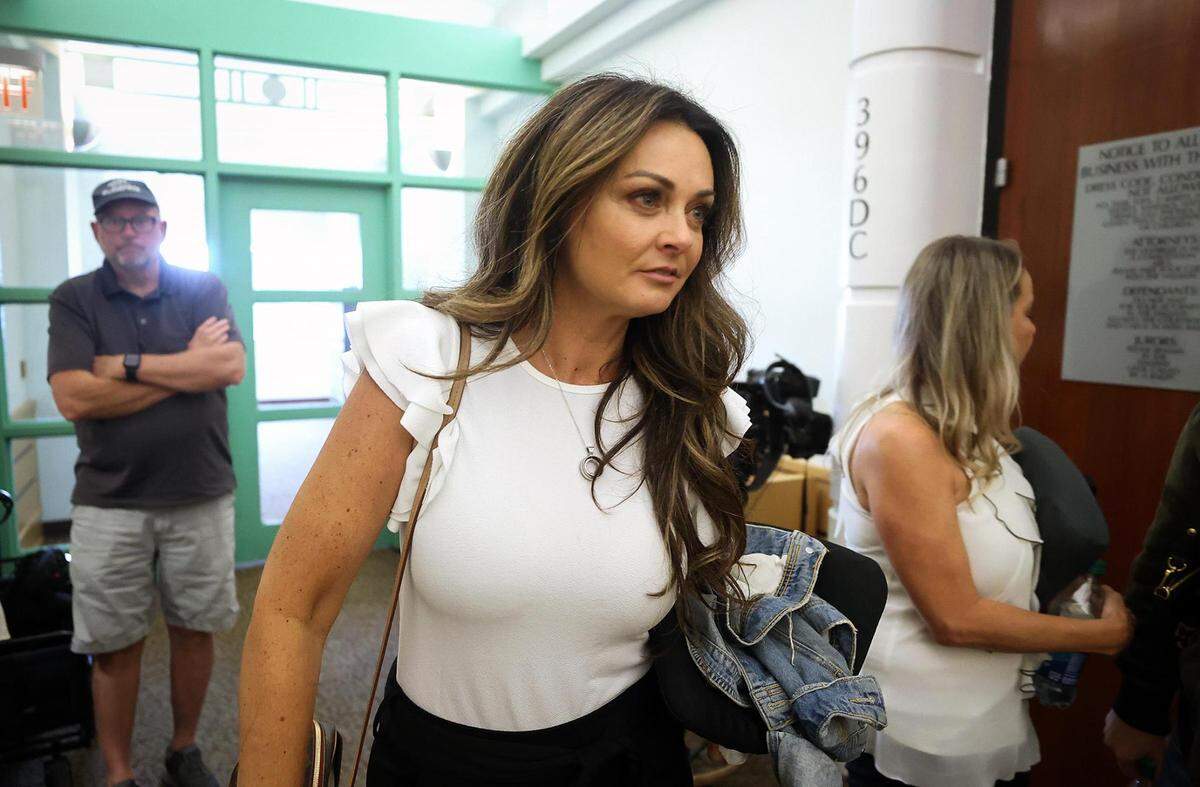
Sabrina Hull testified after her daughter. She described how she fell in love with Garrett Hull’s smile and how safe she felt around him. She never expected to marry a police officer, she said, and never expected someone like Garrett Hull to love “someone with such a broken background.”
Garrett Hull was a steady force, someone who protected the people he loved and called his parents every single day, she said.
During Sabrina Hull’s testimony, prosecuting attorney Timothy Rodgers showed a photo to the courtroom titled “Last photo.” In the picture, Sabrina Hull is curled up on her side in the hospital bed alongside her husband, who is bandaged and unconscious. The picture is the last one she took with her husband.
“Sometimes I wish they would have just buried me, too,” she said. “I am not the same woman I was. I don’t feel safe in this world, that’s for sure.”
Body-camera footage, other testimony
Two other witnesses testified Tuesday morning — a juvenile probation officer who knew Huff as a minor and another Fort Worth police officer who previously testified about the night Hull was shot.
Fort Worth Officer Victor Rankins drove Hull to John Peter Smith Hospital after he was shot. Rankins’ body-cam footage from the drive was presented in court Tuesday, and showed the chaos and efficiency in which the officers rushed Hull to the emergency room. The emotional footage showed Hull on a stretcher, surrounded by ER staff as police officers waited in the hospital hallway.
Rankins was emotional in his testimony about the video. He said watching the footage made him “feel like a failure.”
“A wife lost a husband. Children lost a father,” he said. “The world lost a great man.”
Several family members left the courtroom before the video played. When the court took a break afterward, family, friends and colleagues comforted one another in the hallway.
The juvenile probation officer testified about Huff’s time spent in and out of foster care and juvenile detention facilities as a child. Huff’s mother was in and out of prison, and the household was chaotic, she said.
At least six children lived in the house, and Huff at times took care of younger siblings. Huff’s mother’s boyfriend was physically abusive toward the children, the probation officer said.
During juvenile court hearings, she said, Huff sometimes asked to talk to the judge alone, and would speak to the judges in their chambers. When they would emerge, Huff at times would be granted probation instead of being sentenced to a detention center. Huff ran away from at least one foster care placement, the probation officer said.
The defense’s expert witness, forensic and clinical psychologist John Fabian, testified Tuesday afternoon about Huff’s mental state. During his testimony and the prosecutors’ cross-examination, the two sides portrayed very different versions of Huff.
In his testimony, Fabian described the traumatic experiences Huff reported going through as a child, saying Huff “was raised by wolves.” Huff’s father was murdered when Huff was 9 years old, Fabian said, and Huff’s mother was abusive and encouraged Huff to steal for her. Huff was in and out of foster care and was sexually abused by a family member, Fabian said.
Based on his assessments of Huff, Fabian diagnosed the 36-year-old with borderline personality disorder, anxiety, depression, ADHD and antisocial personality disorder.
Fabian testified his assessment was not to excuse Huff’s crimes, but instead was a way to look at contributing factors into why Huff committed those crimes.
In cross-examination, prosecutor Lloyd Whelchel pushed back against Fabian’s characterization of Huff. Whelchel said Fabian described Huff as unable to think ahead or control impulses, but the robberies Huff was involved in required long-term planning and foresight. He also questioned the validity of Fabian’s assessment because it was based on Huff’s self-reporting, and Huff could have exaggerated past trauma.
Whelchel also questioned whether Huff showed a lack of empathy for others. Fabian said based on his assessment of Huff, Huff lacked a moral barometer.
“What do you call someone like that?” the prosecutor asked.
“A psychopath,” Fabian responded.
Huff will be sentenced to either the death penalty or life in prison. The other living defendant in the case, Samuel Mayfield, is awaiting trial on a capital murder charge.
This story was originally published June 28, 2022 at 12:56 PM.