Here’s how Fort Worth police solved the Carla Walker cold case
This story was originally published on October 22, 2020, after the arrested of Glen McCurley.
On a February night in the late 1970s, a teenager named Jim Walker drove his three-quarter ton Silverado pickup to the Ridglea Bowl parking lot, turned off the headlights and waited for hours. Three days later, at Benbrook Lake, he wandered through the woods of Holiday Park and camped in a culvert near the water. He was hoping to find the man who murdered his sister.
Jim was retracing her final night on the anniversary of her death. He thought, however, that the killer could be anywhere in west Fort Worth, perhaps stopping by neighborhood garage sales or driving by the Walker house.
But nobody appeared suspicious enough at the bowling alley or at the culvert, and nobody ever announced himself at his family’s front door to say he had murdered Carla Walker. The question of who killed her lingered for 46 years, as detectives on the case retired and died, as Ridglea Bowl was replaced with an ice rink and later a wedding venue, as Western Hills High School graduates who were friends of Carla moved to places as far-flung as Los Angeles and Baltimore, building careers and families she never got to have.
All of that time the alleged killer stayed. He was closer than anyone could’ve guessed.
The high school dance
When Carla Walker was taken, in the early morning hours of Feb. 17, 1974, Jim was 12, still a bratty little brother but someone growing increasingly aware of his 17-year-old sister’s energy and kindness. She was a member of the spirit squad, played tennis and could win tough arguments even against her father, Leighton, a retired lieutenant colonel who fought in World War II and Korea. On holidays like Easter and Valentine’s Day, Carla’s mother, Doris, would often give Carla personalized cards saying how proud and thankful she was to have her as a daughter.
At Western Hills, nearly everyone knew her. “She moved within the cliques,” recalls Cathy O’Neal. Carla went cruising — the choice activity for any Fort Worth child of the ‘70s — and went to parties on weekends but, as her good friend Kristi Shelton says, wasn’t a wild girl. She just liked to have fun. When Shelton went to Carla’s house, Carla used to play the Beatles’ “Revolution 9” backward, knowing the “turn me on, dead man” lyrics would freak her out.
Carla was a younger sibling to two brothers, Charles and Steven, and to sisters Patsy and Cindy. By the winter of 1974, she and Jim were the only Walker children staying at the house, where Carla slept in a second-story bedroom.
Jim also knew, as much as a younger brother could admit, that Carla was beautiful. She was a petite girl, about 4-11, with blond hair and an infectious smile. The last night he saw her she wore a powder blue dress with white ruffles. Western Hills, having filled its cafeteria with pink streamers and paper hearts, hosted the Valentine’s Dance. The theme was “Love is a Kaleidoscope” and a band called Hydra played music. Her date was her boyfriend, a senior captain on the football team, Rodney McCoy.
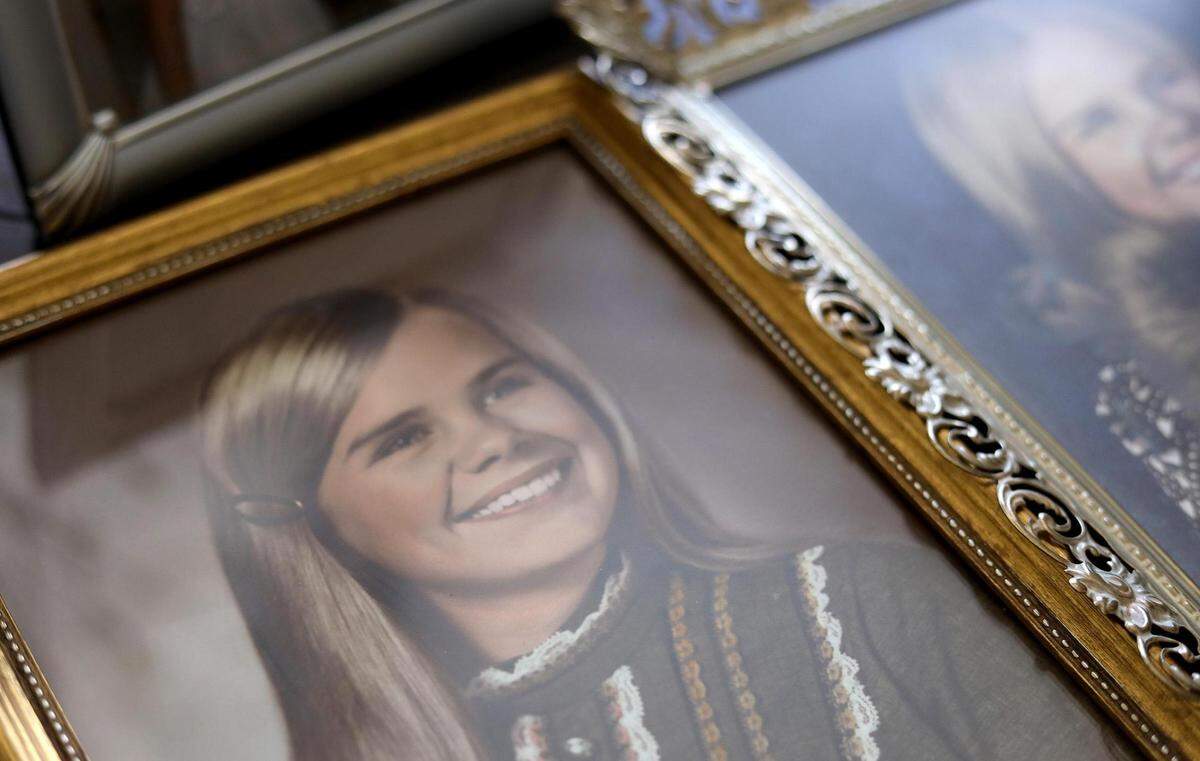
The couple had been dating for about a year. Carla, a junior, dutifully attended all his games — even the spring scrimmages with her young niece in tow — and her family embraced Rodney like one of their own. It wasn’t just a whirlwind high school romance: McCoy planned to attend Texas Tech, and Carla told friends she wanted to follow him, potentially graduating a semester early so she could be in Lubbock the spring of 1975. He had given her his promise ring, which she proudly wore that night.
The dance ended around 11:30. She left with Rodney, who invited a friend named Gary and his girlfriend, Brenda Wells, to join them. The couples set out in McCoy’s mother’s car to cruise the streets. Western Hills students always made the same three pit stops: Ridglea Bowl, where many teenagers participated in leagues, a Taco Bell, and a burger and fry joint called Mr. Quick. Carla and the others stopped at all three that night while sipping alcoholic beverages. Wells remembers offering Carla a pen to stir a drink. She wasn’t drunk, Wells recalls, but walked around with a “giddiness that girls get” when they’ve been drinking and “just enjoying it.”
Taco Bell and Mr. Quick were next to each other and shared a bathroom. Somebody had trashed it that night, so the teens who gathered at the restaurants drove down the road — by the Benbrook Traffic Circle — to the bowling alley’s restroom.
Rodney and Carla took Wells and her boyfriend back to the school around 12:30 a.m. Wells had to be home for a 1 a.m. curfew. About an hour later, Carla was gone. She and Rodney had returned to Ridglea Bowl to use the restroom. As they sat in his mother’s car somebody opened the passenger door, pistol whipped Rodney’s face with a .22 Ruger and grabbed Carla.
Rodney fell unconscious. He later said he believed the man to be tall with short brown hair, wearing a vest and speaking in a western accent. The man dropped a magazine from the Ruger at the crime scene.
A normal high school night had turned into a nightmare for Carla’s family and friends and all of west Fort Worth. The city’s population numbered just 400,000 at the time, and the western neighborhoods felt insular. There, the trope of leaving doors unlocked was real, says Norman Buckley, a 1974 Western Hills graduate. When he thinks back to his youth, before that night, he is reminded of the expansive green lawns and never-ending summer days of “The Tree of Life.” “The city,” he says, “kind of ended in our neighborhoods.”
The uptick in violence of the 1960s and ‘70s seemed to be happening far from west Fort Worth. Even the B-52s that roared from nearby Carswell Air Force Base into the skies above, sometimes dozens at a time, were headed 8,000 miles away to Vietnam. The thought of anyone from the area committing a murder seemed impossible, and the same was true for getting away with the crime.
“It was very small,” says Western Hills graduate Randy Rich. “We all knew what everybody was doing in that neighborhood.”
The family from Midland
At the time of Carla’s abduction and murder, Glen McCurley would have been considered relatively new to west Fort Worth. He moved his family to the 7100 block of Willis Avenue, about a mile south of the traffic circle, in 1972. He was in his late 20s.
McCurley had spent his childhood scattered around Texas and Oklahoma, where his parents were married. His father, Glen Sr., took the family from Austin to Abilene in 1946 when McCurley was 3. He was an older sibling to two brothers, Don and Clay. News articles — written from an era when community papers recorded the comings and goings of everyone in town — show they may have also lived in Odessa and Pecos. By the summer of 1960, McCurley was in Oklahoma, playing baseball for a high school in Granite, a town of 1,000 about 60 miles east of the Texas Panhandle. A few months later, he wrecked whatever normalcy he may have experienced in those high school years.
On February 15, 1961, Abilene police caught McCurley stealing a 1955 Pontiac from a bowling alley. They chased him 130 miles west to Stanton, according to an article from the Abilene Reporter-News, and McCurley ended up with a two-year prison sentence, serving 11 months before being granted parole.
Thirteen months later, on February 16, 1963, he got married to Judy Watson at Crestview Baptist Church in Midland. Judy was a 17-year-old senior at Midland Lee High School. She had shiny blond hair that darkened slightly at her shoulders and participated in mock convention and the business education club. A friend who attended church with them at Crestview believes the couple may have met at another friend’s wedding. She described the McCurley she knew from those days as “a big teddy bear.”
In pictures from their wedding, McCurley, who was 20, stands tall over most guests. He has brown eyes and close-cropped brown hair, and his powerful cheekbones break into dimples in a photo where he cuts a three-tiered wedding cake.
Soon after the marriage, their family grew. McCurley and Judy had two boys in Midland: Craig in 1963 and Roddy in 1966. McCurley worked as a truck driver. After moving to Fort Worth, Judy began what would be a long, successful career in child care at Ridglea West Baptist Church.
On Feb. 16, 1974, they would have been celebrating their 11th anniversary, but Judy visited West Texas. McCurley would explain, much later, that he decided to go out drinking.
Other victims
Jim Walker stayed up late that night, watching TV while his parents played 42 with his aunt and uncle on the dining room table. Around 1:40 a.m., he heard a car tire scrape against the curb outside. Rodney arrived at the door in a few seconds, pounding and yelling, “They got her.” When Jim and his parents, Doris and Leighton, opened the door, the porch light shone on Rodney’s face, illuminating a gash where he had been hit with the Ruger. Jim looked at Rodney’s eyes and noticed a wearniess he’d never seen before.
“As I grew older and saw life experiences,” he says, “I realized that was somebody who had just seen death.”
The Walkers called the police. Leighton grabbed a pistol and peeled out of the driveway to look for his daughter. He didn’t find her that night and neither did the police, and the next few days passed in a surreal haze: The newscasts alerted Fort Worth of her disappearance on Sunday. Police interviewed kids in the Western Hills hallways on Monday. Students held a vigil praying for her return on Tuesday. Police found a body in a culvert near Benbrook Lake on Wednesday. Carla had been abducted, tortured, raped and strangled.
At Western Hills, the carefree existence from the previous months — filled with ‘50s theme days and spirit ladders — evaporated for the rest of the spring semester and for the next school year, especially for Carla’s best friends. “I wasn’t the same for a long, long time,” says Konnie Myers. Kristi Shelton says, “We didn’t go to hangout. It was to a point where our parents were begging us to go out.” When they finally did, Patti Montague, who never had to be home at a specific time, remembers setting her own curfew.
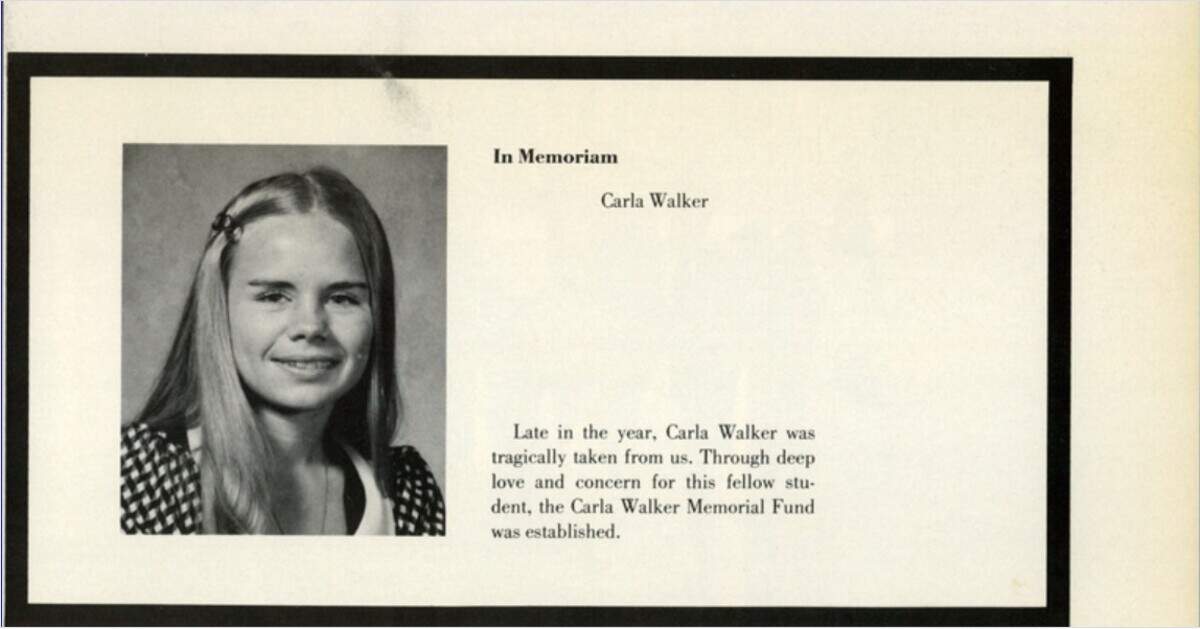
Rodney, seeking to escape the blame he pinned on himself, ditched his Texas Tech plans and started working on pipelines. He made it to Alaska after a few years, but nowhere could be far enough.
As they grieved, a police investigation that one Fort Worth officer described as having more people working on it than he’d ever seen turned up almost no leads, aside from the information gleaned at the crime scene. In 1978, they arrested an unhinged man named Jimmy Ray Sasser whose indictment was so misguided that the district attorney publicly questioned the grand jury that recommended the charges.
The Walkers rarely discussed what happened. Doris quietly suffered through depression for about five years, and Jim channeled his frustration with martial arts lessons and Golden Gloves boxing matches. Leighton, wanting to stay a part of Carla’s old life, went to the weddings and graduations of her friends. He was at the hospital when Myers gave birth to her first child.
On February 16, 1987, exactly 13 years after the Valentine’s Dance, Leighton went to take a nap, had a heart attack and didn’t wake up. “Broken heart,” Myers says. Doris’ mind started to fade from Alzheimer’s around 2010. Jim, who was taking care of her, would tell her before she went to bed that he would find Carla’s killer.
Shortly after Doris died, in 2015, Jim discovered a file cabinet in his parents’ home stuffed with documents he had never seen. There were notes of late night phone calls. Names of potential suspects. Houses circled on maps. Addresses written down.
His parents had never given up.
The churchgoing couple
At Ridglea West Baptist, a congregation on Benbrook Highway, the McCurleys became one of the best-known families in the 1980s and 1990s. They typically sat in the same pew, and many members with young children got to know Judy. She started out as an assistant in the church’s daycare program and worked her way up to the role of director. Childcare was in high demand, and Ridglea West Baptist had developed into one of the most sought-after programs in the area.
Unlike Judy, a family friend says, McCurley’s employment had not been as steady over the years. He worked a series of maintenance and trucking jobs. To this friend, who played sports with their oldest son Craig and visited the McCurley house, McCurley seemed an odd duck but mainly resembled the average working class father common in the neighborhood.
Craig started at Western Hills High School in 1978, the same year the family bought a house on Marks Place. He learned from many of the same educators who taught Carla and became an exemplary student. He played on the baseball and football teams, earned membership to the National Honor Society and developed enough artistic talent to nab a $500 art scholarship his senior year. In 1982, he graduated as the class salutatorian.
Six years later, Craig died when the driver of a 1976 El Camino slammed into his Toyota on North Davis Street in Arlington. He had recently graduated from UT Arlington, near the top of his engineering class, and was working at the Dallas-based conglomerate LTV.
Neighbors embraced the McCurley family, leaving dinners at their front door. Just as Western Hills students and alumni did for Carla Walker, a scholarship account was established in Craig’s name.
People who knew the McCurleys saw them as particularly devout to their faith, best exhibited by their recovery from Craig’s death and by the kindness they showed toward others. In the summer of 2008, a woman named Joyce Stephens forgot her wallet on the roof of her car, and, somehow, it landed on the curb in front of the McCurleys’ house on Marks Place. After several phone calls, they returned the wallet to Stephens, who was impressed by their honesty and messaged the Star-Telegram to publicly thank Judy and Glen McCurley. “The world needs more folks like this,” Stephens wrote.
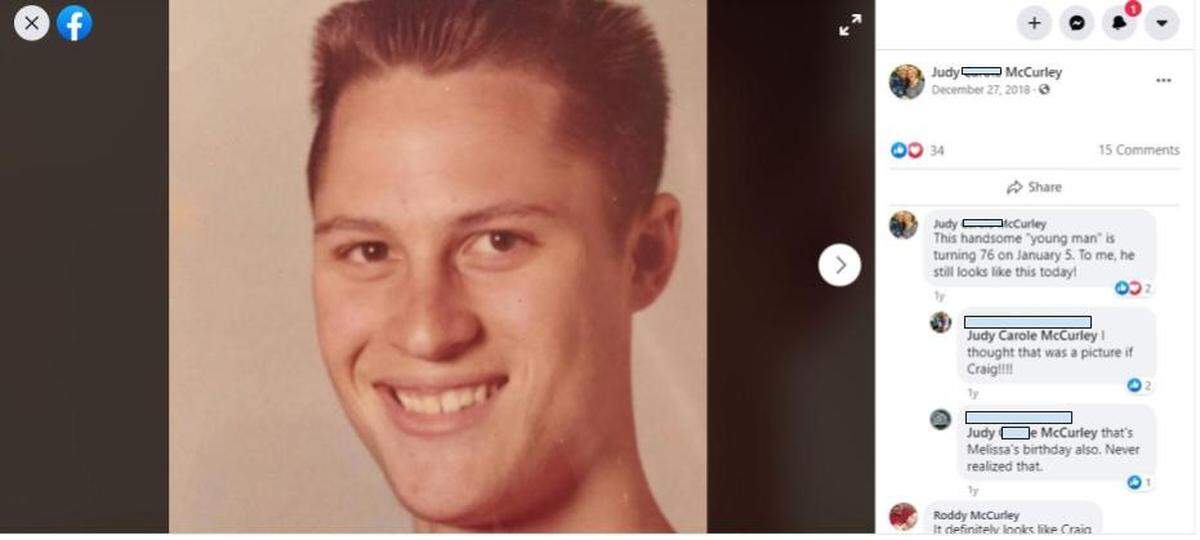
On social media, they projected the image of a couple still in love. Judy regularly posted pictures of them — long-ago photos from the wedding, new photos posing in front of a fireplace — to commemorate anniversaries and holidays. She once wished her husband a happy birthday by displaying a picture of him from when he was much younger. She commented on her public account, “To me, he still looks like this today!”
The last piece of DNA
By 2017, both of Jim Walker’s parents were dead, as were two older brothers. His eyesight was fading from a genetic disorder that had already derailed his own law enforcement career and was now stopping him from driving and seeing people standing in front of him if they weren’t speaking. He was no longer convinced of the promise of justice he had made to his mother. “I was battling depression and had been angry for so many years,” he says.
As his disappointment grew, Jim remembers getting a phone call from a woman who had visited him at his job as a vocational rehabilitation counselor and seemed to realize his struggles. She asked whether he would come with her to Capstone Church; she could even pick him up. Jim, embracing God in a new light, started to feel more at peace about the loss of his sister. He began meeting a prayer group at 6:15 most mornings and asked if the other participants would pray for Carla’s case.
Jim is almost hesitant to discuss his religion, knowing not everyone likes to hear about it. But his turn toward a deeper faith preceded new breakthroughs, as grassroots efforts from friends and family, police work, America’s recent obsession with true crime, and forensic science innovations converged.
One of the first signs that things were turning around was a 2018 podcast by a North Richland Hills resident who goes by Vincent Strange. It got Carla’s friends and acquaintances talking about the case like never before and inspired Dianne Kuykendall and Kathleen Barnett to pitch Carla’s story to producers for Paul Holes, a famous detective with his own TV show who cracked the case of the Golden State Killer.
Holes aired an episode about Carla in April. Fort Worth police detectives Leah Wagner and Jay Bennett, who had recently reopened the case — interviewing dozens of witnesses and friends for the first time since 1974 — struck a deal with Holes. They gave him access to various police files, and his show paid for advanced DNA testing the Fort Worth cold case department may have struggled to earn approval for.
At the Serological Research Institute in Richmond, Calif., analysts uncovered male DNA from three stains on Carla’s clothing that had never been successfully read before. The milestone was followed by disappointment when the DNA profile did not link to anyone on CODIS, a law enforcement database that features the DNA of millions of offenders. Holes’ next step was to try a separate lab that could create a genealogical profile. He provided the highest-quality DNA sample available, but the lab, which he declined to name, failed in its efforts.
After the episode aired, Holes told Fort Worth police about Othram, a forensic genealogy lab based in the Houston suburb The Woodlands. Othram’s staff expressed confidence in its ability to do what the other lab could not. But Holes says there was a risk: The sample that remained may have included the last usable bit of the male DNA, and this sample was of poorer quality than the sample provided to the other lab. Wagner and Bennett had to trust Othram, knowing another failure could mean no more DNA for any improved technology in the future. After a visit to the Woodlands, they gave Othram the go-ahead. It was the right choice. With state-of-the art parallel DNA sequencing, Othram reconstructed the sample’s genome using a miniscule portion of the sample.
But no genealogical profile, no matter how complete, generates a concrete lead if law enforcement can’t match it to someone. Othram uploaded the data from the sample onto GEDmatch, where thousands of individuals publicly share their DNA. The lab’s staff got a hit on what may have been a distant relative and constructed a family tree to trace the distance between the DNA on GEDmatch and the sample. It led to three brothers with the last name McCurley.
Who, of the many thousands of people who use GEDmatch, had been the connection? Likely someone only tangibly related, a stranger to the McCurleys.
Othram CEO David Mittelman called Bennett on July 4 to share the good news. “Imagine our surprise,” Mittelman says, “when we discover ... he recognizes the name.”
In 1974, after Carla’s murder, Fort Worth Police tracked sales of Rugers — because of the magazine found at the crime scene — interviewing the buyers as potential suspects. Glen McCurley, now 77 and 31 at the time, was one of those buyers. On April 3 of that year, according to an affidavit, he told detectives his Ruger had been stolen six weeks before, around the same time of Carla’s murder. He also explained his wife was out of town and that he was not working the night of Feb. 16 or at any time on Feb. 17. But that was it. The police took no further action until this summer.
Three days after Mittleman’s call, they collected discarded items from a trash bin on McCurley’s curb. DNA test results from the trash arrived in early September and matched the male profile Othram helped police identify from Carla’s clothing. From there, the police interviewed McCurley, who agreed to give a DNA sample from his mouth. It also matched the DNA found on Carla’s clothes, according to the affidavit.
The police had the man they believe killed her. McCurley was arrested, without incident, on Sept. 21. Multiple sources close to the investigation say he offered information that will aid in the prosecution when police interviewed him that evening. At a court hearing on Oct. 14, Wagner said police recovered the Ruger that McCurley claimed was stolen in 1974.
McCurley’s criminal record indicated no transgressions, aside from his arrest for car theft in 1961. The police say they do not suspect him of committing any other crimes, nor have they been able to trace his DNA to any other cold cases.
Since the advent of forensic genealogy in the last few years, Holes notes experts on criminal behavior have discovered a new class of offender who commits fantasy or predatory-type crimes, but only once. “They commit the one-off, and they live a criminal history-free type of life,” he says. McCurley, if he is proven to be the killer, may be part of this category. As far as any available crime data and technology can tell, he followed up his alleged murder with a normal life in west Fort Worth.
Too close
Brenda Wells, who Carla and Rodney had dropped off before returning to the bowling alley, went to Abilene Christian for college. She got married. She moved back to west Fort Worth, to a home on Roanoke Street, raising her kids there for about 10 years in the 1980s and 1990s. She never forgot her experience with Carla, although she’d tuned out some of the Facebook groups devoted to solving her murder when people started making unreasonable accusations against former Western Hills classmates. So when police announced they had apprehended Carla’s killer on Sept. 22, Wells thought about avoiding the news stories populating her social media feed.
But when she clicked on an article and started reading, her stomach dropped. The alleged killer had been living in her own backyard. The McCurley house on Marks Place backed up to her house on Roanoke Street.
Wells remembers McCurley as being shy and sometimes standoffish. Although he kept his front yard pristine, she recalls, he would rarely mow the backyard. The lawn grew to several inches in height and, among the overgrown weeds and grass, he kept pipes and construction material, perhaps for a shed he always said he was going to build. “I was mad at him all the time,” she says. Judy, however, was to Wells, “so sweet, a wonderful lady. I can’t imagine the number of kids she impacted over the years (at the daycare).”
As Carla’s friends absorbed the news of McCurley’s arrest, they, too, reckoned with knowing her alleged killer had always lived among them, at one or two degrees of separation from their social circles. Patti Montague’s younger sister had been good friends with Craig McCurley. One of Kristi Shelton’s friends has a niece who was engaged to Craig and continued to occasionally visit Judy and Glen McCurley for dinner after Craig’s death. Konnie Myers saw a picture online of McCurley at the Benbrook Mexican restaurant Pulido’s. In high school, Carla had taught Myers, Shelton and Montague how to keep a crunchy taco shell intact — by wrapping a tortilla around it — at the same restaurant.
The Walkers have connections of their own. About a week after police apprehended McCurley, Jim’s uncle, who lives in Midland, called and asked him if he was sitting down. He told him he and Jim’s aunt had been going to church with Judy McCurley’s West Texas relatives. Sometimes they’d get coffee or Whataburger after the service.
Jim and his wife, Beverly Walker, came across a Facebook conversation saying Craig McCurley was buried in the same cemetery as Carla. When they visited, they found his grave was in the same section, not more than a 30-second walk from Carla.
The proximity made Jim wonder. Long ago, the Walkers used to find mystery flowers at her burial site. They called close friends and family members but could never figure out who left them.
Footsteps
Back in his high school days, when Jim went to the bowling alley and the culvert by Benbrook Lake, he’s not exactly sure what would’ve happened if he came across the man who killed his sister. He’s not proud to admit it, but he used to want, out of pure vengeance, 48 hours alone with whoever did it. “Thank God that never happened,” he says.
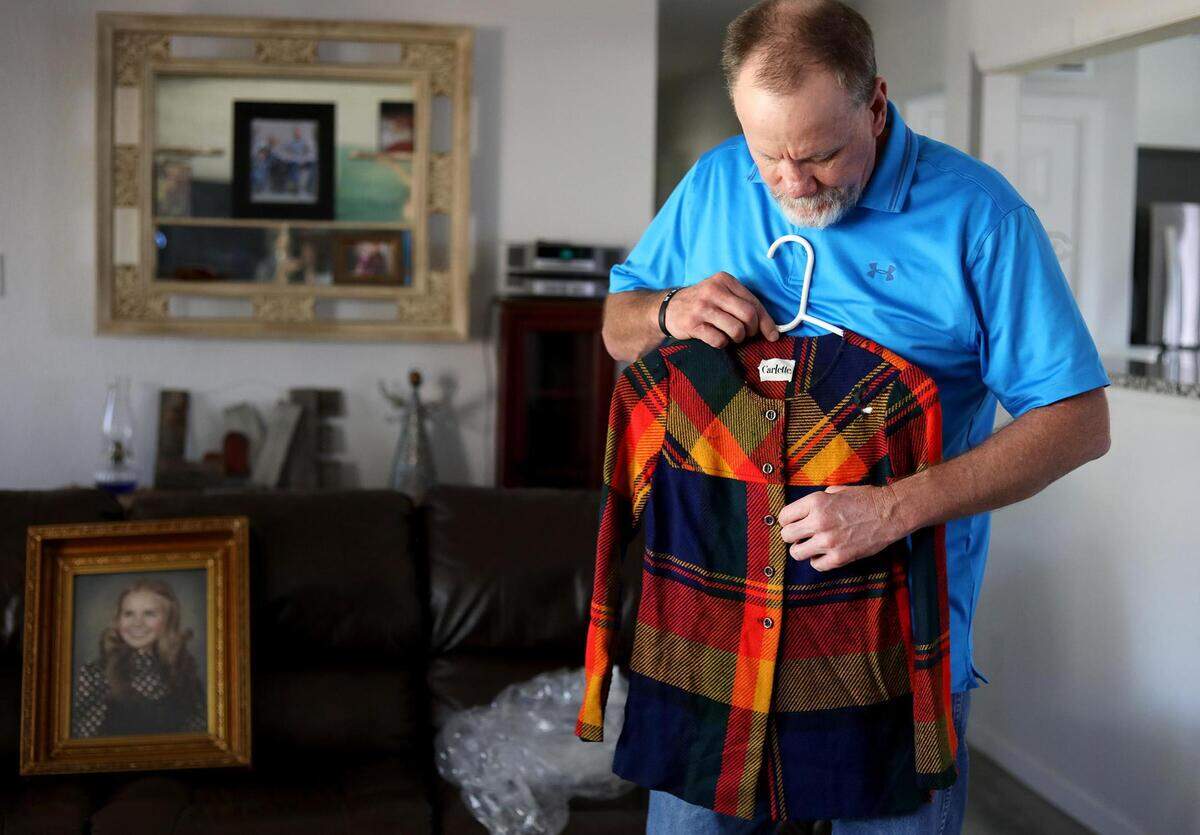
Jim still does want to meet McCurley. He remains at the Tarrant County jail — isolated from the general population — despite having the potential for release with a $500,000 bond, which was raised from $100,000 on Oct. 14. Because of COVID-19, visits from family and friends are banned. His brother Don McCurley declined to be interviewed but said over email: “You might imagine that we are all in shock at these recent events, much as you would be. Please respect that.”
Through a jail spokesperson, McCurley declined an interview request. Since being arrested, he has only spoken publicly in a brief interview with KRLD-AM, leaving gaping holes in his story. He said he was drinking beer in the Ridglea Bowl parking lot, heard an argument between a teenage boy and a teenage girl and decided to take her away. “She just gave me a hug. I gave her a kiss. I mistook her for something else,” McCurley told the radio station. “I didn’t mean to do it.”
The interview drew outrage among the Western Hills community, with Carla’s friends dismissing his explanation, particularly any conflict between Carla and Rodney, who declined an interview, expecting to be a witness in any upcoming trial. When Jim heard McCurley’s comments, flashes of the old anger returned. “He was hunting,” Jim says. “He wasn’t driving around drinking.”
But the anger subsided quickly. Jim says he forgives McCurley. And if he does get to meet him someday, this time he is sure of what he’ll do. He wants to ask the who, what, when, and why, and he wants to leave McCurley a message. It’s related to one Jim used to repeat on television interviews over the years: a warning that the killer would be hearing footsteps and bumps in the night.
He will tell McCurley those noises were made by him, the rest of the Walker family and Carla’s friends. As McCurley continued living in their neighborhood, they were always searching.
BEHIND THE STORY
MOREHow we did this story
The Star-Telegram reported this story through interviews, newspaper archives and publicly available documents. To recreate details about Carla’s life, we talked to close friends and Western Hills classmates, as well as to Jim Walker and his wife, Beverly Walker. We pieced together details about Glen McCurley through a few interviews, the affidavit for his arrest and newspaper accounts about his son and his auto theft. We also used birth records, death records, social media posts and yearbooks for fact-checking and for adding key details to the story.
This story was originally published October 22, 2020 at 6:00 AM.