
Hold the phone! Scam making rounds targeting those who can’t resist knowing who called
There are two kinds of people in this world.
Those who won’t answer a phone call from a number they don’t recognize.
And those so curious that they not only must answer it, but they even ring back if they missed the call.
If you’re part of that latter group, the Federal Communications Commission is warning you to watch out.
Social media is abuzz with reports of people receiving calls, often in the middle of the night, from unknown numbers. Often, the calls ring just once, sometimes prompting the curious to call back.
“If you call any such number, you risk being connected to a phone number outside the U.S.,” the FCC warns. “As a result, you may wind up being charged a fee for connecting, along with significant per-minutes fees for as long as they can keep you the phone. “These charges may show up on your bill as premium services.”
The ploy, often referred to as the “One Ring” phone scam, has varied through the years, sometimes with voice-mail messages urging the recipient to call a number with an unfamiliar area code to collect a prize or to learn about a sick relative.
Many of the recent phone scam calls reported have used the area codes of 222 or 232. Several show to originate from Sierra Leone.
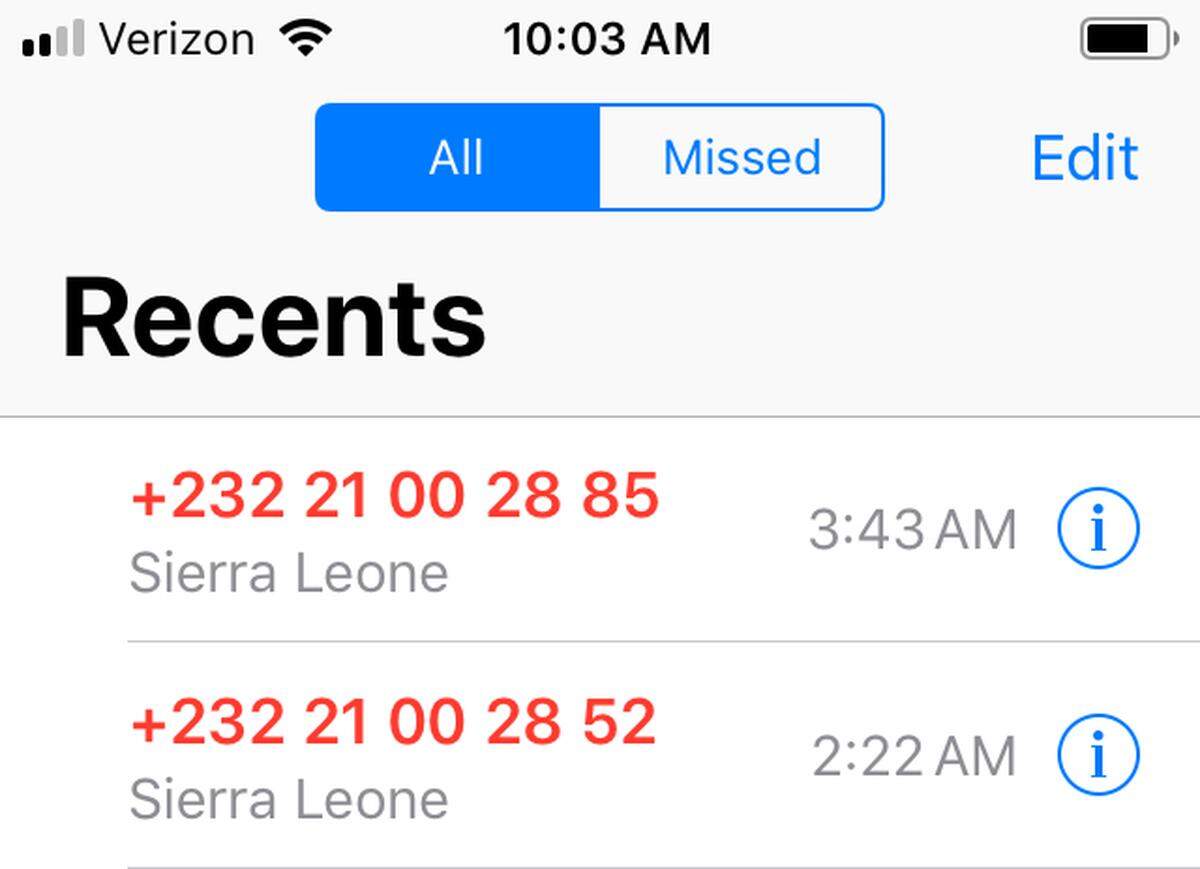
The FCC recommends you don’t answer or return any calls from numbers you don’t recognize. If you must call back, check first to see if the area code is international.
And if you don’t make international calls, ask your phone company to block outgoing international calls on your line.
If you fell victim to this scam and were billed as a result, the FCC urges you to first try to resolve the matter with your telephone company. If that doesn’t work, file a complaint with the FCC.
This story was originally published May 7, 2019 at 11:28 AM.